Canada’s pledge to make more vaccines at home is still a work in progress
Advertisement
Read this article for free:
or
Already have an account? Log in here »
To continue reading, please subscribe:

Digital Subscription
One year of digital access for only $205*
- Enjoy unlimited reading on winnipegfreepress.com
- Read the E-Edition, our digital replica newspaper
- Access News Break, our award-winning app
- Play interactive puzzles
*First annual payment billed as $205.00 + GST for one year. This annual subscription will automatically renew at $233.00 + GST every 52 weeks (10% off the regular annual price of $259.35). Offer available to new and qualified returning subscribers only. Cancel any time.
To continue reading, please subscribe:
Add Free Press access to your Brandon Sun subscription for only an additional
$1 for the first 4 weeks*
- Enjoy unlimited reading on winnipegfreepress.com
- Read the E-Edition, our digital replica newspaper
- Access News Break, our award-winning app
- Play interactive puzzles
*Your next Brandon Sun subscription payment will increase by $1.00 and you will be charged $17.95 plus GST for four weeks. After four weeks, your payment will increase to $24.95 plus GST every four weeks.
Read unlimited articles for free today:
or
Already have an account? Log in here »
Hey there, time traveller!
This article was published 14/04/2023 (1265 days ago), so information in it may no longer be current.
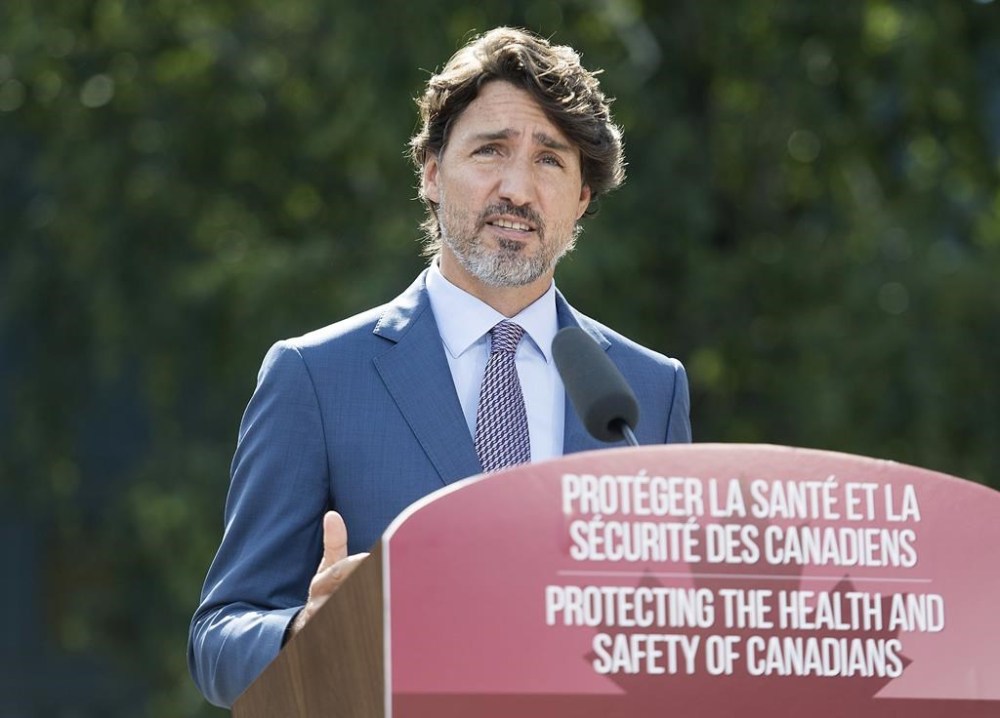
OTTAWA – The COVID-19 pandemic wasn’t even six months old, and not a single vaccine for it had been approved for use anywhere, when Prime Minister Justin Trudeau took to a podium in Montreal to promise that Canada’s National Research Council would be able to start churning out millions of doses by the end of 2021.
Nearly 1,000 days later, it hasn’t produced even one dose for clinical use.
But that day is coming.
Earl Brown, a virologist and professor emeritus at the University of Ottawa, said getting a new plant from the ground up was never going to happen in less than a year.
“As soon as I heard that, I thought, ‘Well gee, that’s overly optimistic by a couple or three years.’ You have to have an objective, but that one wasn’t realistic.”
Still, Brown said if another coronavirus pandemic hits the world, Canada is now in a better position to make its own vaccines and medicines than it was when COVID-19 arrived three years ago.
“We are further ahead because we’ve taken initiative,” he said.
When Canada was negotiating contracts to buy COVID-19 vaccines in the summer of 2020, then-procurement minister Anita Anand asked every company if it could make their doses in Canada. All of them said no.
Anand, who is now the defence minister, said they all concluded that Canada’s biomanufacturing capacity “was too limited to justify the investment of capital and expertise to start manufacturing in Canada.”
That left Canada beholden to imported vaccines, limited early supplies and forced up the cost. The government promised that would change.
Between May 2020 and April 2022, Canada promised more than $1.3 billion for 12 new or expanded biomanufacturing plants to make vaccines and antibody treatments.
Most are still in construction, but Innovation Minister François-Philippe Champagne said Friday things are moving well.
“I think we’re in a much better spot than we have ever been as a nation,” he said.
When he started as the minister in January 2021, he said Canada had capacity to make or at least complete the production on about 30 million doses of vaccine a year.
GlaxoSmithKline made seasonal flu vaccines at its plant in Quebec. Sanofi Pasteur was filling vials with polio vaccine in Toronto, but the vaccine itself was being made in Europe. Most other common immunizations, such as the measles, mumps and rubella vaccine, are imported.
Sanofi is among the 12 companies expanding production capacity now. In March 2021 it received $415 million from Canada and another $55 million from the Ontario government, to build a flu vaccine plant at its Toronto campus by 2026.
Champagne said all together the new projects will get Canada close to 600 million doses a year, but most are still one to three years away from completion.
The National Research Council’s new Biologics Manufacturing Centre is one of the few that is ready to make vaccines as of spring 2023 — as many as two million doses a month. It just doesn’t have one to produce.
The brand-new, $126-million plant was built by June 2021, somewhat within the timeline Trudeau proposed. It took another 14 months to get a Health Canada licence to make vaccines.
But the only vaccine it has an agreement to produce is spluttering. Maryland-based Novavax said in February it may not be able to survive. It took too long to get its COVID-19 vaccine onto the market, and lost the race to Pfizer-BioNTech and Moderna.
The NRC said it was up to Novavax to comment on the status of its Canadian production plan. The company has not yet responded to The Canadian Press.
BioVectra, a biopharmaceutical contract manufacturer in Prince Edward Island, is also looking for vaccine partners. It’s new manufacturing site in Charlottetown, built in part with a $39.8 million grant from the federal government could eventually make 160 million doses of vaccine a year.
CEO Oliver Technow said construction began in April 2022, and it’s expected the first engineering batches will be produced by the end of this year.
That time frame, he said, “is pretty remarkable.”
But as to when any vaccines that might end up in patients’ arms, “that largely depends on our clients,” said Technow.
He said BioVectra is in discussions now with various companies. The site can make multiple types of vaccine, including the popular mRNA vaccines. That technology was newly used for COVID-19 vaccines, but multiple trials are underway that use it to fight other infectious diseases, as well as cancers.
Technow said the demand for mRNA vaccines “is just getting started.”
Moderna is banking on that. The company was founded to bring an mRNA vaccine to market, and its COVID-19 vaccine is its first successful product. It had only limited production capacity at its Massachusetts headquarters, and relied on a partnership with Swiss contract drug maker Lonza to fill its non-U.S. orders, including Canada’s.
Patricia Gauthier, Moderna’s general manager in Canada, said the company is now building manufacturing plants in Canada, Kenya, Australia and the United Kingdom.
She said the Canadian plant in the Montreal suburb of Laval is going up very quickly. Announced just a year ago, the site was picked last summer and construction began in November. Now, she said, there are walls and a roof and the expectation doses can start coming off the line by the end of next year.
Health Canada’s licensing process will dictate when doses for patient use will be ready, but Gauthier said the hope is by late 2024 or early 2025.
The facility should be able to make up to 100 million doses a year, depending on the vaccine being produced. While manufacturing COVID-19 vaccines is the initial plan, Moderna is also planning to make its RSV and flu vaccines there, though neither has yet been authorized.
“We’re making sure Canada will have everything it needs,” said Gauthier.
Ottawa didn’t make a direct financial contribution to Moderna for the plant. Instead, it has an agreement to buy the vaccines that are to come off the plant’s manufacturing lines.
Eleven of the new projects involve vaccines. The twelfth one, AbCellera Biologics new manufacturing site, will make antibody therapies.
Vaccines help the body stimulate antibodies to a particular virus to ward off a potential future infection. Antibody treatments use antibodies produced in a lab to help the body fight off an infection after it has already started.
AbCellera partnered with Eli Lilly to make the first COVID-19 antibody treatment. The research and development happened at AbCellera in Vancouver but the manufacturing happened in the United States.
In May 2020, Canada funded AbCellera with $175.6 million to build Canada’s first antibody therapy manufacturing plant in Vancouver over the next five years. Murray McCutcheon, senior vice-president of corporate development at AbCellera, said the new 130,000-square plant is on schedule.
Construction began last summer, and should be completed in 2024. McCutcheon said the first clinical batches should be produced in 2025.
“In the early days of COVID, we recognized that there was no opportunity to produce these medicines here in Canada and we were reliant on foreign suppliers,” said McCutcheon.
“So we saw an opportunity to ensure that we could not only discover and develop these therapies here, but also manufacture them here so that Canadian patients could be the first to receive such therapies.”
The only project on the list that may completely fail is Medicago’s manufacturing site in Quebec City. The company got $173 million from Canada in 2020 to push its COVID-19 forward and build a new production plant.
The vaccine was successful in trials, but because the company was partly owned by tobacco giant Philip Morris, the World Health Organization refused to even consider its application for authorization.
Health Canada approved the vaccine, and Canada paid for 20 million doses, but Canada’s ongoing COVID-19 vaccine supply is being entirely filled by Pfizer-BioNTech and Moderna. Without the WHO authorization, Medicago couldn’t get approval for use elsewhere.
Philip Morris sold its share of the company in December but in February the remaining sole owner, Japan’s Mitsubishi, said it was closing Medicago’s operations.

Champagne said Friday he spoke to the Quebec City mayor about the issue this week, and he is hoping to find a new partner to at least save the research done by the company.
Medicago was the only company in the world making a vaccine grown in plants.
Champagne did not say whether Canada has any chance to get its investment back if the company does entirely disappear.
This report by The Canadian Press was first published Friday, April 14, 2023.
— With files from Marisela Amador in Montreal.