After fall of Roe, emboldened religious conservatives lobby to restrict abortion in Africa
Advertisement
Read this article for free:
or
Already have an account? Log in here »
To continue reading, please subscribe:
Digital Subscription
One year of digital access for only $1.44 a week*
- Enjoy unlimited reading on winnipegfreepress.com
- Read the E-Edition, our digital replica newspaper
- Access News Break, our award-winning app
- Play interactive puzzles
*Billed as $5.77 plus GST every four weeks. After 52 weeks, price increases to the regular rate of $19.95 plus GST every four weeks. Offer available to new and qualified returning subscribers only. Cancel any time.
To continue reading, please subscribe:
Add Free Press access to your Brandon Sun subscription for only an additional
$1 for the first 4 weeks*
- Enjoy unlimited reading on winnipegfreepress.com
- Read the E-Edition, our digital replica newspaper
- Access News Break, our award-winning app
- Play interactive puzzles
*Your next Brandon Sun subscription payment will increase by $1.00 and you will be charged $17.95 plus GST for four weeks. After four weeks, your payment will increase to $24.95 plus GST every four weeks.
Read unlimited articles for free today:
or
Already have an account? Log in here »
Hey there, time traveller!
This article was published 01/07/2023 (1210 days ago), so information in it may no longer be current.
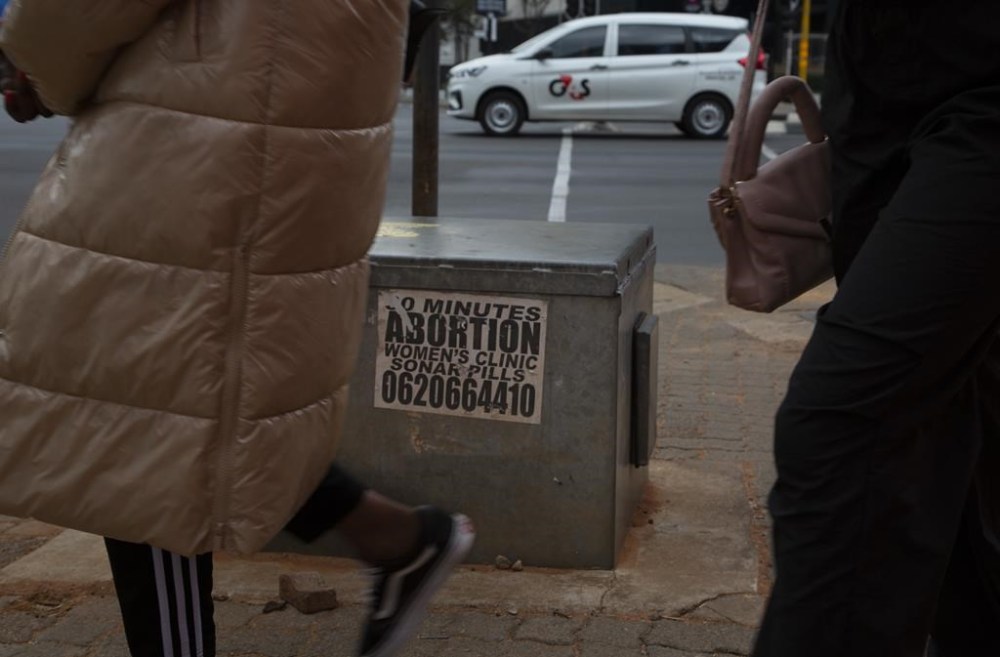
NAIROBI, Kenya (AP) — Nowhere in the world has a higher rate of unsafe abortions or unintended pregnancies than sub-Saharan Africa, where women often face scorn for becoming pregnant before marriage.
Efforts to legalize and make abortions safer in Africa were shaken when the U.S. Supreme Court ended the national right to an abortion a year ago. Within days, Sierra Leone President Julius Maada Bio declared that his government would decriminalize abortion “at a time when sexual and reproductive health rights for women are being either overturned or threatened.”
But some U.S.-based organizations active in Africa were emboldened, especially in largely Christian countries. One is Family Watch International, a nonprofit Christian conservative organization whose anti-LGBTQ+ stance, anti-abortion activities and “intense focus on Africa” led to its designation as a hate group by the Southern Poverty Law Center.
In April, Family Watch International helped to develop a “family values and sovereignty” meeting at Uganda’s presidential offices with lawmakers and other delegates from more than 20 African countries. The organization’s Africa director also is advocating for his country, Ethiopia, to revoke a 2005 law that expanded abortion access and dramatically reduced maternal mortality.
“It’s kind of like the gloves are off,” Sarah Shaw, head of advocacy at U.K.-based MSI Reproductive Choices, an international provider of reproductive health services, said in an interview.
In a September speech to the African Bar Association, the president of Family Watch International, Sharon Slater, alleged that donor countries were attempting a “sexual social recolonization of Africa” by smuggling in legal abortion along with sex education and LGBTQ+ rights.
“Sexual rights activists know if they can capture the hearts and minds of Africa’s children and indoctrinate and sexualize them, they will capture the future lawyers, teachers, judges, politicians, presidents, vice presidents and more, and thus they will capture the very heart of Africa,” Slater claimed.
Her speech in Malawi was attended by the country’s president, a former leader of the Pentecostal Assemblies of God movement.
After lobbying lawmakers in the southern African nation not to consider a bill that would have allowed abortion under certain circumstances, the U.S.-based Catholic group Human Life International told its supporters in March that “thanks to you, Malawi is safe from legal abortion.”
The African Union two decades ago recognized the right to abortion in cases of rape and incest or when the life of the mother or fetus is endangered or the mother’s mental or physical health is at risk.
A growing number of countries have relatively liberal abortion laws. Benin legalized abortion less than a year before the U.S. Supreme Court ruling, though Nigeria, Africa’s most populous country, allows abortion only to save the mother’s life.
African experts say events in the U.S. could reverse gains in the availability of safe abortion procedures, especially since the U.S. government is the largest global donor of international reproductive health assistance.
Such changes could deeply affect the lives of women of reproductive age in sub-Saharan Africa, where 77% of abortions, or more than 6 million a year, are estimated to be unsafe, the Guttmacher Institute, an international research and policy organization with headquarters in New York, said in 2020.
Unsafe abortions cause 16% of maternal deaths in the World Health Organization’s largely sub-Saharan Africa region, the U.N. agency said last year, “with variations across countries depending on the level of restrictions to abortion.”
Abortion opponents are especially outspoken in East Africa, where countries publicly wrestle with the issue of teen pregnancy but offer little sex education and access to legal abortions in limited circumstances.
A sexual and reproductive health bill introduced in 2021 is still under debate by the East African Community, whose member nations include Burundi, Congo, Kenya, Rwanda, South Sudan, Tanzania and Uganda. Some Catholic and other conservative organizations have criticized a section that would allow a woman to terminate a pregnancy in cases of rape, incest or endangered health.
Earlier this year, the Protestant Council of Rwanda directed all health facilities run by its member institutions to stop performing abortions, although Rwandan law permits them in certain cases.
“We are having a very strong anti-rights narrative,” Brenda Otieno, research coordinator with the Kisumu Medical and Education Trust in Kenya, said during a Tuesday webinar about the global effects of the U.S. Supreme Court decision.
Abortion providers are often harassed, Otieno said, and a year ago, Kenya passed a national reproductive health policy that paid little attention to safe abortion care.
In Uganda, one rights watchdog said the issue of abortion access is taboo, with advocates facing discrimination, even as some women resort to self-mutilation.
“We’ve seen a number of people losing their lives,” said Twaibu Wamala, executive director of the Uganda Harm Reduction Network.
Abortion is illegal in Uganda, although it can be legally carried out by a licensed medical worker who determines that a pregnancy threatens the mother’s life. But many doctors, fearing medical complications, only offer post-abortion care that may be too expensive or too late to save a woman’s life.
In Ethiopia, civil society workers have asked the government to investigate what they fear is a new trend: fewer public health facilities providing abortions and more women seeking care after unsafe abortions.

Groups that oppose abortion in Africa’s second most populous nation are mostly incited by outsiders and “consider the Supreme Court decision as fuel for them,” Abebe Sibru, the Ethiopia director for MSI Reproductive Choices, said.
___
Associated Press writer Rodney Muhumuza in Kampala, Uganda, contributed.
___
Follow AP’s coverage of Africa at https://apnews.com/hub/africa and of abortion at https://apnews.com/hub/abortion