Journal series calls for inquiry into Canada’s COVID-19 response, highlighting shortfalls
Advertisement
Read this article for free:
or
Already have an account? Log in here »
To continue reading, please subscribe:

Digital Subscription
One year of digital access for only $205*
- Enjoy unlimited reading on winnipegfreepress.com
- Read the E-Edition, our digital replica newspaper
- Access News Break, our award-winning app
- Play interactive puzzles
*First annual payment billed as $205.00 + GST for one year. This annual subscription will automatically renew at $233.00 + GST every 52 weeks (10% off the regular annual price of $259.35). Offer available to new and qualified returning subscribers only. Cancel any time.
To continue reading, please subscribe:
Add Free Press access to your Brandon Sun subscription for only an additional
$1 for the first 4 weeks*
- Enjoy unlimited reading on winnipegfreepress.com
- Read the E-Edition, our digital replica newspaper
- Access News Break, our award-winning app
- Play interactive puzzles
*Your next Brandon Sun subscription payment will increase by $1.00 and you will be charged $17.95 plus GST for four weeks. After four weeks, your payment will increase to $24.95 plus GST every four weeks.
Read unlimited articles for free today:
or
Already have an account? Log in here »
Hey there, time traveller!
This article was published 24/07/2023 (1176 days ago), so information in it may no longer be current.
A new series published in the BMJ medical journal is calling for an independent inquiry into Canada’s COVID-19 response.
Experts from 13 organizations across Canada, including doctors, nurses, researchers, law and humanitarian specialists, along with Jocalyn Clark, a Canadian who is the BMJ’s international editor, wrote the seven articles published late Monday.
“We see this as the next step in the pandemic,” said Dr. Sharon Straus, physician-in-chief at St. Michael’s Hospital in Toronto and one of the senior authors of the “Accountability for Canada’s COVID-19 Response” series.
“This is the start of preparing for the next emergency,” she said.
The articles identify shortfalls in Canada’s COVID-19 response, including difficulty reaching vulnerable and marginalized populations who were most at risk, the catastrophic deaths in long-term care homes and inconsistent public health messages across provinces and territories.
The articles also acknowledge successes in Canada’s pandemic response, including a vaccination rate of more than 80 per cent.
“An evaluation two years into the pandemic said the country had lower COVID case and death burdens and higher vaccination coverage than most other G10 countries,” the authors said in a BMJ editorial summarizing their findings.
“But this overall impression of adequacy masks important inequalities by region, setting and demography.”
A series of articles previously published in the BMJ about the U.K.’s COVID-19 response helped to inform an inquiry in that country, Straus said, so the authors are hoping the same will happen in Canada.
ESSENTIAL WORKERS AND MARGINALIZED COMMUNITIES
It’s important to look closely at who bore “the burden of the pandemic,” Straus said.
Those people included essential workers making low wages and living in disadvantaged neighbourhoods, she said.
One of the learnings Straus hopes will emerge from an inquiry into the COVID-19 response is how critical it is to “build relationships with the communities who are most likely to be involved in these health inequities before the next health emergency.”
Those relationships can help ensure marginalized communities are included in research and that their needs are prioritized in public health outreach, she said.
LONG-TERM CARE FAILURES
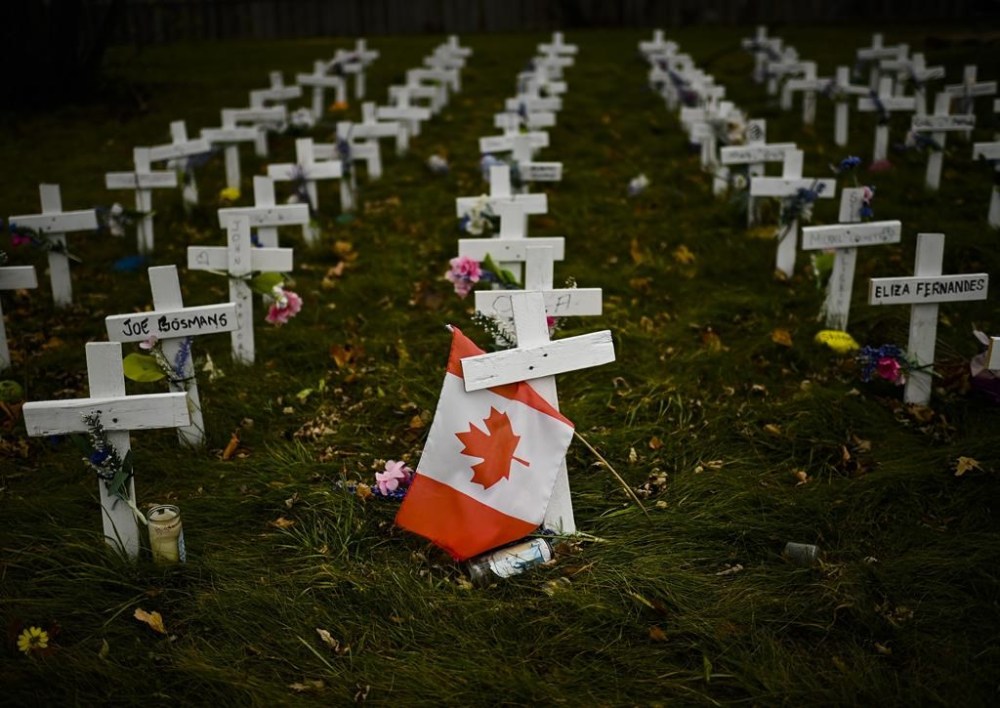
An inquiry is needed to ensure “accountability for losses,” including 53,000 deaths in Canada — many of those in long-term care, the authors said.
“A particular disgrace is Canada being at the top of wealthy nations for COVID-related deaths in care homes for older people, despite more than 100 reports foreshadowing a nursing home crisis,” they wrote.
Those reports identified issues such as chronic underfunding in long-term care and a lack of sufficient support for staff, Straus said.
Some provincial governments are already walking back some of the measures they put in place to strengthen long-term care, she said, including sick benefits for staff. Straus also noted it’s important to ensure long-term care homes don’t use the four-bed rooms where COVID-19 and other illnesses can easily spread.
”We have a responsibility to those individuals who died to make sure that we do better by them … so that it doesn’t happen again. We don’t want to risk the lives of more older adults and those who care for them,” Straus said.
REGIONAL DISPARITIES AND STAFFING SHORTAGES
A national inquiry should also include recommendations for “reforming Canada’s healthcare and public health systems, which were struggling pre-pandemic and are currently on life support,” the authors wrote.
COVID-19 resulted in “an exodus of exhausted and distressed healthcare workers,” they wrote, noting that Canada has a “critical workforce shortage that is ongoing.”
Canada’s decentralized health-care system, with provinces and territories responsible for their own public health responses, contributed to inconsistent COVID-19 messaging and directives across the country, the BMJ articles said.
The Public Health Agency of Canada develops “national clinical and public health guidelines,” but it “lacks the powers to direct provincial and territorial health agencies or other bodies with similar mandates to implement its recommendations,” they said.
“Each province and territory devised its own interventions and timelines for protective measures such as school closures, border controls and closures, prohibition of gatherings, and masking requirements, leading to substantial variation in policy and practice across the country, widely varying hospital admission rates, and public confusion.”
A key lesson from that, Straus said, is the need to be “explicit and transparent” about why there are different approaches in different regions.
Not being transparent about why public health decisions are made lead to “mistrust,” she said.
Examining what went well and what went wrong in Canada’s COVID-19 response through an independent inquiry is “essential,” the authors wrote.
“Failing to look at the past will ensure an unchanged future. Undoubtedly, lessons can be drawn to inform new health investments and preparedness, and much learning comes from decisions and actions that failed or faltered,” they wrote.
When asked to respond to the call for a national inquiry and the issues raised by the BMJ series, Guillaume Bertrand, press secretary for federal health minister Jean-Yves Duclos, said in an email that they are “committed to a review of the response to COVID-19 in order to take stock of lessons learned and to better inform preparations and responses to future health emergencies.”
This report by The Canadian Press was first published July 24, 2023.
Canadian Press health coverage receives support through a partnership with the Canadian Medical Association. CP is solely responsible for this content.
Related Articles
Convoy organizer Pat King to stand trial Nov. 27



Advertisement Advertise With Us
Advertisement Advertise With Us