

Mexican boxer did not report concussion before deadly Montreal fight: coroner
Advertisement
Read this article for free:
or
Already have an account? Log in here »
To continue reading, please subscribe:

Digital Subscription
One year of digital access for only $205*
- Enjoy unlimited reading on winnipegfreepress.com
- Read the E-Edition, our digital replica newspaper
- Access News Break, our award-winning app
- Play interactive puzzles
*First annual payment billed as $205.00 + GST for one year. This annual subscription will automatically renew at $233.00 + GST every 52 weeks (10% off the regular annual price of $259.35). Offer available to new and qualified returning subscribers only. Cancel any time.
To continue reading, please subscribe:
Add Free Press access to your Brandon Sun subscription for only an additional
$1 for the first 4 weeks*
- Enjoy unlimited reading on winnipegfreepress.com
- Read the E-Edition, our digital replica newspaper
- Access News Break, our award-winning app
- Play interactive puzzles
*Your next Brandon Sun subscription payment will increase by $1.00 and you will be charged $17.95 plus GST for four weeks. After four weeks, your payment will increase to $24.95 plus GST every four weeks.
Read unlimited articles for free today:
or
Already have an account? Log in here »
Hey there, time traveller!
This article was published 28/11/2023 (1052 days ago), so information in it may no longer be current.
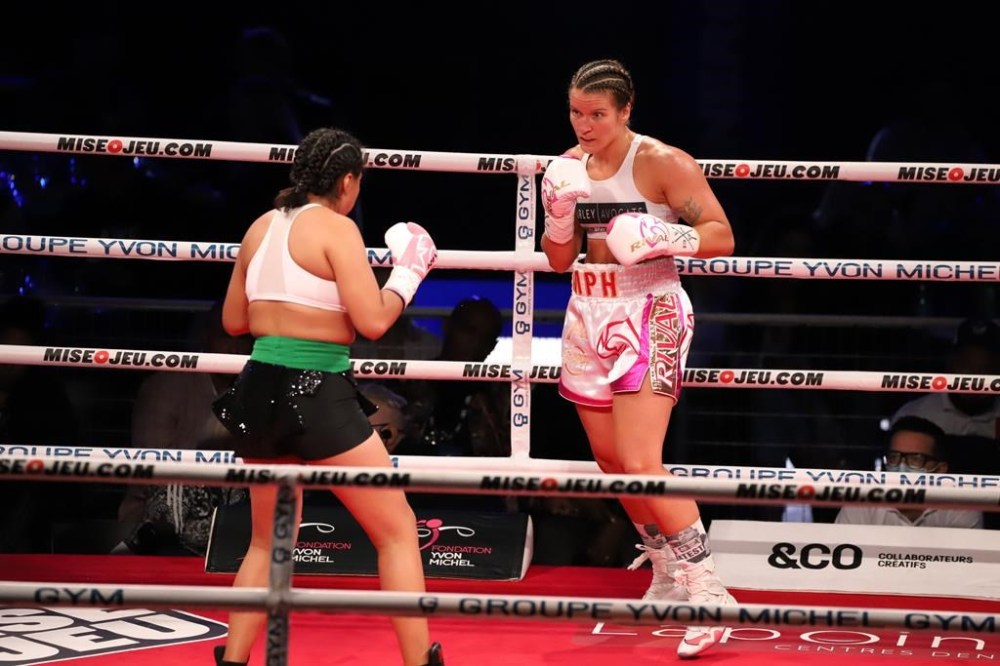
MONTREAL – Mexican boxer Jeanette Guadeloupe Zacarias Zapata did not declare a likely prior concussion before an August 2021 match in Montreal that led to her death, a Quebec coroner noted in a report released Tuesday.
Jacques Ramsay concluded that 18-year-old Zacarias Zapata died of a traumatic brain injury after she suffered a cerebral knockout during the match with Quebec boxer Marie-Pier Houle at Montreal’s IGA Stadium.
Though Ramsay said Zacarias Zapata’s death was accidental, he noted it came 15 weeks after a match in Mexico “against a much more experienced opponent” during which she likely suffered a similar cerebral knockout — characterized by head trauma causing a concussion.
“In the final round, visibly exhausted, Ms. Zacarias Zapata was dominated by a much better-conditioned opponent who delivered several solid blows to the head until Zacarias Zapata clung to the ropes and dropped to one knee,” Ramsay wrote, describing a video of the May match in Mexico. “Zacarias Zapata was held up only by the cables, and eventually collapsed to the ground, where she lay still.”
The boxer was brought to the hospital and released hours later. Though her father initially attributed her faint to a lack of oxygen, and a subsequent medical evaluation “showed nothing abnormal,” Ramsay said the video of the match led him to determine Zacarias Zapata had experienced a cerebral knockout.
She would nevertheless answer negative to a question on a government-issued questionnaire ahead of the August fight in Montreal about previous concussions, head injuries and losses of consciousness.
Her response to the questionnaire suggests she didn’t consider the May knockout to be a concussion, Ramsay said. He pointed, however, to what he described as a widespread “tendency to downplay or even trivialize neurological symptoms among boxers at all levels” — a practice the coroner said is “part of the boxing culture.”
Among Ramsay’s recommendations is a call for Quebec’s sports regulator agency — Régie des alcools, de courses et des jeux — to require combat sport fighters who are knocked out in a preceding match to submit details of what happened and associated medical reports before their next fight. Those who experienced cerebral knockouts would have to also submit neuropsychological reports.
Those submissions, he said, would be a condition of the regulator’s approval of a fight.
Finally, Ramsay recommends that the agency mandate neuropsychological testing for professional combat sports athletes when issuing them licences to practise in Quebec. Such measures would allow officials to compare test results from before and after a knockout, and allow the sports regulator to “better appreciate the nature of the injuries sustained by the boxer and thus better fulfil its mission of ensuring the boxer’s safety.”
This report by The Canadian Press was first published Nov. 28, 2023.




