Create national breast-implant registry to help prevent complications: committee
Advertisement
Read this article for free:
or
Already have an account? Log in here »
To continue reading, please subscribe:
Digital Subscription
One year of digital access for only $1.44 a week*
- Enjoy unlimited reading on winnipegfreepress.com
- Read the E-Edition, our digital replica newspaper
- Access News Break, our award-winning app
- Play interactive puzzles
*Billed as $5.77 plus GST every four weeks. After 52 weeks, price increases to the regular rate of $19.95 plus GST every four weeks. Offer available to new and qualified returning subscribers only. Cancel any time.
To continue reading, please subscribe:
Add Free Press access to your Brandon Sun subscription for only an additional
$1 for the first 4 weeks*
- Enjoy unlimited reading on winnipegfreepress.com
- Read the E-Edition, our digital replica newspaper
- Access News Break, our award-winning app
- Play interactive puzzles
*Your next Brandon Sun subscription payment will increase by $1.00 and you will be charged $17.95 plus GST for four weeks. After four weeks, your payment will increase to $24.95 plus GST every four weeks.
Read unlimited articles for free today:
or
Already have an account? Log in here »
Hey there, time traveller!
This article was published 30/11/2023 (1058 days ago), so information in it may no longer be current.
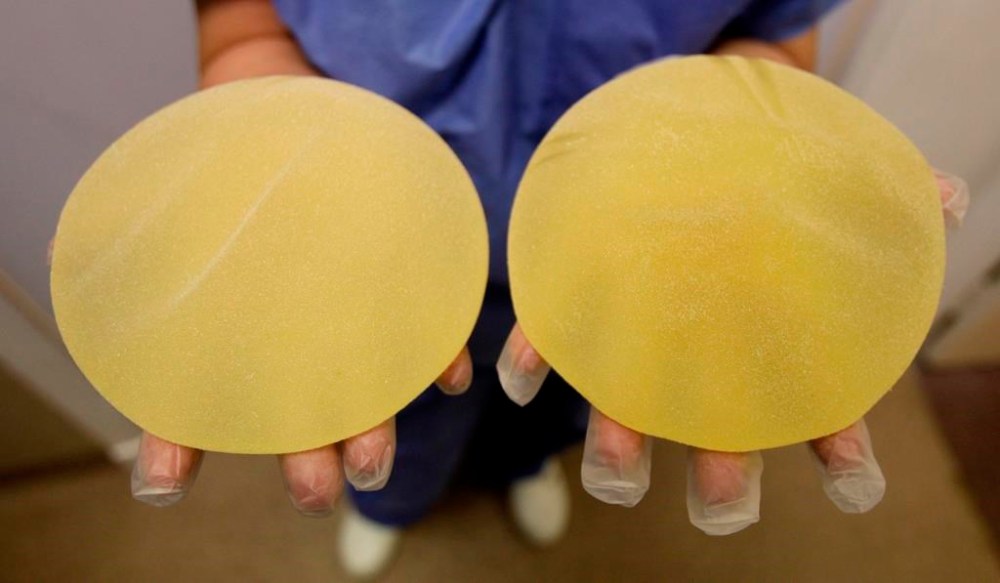
OTTAWA – The House of Commons health committee is echoing long-standing calls from plastic surgeons and patient advocates for a national registry to help prevent illness and problems linked to breast implants.
A national registry would allow the federal government to trace specific implants, contact patients in the case of a recall and contribute to research related to breast implants, the committee said in a report released Thursday.
Health Canada officials told the committee that breast implants are associated with a range of potential complications, including life-threatening ones.
Several private members’ bills have been introduced in Parliament calling for the creation of a national registry, but none have made it far.
“We shouldn’t still have to fight so hard for safety and tracking measures for devices that carry Health Canada’s highest risk rating and have known serious issues,” Nancy Pratt, a patient advocate with Breast Implant Failure & Illness Society Canada, said in May.
Those issues range from device failures to localized complications, effects of silicone migration, autoimmune systemic illnesses and a known link to cancer, deaths and recalls, said Pratt.
She told the committee that she unknowingly lived with breast implants that had been recalled.
The MPs on the committee suggest that recovering the costs to run the registry from breast-implant manufacturers.
The committee is also recommending that Health Canada formally recognize “breast-implant illness,” which is characterized by fatigue, anxiety, chronic pain and nervous-system dysfunction.
There is not currently a medical diagnosis associated with the pathology.
“Patients with breast implants often have symptoms suggestive of an abnormally functioning autonomous nervous system,” Dr. Jan Willem Cohen Tervaert, a professor of medicine at the University of Alberta, told the committee on May 9.
“Although an accurate estimation of how often this occurs does not exist, our studies suggest that one in four women, so 25 per cent, may develop at least three symptoms suggestive of this disease, 10 years after breast implants.”
The federal department is assessing illnesses linked to breast implants, but has not yet taken a position on the issue due to a lack of available data.

“Monitoring is taking place. Incident reports are evaluated on a regular basis by the department. There is no basis yet to change our approach to breast implant licensing,” David Boudreau, the director general of the medical devices directorate at the health department, testified in April.
Unlike Health Canada, the United States Food and Drug Administration does recognize breast implant illness, and warns about the potential symptoms on its website.
The committee recommends that the government put money toward researching breast implants, including their long-term health effects.
At the time the study was undertaken, the committee of MPs included only one woman, though other female MPs participated in the study as well.
This report by The Canadian Press was first published Nov. 30, 2023.