Indigenous-led RAAM clinic opens doors to relationship-focused care
Advertisement
Read this article for free:
or
Already have an account? Log in here »
To continue reading, please subscribe:

Digital Subscription
One year of digital access for only $205*
- Enjoy unlimited reading on winnipegfreepress.com
- Read the E-Edition, our digital replica newspaper
- Access News Break, our award-winning app
- Play interactive puzzles
*First annual payment billed as $205.00 + GST for one year. This annual subscription will automatically renew at $233.00 + GST every 52 weeks (10% off the regular annual price of $259.35). Offer available to new and qualified returning subscribers only. Cancel any time.
To continue reading, please subscribe:
Add Free Press access to your Brandon Sun subscription for only an additional
$1 for the first 4 weeks*
- Enjoy unlimited reading on winnipegfreepress.com
- Read the E-Edition, our digital replica newspaper
- Access News Break, our award-winning app
- Play interactive puzzles
*Your next Brandon Sun subscription payment will increase by $1.00 and you will be charged $17.95 plus GST for four weeks. After four weeks, your payment will increase to $24.95 plus GST every four weeks.
Read unlimited articles for free today:
or
Already have an account? Log in here »
Hey there, time traveller!
This article was published 12/12/2023 (1020 days ago), so information in it may no longer be current.
Within the imposing brick-and-limestone walls of the former Canadian Pacific Railway Station in Point Douglas, there’s a safe, soft landing for people seeking help with substance use and addictions.
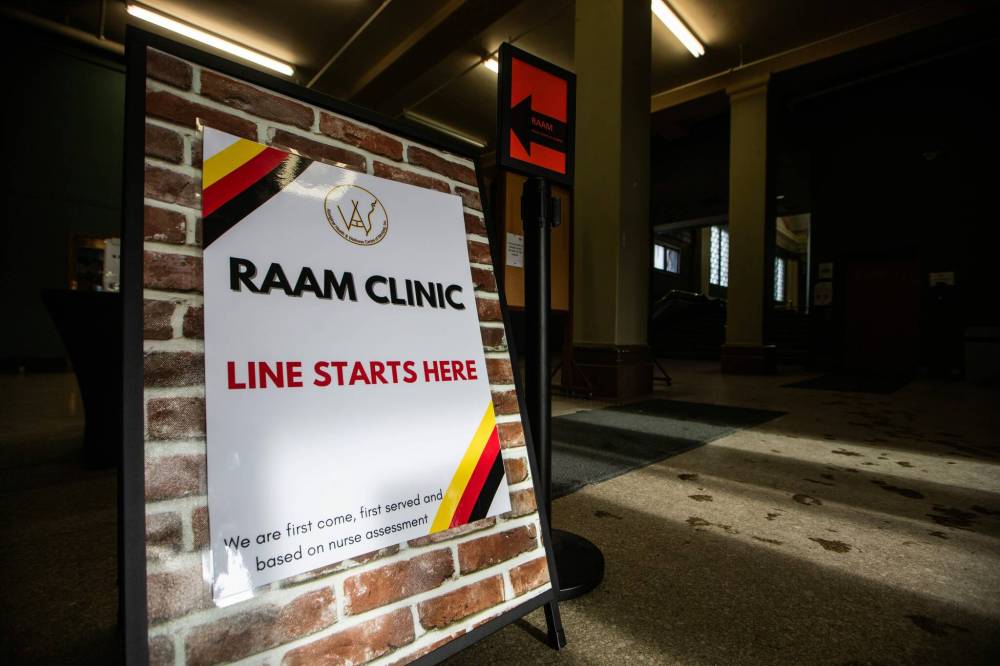
The Higgins Avenue heritage building is home to Manitoba’s first Indigenous-led rapid access to addictions medicine (RAAM) clinic, operated by the Aboriginal Health and Wellness Centre, alongside its primary care office.
Clinic staff, elected officials and community members gathered Tuesday to officially mark the launch of the culturally-informed treatment model, which accepted its first patients Aug. 24.
MIKAELA MACKENZIE / WINNIPEG FREE PRESS
The clinic is Manitoba’s first Indigenous-led rapid access to addictions medicine (RAAM), operated by the Aboriginal Health and Wellness Centre.
“We already know that our operations must expand, we know we want to help more people, we can help more people and we are ready to help people,” said clinical operations lead Monica Cyr.
“While we do not say that we have the blueprint for an Indigenous-led addiction model, we do say that we have a blueprint that is appearing to work based on the feedback from our relatives.”
On Tuesday, Housing and Addictions Minister Bernadette Smith announced the NDP government would provide up to $1 million annually to support the clinic’s operations.
The former Progressive Conservative government announced $893,000 in initial funding in January, with the expectation the clinic could handle up to 2,300 patient visits per year. It is the seventh RAAM clinic to open in Manitoba since 2018.
A walk-in clinic is offered Tuesdays and Thursdays; routine programming, which can include counselling, medication, social service support, and referrals to other treatment providers, is offered five days a week.
“Our government is excited to collaborate with the centre and uplift the work that they are doing and leading here in our community,” Smith said. “The leadership was integral to ensuring the wide range of culturally safe and relevant services and programming is offered to our relatives.”
What sets the Higgins Avenue RAAM site apart from others is the integration of Indigenous voices, cultural practices and relationship-focused care, said Dr. Camisha Mayes, the clinic’s medical lead.
People who use the clinic — staff refer to them as constituents — are greeted by staff in the triage room while they fill out registration forms and wait for a nurse.
They are invited to smudge with cedar or sage, offered harm reduction supplies, and provided with coffee, tea or soup.
MIKAELA MACKENZIE / WINNIPEG FREE PRESS
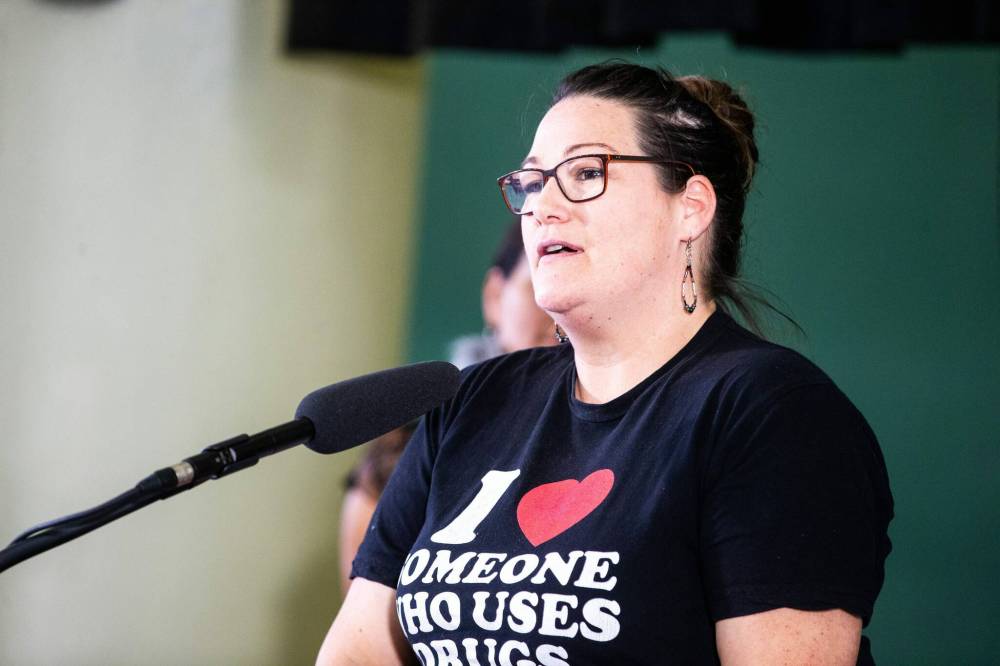
“We already know that our operations must expand, we know we want to help more people, we can help more people and we are ready to help people,” said clinical operations lead Monica Cyr.
Upstairs, the second-floor examination rooms are decorated and furnished with retro dinettes to create a space that feels akin to a family kitchen.
A separate cultural room offers a private, comfortable space for patients to talk with counsellors or to take a break from the clinic area.
Bear prints also line the walls of the clinic as a visual representation of constituents’ courage to seek out health care, explained Charlene Hallett, the cultural integration lead.
Aboriginal Health and Wellness Centre executive director Della Herrera said offering culturally-informed care has had a profound effect on the people coming through the clinic.
Herrera shared a story of a client who was moved to tears after staff in the triage room — at his request — smudged his hair, which was worn in a braid.
“This was the beginning of his experience with us, the experience of what Indigenous-led services looks like,” she said. “In pain, there can be healing and this is what we offer our community.”
The centrally-located RAAM clinic hit capacity not long after opening its doors, site co-ordinator Crystal Cyr said, with demand from the community it serves overwhelming available resources.
Over the past three months, 100 people have come through the walk-in clinic, or about 16 people per week. In that time, upwards of 17 people were turned away and asked to return at another time because capacity was reached.
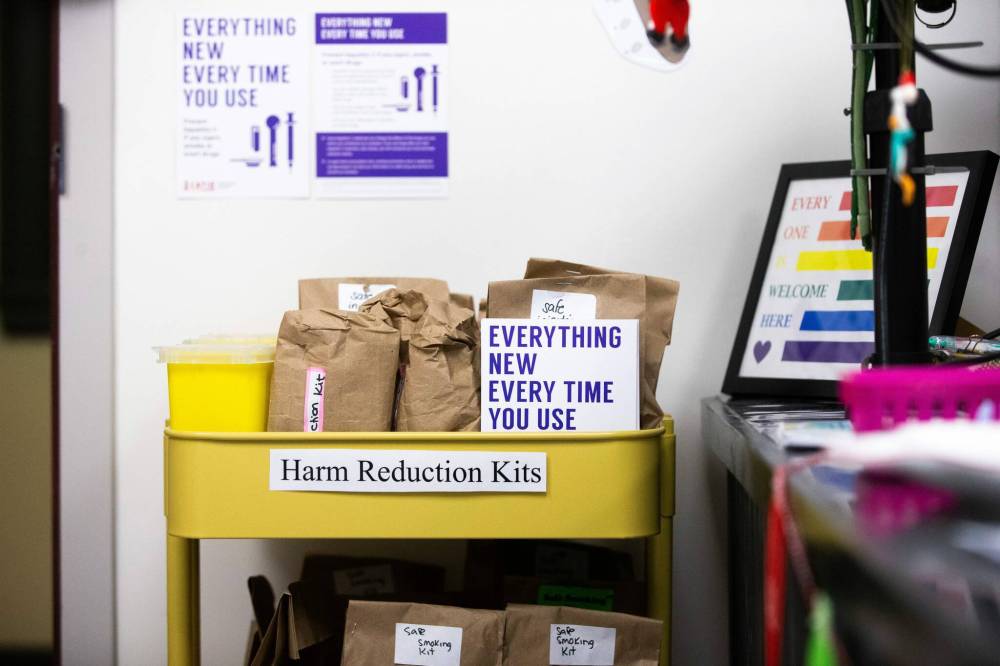
MIKAELA MACKENZIE / WINNIPEG FREE PRESS
People who use the clinic will be invited to smudge with cedar or sage, offered harm reduction supplies and provided with coffee, tea or soup.

“We are often at capacity to treat these individuals, but that said, we are stretching ourselves thin in doing so, more so than we would if we had adequate physician availability,” Crystal Cyr said.
“Day in and day out, we do see more individuals than we did the day before, than we did the week before and we are stretching ourselves thinner and thinner… by trying to minimize the redirect process.”
The centre is slowly rolling out its operations and gradually adding to clinic capacity amid a nationwide health human resources shortage, with plans to add an opiate agonist therapy model next month and mobile outreach in the spring, Monica Cyr said.
“As far as we’re concerned, we’re right on track.”
danielle.dasilva@freepress.mb.ca