Ancient human DNA hints at why multiple sclerosis affects so many northern Europeans today

Advertisement

Advertise with us

WASHINGTON (AP) — Ancient DNA helps explain why northern Europeans have a higher risk of multiple sclerosis than other ancestries: It’s a genetic legacy of horseback-riding cattle herders who swept into the region about 5,000 years ago.

Read this article for free:


or

Already have an account? Log in here »

To continue reading, please subscribe:

Subscribe and receive a limited-edition Free Press branded hat or tote.

Digital Subscription

One year of digital access for only $205*

  • Enjoy unlimited reading on winnipegfreepress.com
  • Read the E-Edition, our digital replica newspaper
  • Access News Break, our award-winning app
  • Play interactive puzzles

*First annual payment billed as $205.00 + GST for one year. This annual subscription will automatically renew at $233.00 + GST every 52 weeks (10% off the regular annual price of $259.35). Offer available to new and qualified returning subscribers only. Cancel any time.

To continue reading, please subscribe:

Add Free Press access to your Brandon Sun subscription for only an additional

$1 for the first 4 weeks*

  • Enjoy unlimited reading on winnipegfreepress.com
  • Read the E-Edition, our digital replica newspaper
  • Access News Break, our award-winning app
  • Play interactive puzzles
Start now

*Your next Brandon Sun subscription payment will increase by $1.00 and you will be charged $17.95 plus GST for four weeks. After four weeks, your payment will increase to $24.95 plus GST every four weeks.

Hey there, time traveller!
This article was published 10/01/2024 (1004 days ago), so information in it may no longer be current.

WASHINGTON (AP) — Ancient DNA helps explain why northern Europeans have a higher risk of multiple sclerosis than other ancestries: It’s a genetic legacy of horseback-riding cattle herders who swept into the region about 5,000 years ago.

The findings come from a huge project to compare modern DNA with that culled from ancient humans’ teeth and bones — allowing scientists to trace both prehistoric migration and disease-linked genes that tagged along.

When a Bronze Age people called the Yamnaya moved from the steppes of what are now Ukraine and Russia into northwestern Europe, they carried gene variants that today are known to increase people’s risk of multiple sclerosis, researchers reported Wednesday.
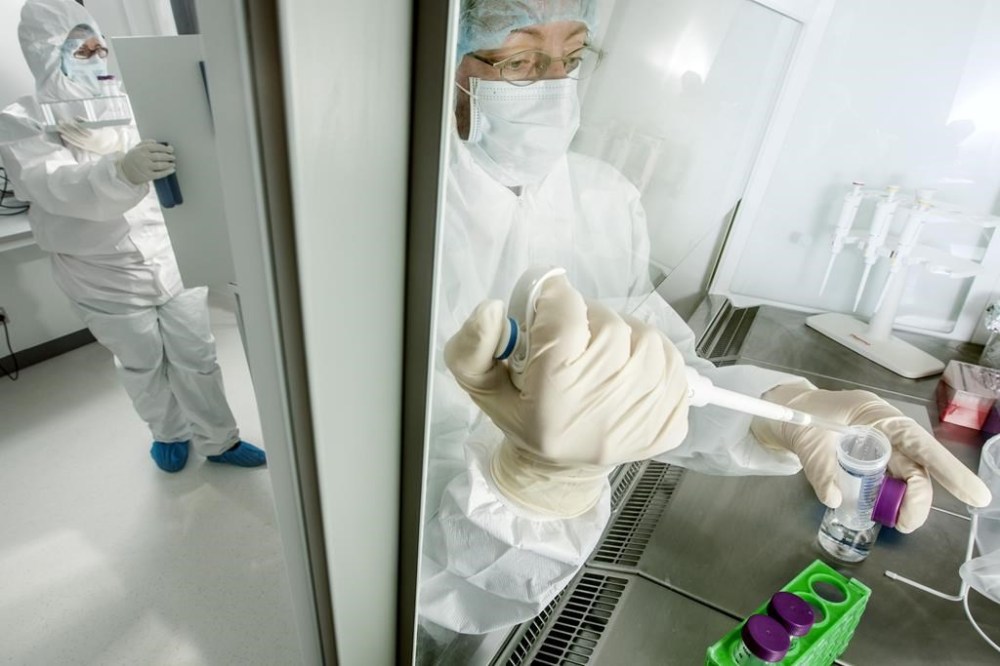
This photo provided by the University of Copenhagen in January 2024 shows the process of ancient DNA extraction at the Lundbeck Foundation GeoGenetics Center in Copenhagen. According to research published Wednesday, Jan. 10, 2024, in the journal Nature, ancient DNA helps explain why northern Europeans have a higher risk of multiple sclerosis than other ancestries: It’s a genetic legacy of horseback-riding cattle herders who swept into the region about 5,000 years ago. (Mikal Schlosser/University of Copenhagen via AP)

Yet the Yamnaya flourished, widely spreading those variants. Those genes probably also protected the nomadic herders from infections carried by their cattle and sheep, concluded the research published in the journal Nature.

“What we found surprised everyone,” said study co-author William Barrie, a genetics researcher at the University of Cambridge. “These variants were giving these people an advantage of some kind.”

It’s one of several findings from a first-of-its-kind gene bank with thousands of samples from early humans in Europe and western Asia, a project headed by Eske Willerslev of Cambridge and the University of Copenhagen who helped pioneer the study of ancient DNA. Similar research has traced even earlier cousins of humans such as Neanderthals.

Using the new gene bank to explore MS was a logical first step. That’s because while MS can strike any population, it is most common among white descendants of northern Europeans and scientists have been unable to explain why.

The potentially disabling disease occurs when immune system cells mistakenly attack the protective coating on nerve fibers, gradually eroding them. It causes varying symptoms — numbness and tingling in one person, impaired walking and vision loss in another — that often wax and wane.

It’s not clear what causes MS although a leading theory is that certain infections could trigger it in people who are genetically susceptible. More than 230 genetic variants have been found that can increase someone’s risk.

The researchers first examined DNA from about 1,600 ancient Eurasians, mapping some major shifts in northern Europe’s population. First, farmers from the Middle East began supplanting hunter-gatherers and then, nearly 5,000 years ago, the Yamnaya began moving in — traveling with horses and wagons as they herded cattle and sheep.

The research team compared the ancient DNA to about 400,000 present-day people stored in a UK gene bank, to see the MS-linked genetic variations persist in the north, the direction the Yamnaya moved, rather than in southern Europe.

In what is now Denmark, the Yamnaya rapidly replaced ancient farmers, making them the closest ancestors of modern Danes, Willerslev said. MS rates are particularly high in Scandinavian countries.

Why would gene variants presumed to have strengthened ancient immunity later play a role in an autoimmune disease? Differences in how modern humans are exposed to animal germs may play a role, knocking the immune system out of balance, said study co-author Dr. Astrid Iversen of Oxford University.

The findings finally offer an explanation for the north-south MS divide in Europe but more work is needed to confirm the link, cautioned genetic expert Samira Asgari of New York’s Mount Sinai School of Medicine, who wasn’t involved with the research, in an accompanying commentary.

___

The Associated Press Health and Science Department receives support from the Howard Hughes Medical Institute’s Science and Educational Media Group. The AP is solely responsible for all content.


Report Error Submit a Tip

More Stories

Nurses disciplined for botched IV infusion

Nicole Buffie 4 minute read Preview

Nurses disciplined for botched IV infusion

Nicole Buffie 4 minute read Updated: Yesterday at 4:36 PM CDT

Two nurses working at the Grace Hospital have been reprimanded and fined $2,500 each for an IV infusion gone bad and an attempted coverup.

The incident happened on November 23, 2023 when a nurse asked a colleague to set up an IV infusion on him in an unused operating room.

During the attempted IV start, the nurse lost consciousness. The nurse who attempted the IV drip and another who was in the room called for help and several staff responded.

The nurse regained consciousness and vomited, but recovered and continued to work his shift, a March 18 decision by the College of Registered Nurses of Manitoba says.

Read
Updated: Yesterday at 4:36 PM CDT

Puzzles Palace

1 minute read Monday, Jul. 27, 2026

To solve our puzzles, please subscribe with this special offer: |

Bombers, Stamps rumble a can’t-miss must-win

Taylor Allen 7 minute read Preview

Bombers, Stamps rumble a can’t-miss must-win

Taylor Allen 7 minute read 6:41 PM CDT

The Winnipeg Blue Bombers, Calgary Stampeders and Saskatchewan Roughriders are playing musical chairs and pretty soon the music is going to stop.

One of them will be left without a seat at the post-season table, and Saturday’s clash between the Bombers (7-8) and Stampeders (8-8) at Princess Auto Stadium (6 p.m.) will go a long way toward determining who that will be.

You’re not going to want to miss this one.

“We’ve shown we can play great, we’ve shown we can play terrible. So, let’s try to play on the great side and really lock in,” said Bombers halfback Evan Holm on the team’s mindset this week.

Read
6:41 PM CDT

Brandon school expansion unveiled

3 minute read Preview

Brandon school expansion unveiled

3 minute read 9:12 PM CDT

The Manitoba government has spent more than $13 million to boost a Brandon school’s capacity by nearly two-thirds.

The expansion of Maryland Park School, which was completed for the start of the school year, adds more than 17,000 square feet of educational space and increases the school’s capacity from about 550 students to 900.

Education Minister Tracy Schmidt joined Brandon East MLA Glen Simard, school division officials, staff and students Friday afternoon for a ribbon-cutting ceremony officially opening the expansion.

“This is a two-storey addition, which includes 13 new classrooms, a new science room, student support spaces and much, much more,” Schmidt said. “This is not only going to give more space for the students that are here today and for the staff, but also so that we can continue to meet the growing needs of this growing, vibrant community.”

Read
9:12 PM CDT

Jets goaltender quickly taking on folk hero status with hot start

Ken Wiebe 7 minute read Preview

Jets goaltender quickly taking on folk hero status with hot start

Ken Wiebe 7 minute read Updated: Yesterday at 10:03 AM CDT

Stuart Skinner is giving the hometown crowd plenty to cheer about.

The Winnipeg Jets new No. 1 netminder came up with another brilliant performance, making 32 saves — including several of the highlight-reel variety — to propel his team to a 3-2 victory over the Colorado Avalanche on Wednesday night at Canada Life Centre.

With each save he makes and each win he records, Skinner is doing what he can to help turn the page on the Connor Hellebuyck era.

“I would say that they are big shoes to fill 100 per cent, but I’m not looking into the scenario of filling his shoes,” said Skinner, who lowered his goals-against average to 2.62 and raised his save percentage to .920 through three starts. “My job’s the same job as any other goalie in this league. So it’s a little bit of a difficult question for me to truly answer.”

Read
Updated: Yesterday at 10:03 AM CDT

Get to know your Jet: Mario Ferraro

Mike McIntyre 8 minute read Preview

Get to know your Jet: Mario Ferraro

Mike McIntyre 8 minute read Yesterday at 5:39 PM CDT

A one-on-one conversation with a Winnipeg Jet about the stuff you don't always hear in the media scrum

Read
Yesterday at 5:39 PM CDT