Some worry California proposition to tackle homelessness would worsen the problem

Advertisement

Advertise with us

OROVILLE, Calif. (AP) — Democratic California Gov. Gavin Newsom is urging voters to approve a ballot initiative that he says is needed to tackle the state's homelessness crisis, a change social providers say would threaten programs that keep people from becoming homeless in the first place.

Read this article for free:


or

Already have an account? Log in here »

To continue reading, please subscribe:

Subscribe and receive a limited-edition Free Press branded hat or tote.

Digital Subscription

One year of digital access for only $205*

  • Enjoy unlimited reading on winnipegfreepress.com
  • Read the E-Edition, our digital replica newspaper
  • Access News Break, our award-winning app
  • Play interactive puzzles

*First annual payment billed as $205.00 + GST for one year. This annual subscription will automatically renew at $233.00 + GST every 52 weeks (10% off the regular annual price of $259.35). Offer available to new and qualified returning subscribers only. Cancel any time.

To continue reading, please subscribe:

Add Free Press access to your Brandon Sun subscription for only an additional

$1 for the first 4 weeks*

  • Enjoy unlimited reading on winnipegfreepress.com
  • Read the E-Edition, our digital replica newspaper
  • Access News Break, our award-winning app
  • Play interactive puzzles
Start now

*Your next Brandon Sun subscription payment will increase by $1.00 and you will be charged $17.95 plus GST for four weeks. After four weeks, your payment will increase to $24.95 plus GST every four weeks.

Hey there, time traveller!
This article was published 13/02/2024 (964 days ago), so information in it may no longer be current.

OROVILLE, Calif. (AP) — Democratic California Gov. Gavin Newsom is urging voters to approve a ballot initiative that he says is needed to tackle the state’s homelessness crisis, a change social providers say would threaten programs that keep people from becoming homeless in the first place.

In 2004, voters approved legislation that imposed a tax on millionaires to finance mental health services, generating $2 billion to $3 billion in revenue each year that has mostly gone to counties to fund mental health programs as they see fit under broad guidelines.

Newsom wants to give the state more control over how that money is spent. Proposition 1, before voters on the March 5 ballot, would require counties to spend 60% of those funds on housing and programs for homeless people with serious mental illnesses or substance abuse problems.
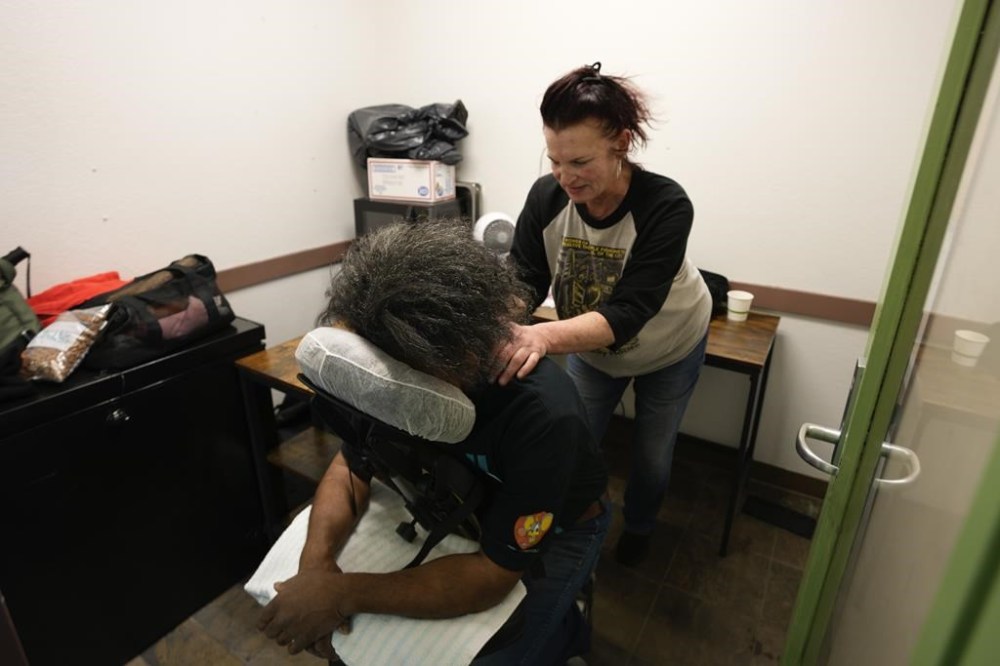
Wayne Foot receives a back and neck massage from masseuse Lisa Whitney at the Hospitality House in San Francisco, Wednesday, Feb. 7, 2024. A measure aimed at transforming how California spends money on mental health will go before voters in March as the state continues to grapple with an unabated homelessness crisis. Hospitality House's programs are among a slew of prevention services that would face significant budget cuts if Proposition 1 passes. (AP Photo/Eric Risberg)

The single formula would mean rural counties such as Butte, with a homeless population of fewer than 1,300 people, would be required to divert the same percentage of funds to housing as urban counties such as San Francisco, which has a homeless population six times bigger. San Francisco Mayor London Breed said she supports the measure. Butte County officials have expressed concerns.

The funding from the millionaire tax in Butte County has mostly gone to prevention services to combat high suicide and childhood trauma rates. Officials estimated they would have to divert at least 28% of current funding from existing programs toward housing. They say the change could cause cultural centers, peer-support programs, vocational services and even programs working with homeless people to lose funding.

Tiffany McCarter burst into tears when talking about how the African American Family & Cultural Center she runs in rural Oroville, a city in Butte County, might have to close its doors. The 14-year-old center with a mission of breaking the cycle of trauma in the Black community relies heavily on mental health funding from the county.

The center offers an after-school program, art and dance classes and anger management sessions — designed to steer young people away from the streets. McCarter said some have learning disabilities or parents who are incarcerated.

“I’d love to solve the homeless problem,” McCarter, the center’s executive director, said as the halls filled with laughter of children who ran around her to win her attention. “But then which one of my kids are we going to leave behind?”

With makeshift tents lining streets and disrupting businesses in communities across the state, homelessness has become one of the most frustrating issues in California and one sure to dog Newsom should he ever mount a national campaign. The Democratic governor has raised about $10 million to back the ballot measure and has appeared in television ads promoting it, indicating it’s one of his top political priorities.

Already he has pushed for laws that make it easier to force people with behavioral health issues into treatment, and he touts the proposition as the final piece of the new approach.

“We are in a unique position to take what we have been promoting — these promises — and make them real, and finally address the issue that defines more stress and more frustrations than any other issue in this state,” Newsom said at the proposition kickoff event.
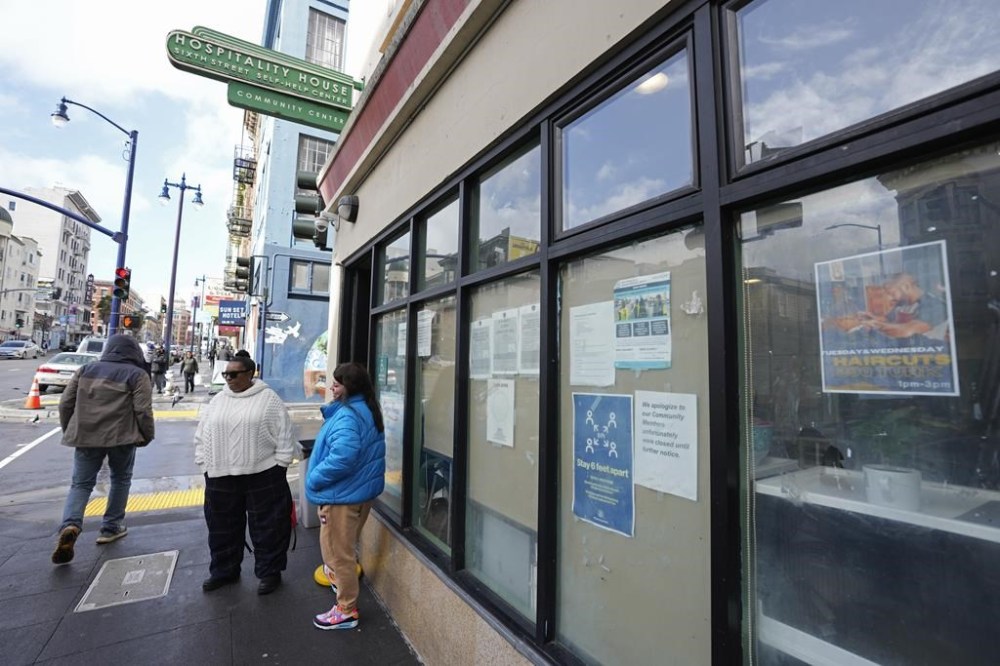
Windy Click, right, director of community engagement, and Cherie Davis, program manager, stand outside the Hospitality House in San Francisco, Wednesday, Feb. 7, 2024. A measure aimed at transforming how California spends money on mental health will go before voters in March as the state continues to grapple with an unabated homelessness crisis. Hospitality House's programs are among a slew of prevention services that would face significant budget cuts if Proposition 1 passes. (AP Photo/Eric Risberg)

Sacramento Mayor Darrell Steinberg, who authored the 2004 millionaire tax, said the funding is meant to serve homeless people with serious mental illnesses and that county officials and providers “miss the big picture.”

“While it has funded many good programs over 20 years, it has gotten away from the original purpose,” Steinberg said. “Nothing is more important than alleviating the unacceptable suffering of people living and dying on our streets.”

The two-part measure would authorize the state to borrow $6.38 billion to build 4,350 housing units, half of which would be reserved for veterans. It also would add 6,800 mental health and addiction treatment beds.

Newsom’s administration already has spent at least $22 billion on various programs to address the crisis, including $3.5 billion to convert rundown motels into homeless housing. California is also giving out $2 billion in grants to build more treatment facilities.

But the crisis is worse than ever, many say.

The state accounts for nearly a third of the homeless population in the United States; roughly 181,000 Californians are in need of housing. A recent survey by the University of California San Francisco’s Benioff Homelessness and Housing Initiative found about two-thirds of homeless people in California have a mental health disorder, but only 18% had received recent treatment and only 6% had received any addiction treatment despite rampant abuse.

The state needs some 8,000 more beds to treat mental health and addiction issues, according to researchers who testified before state lawmakers last year.
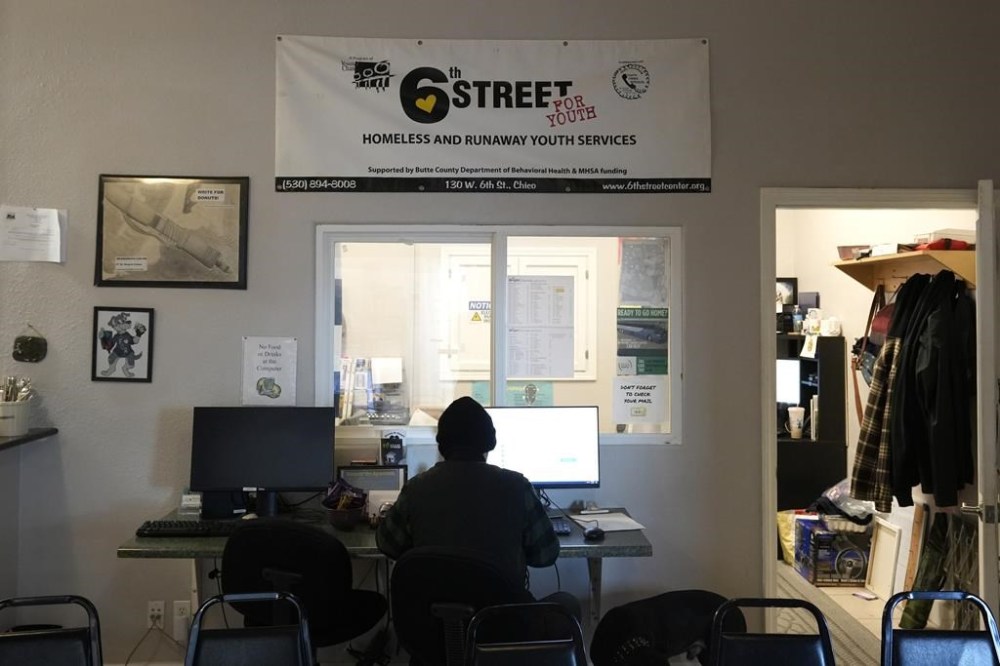
A person works on a computer, one of the many services provided at the 6th Street Center for Youth in Chico, Calif., Feb. 8, 2024. A measure aimed at transforming how California spends money on mental health will go before voters in March as the state continues to grapple an unabated homelessness crisis. Providers say the center is Chico's only drop-in facility for troubled youth that helps provide clothing, meals, and also offers rent assistance to college student Workers at the center do not believe that these services would protect it from funding cuts if Proposition 1 is approved in March. (AP Photo/Rich Pedroncelli)

California has 5,500 beds, down from as many as 37,000 more than a half-century ago, the governor said.

The proposal could also add beds in locked psychiatric facilities, which advocates say could force more people into involuntary treatment. Newsom and state lawmakers haven’t decided what types of facility would be built.

“From a humanitarian and civil rights perspective, we vehemently oppose Proposition 1,” said Mark Salazar, executive director of Mental Health Association of San Francisco, which serves more than 15,000 people monthly. “There are studies that show over and over that coercing treatment just doesn’t end well for the individual.”

Mark Cloutier, CEO of Caminar, which provides mental health services, employment placement and supportive housing to mostly young adults, believes the ballot measure is needed because the lack of housing and treatment beds means many people end up in jail or the emergency room.

Joe Wilson, who runs Hospitality House in San Francisco, said more housing and beds are needed but not at the expense of other programs like his organization’s two drop-in centers in the Tenderloin neighborhood and Sixth Street Corridor. Workers there, most of whom were once homeless, help navigate services for people, update resumes, and drive them to appointments.

“Everyone agrees that we need more resources for housing,” he said. “Is this the best way to do it? We don’t believe so.”

One of the center’s workers, Anthony Hardnett, a San Francisco native who was homeless and suffered from addiction issues, said many people he has helped have become independent and productive by learning new skills and hobbies, like in the chess club he hosts. The group connected more than 30 people to jobs last month.
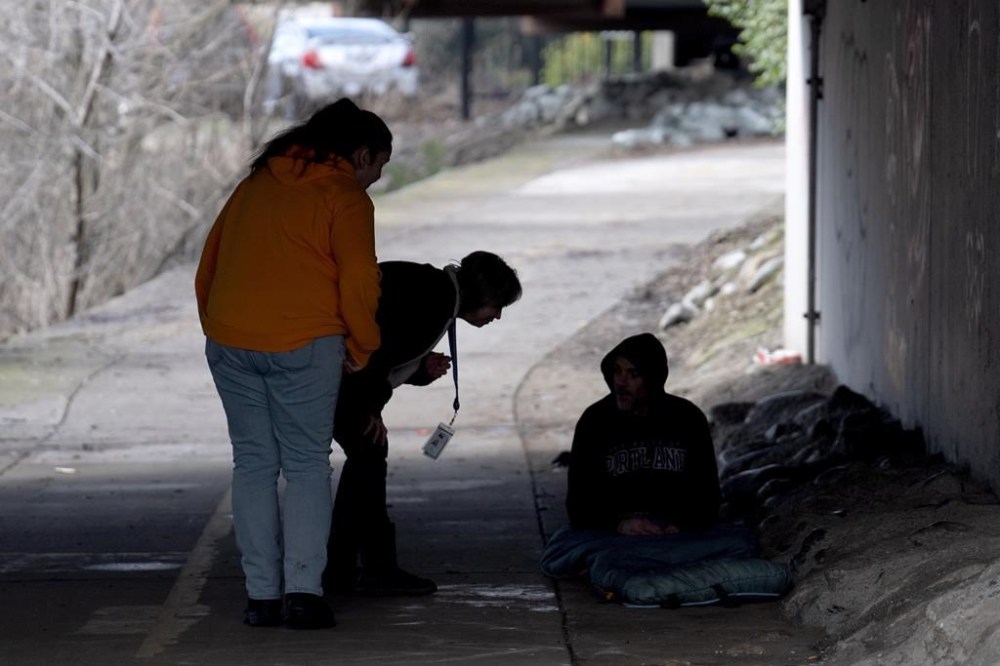
Members of the Resiliency Empowerment Support Team (REST) Letha Croff, left, and Torie Baxter, second from left, talk to a homeless person sleeping under a bridge in Chico, Calif., Feb. 8, 2024. A measure aimed at transforming how California spends money on mental health will go before voters in March as the state continues to grapple an unabated homelessness crisis. The REST Program does daily visits to homeless encampments to get them into treatment or housing. Butte County officials fear the REST program would lose its funding if California voters approve Proposition 1 (AP Photo/Rich Pedroncelli)

“You’ve got to show them something different to change their mindset,” Hardnett said. “We can’t just give up on them.”

In the Butte County city of Chico, about 165 miles (265 kilometers) north of San Francisco, providers say the city’s only drop-in center for troubled youth is at risk. The 6th Street Center for Youth also offers rent assistance to college students, but workers do not believe that would protect it from having its budget cut.

Solace Kalkowski, who uses the pronoun they, found themself sleeping in their truck after a breakup a few weeks ago and said the center kept them from ending up chronically homeless.

“It’s a healthy outlet for me to come where people will listen and give you advice,” Kalkowski said. “I’ve been working on myself and being more productive. … Me having this chance, I’m blown away.”

Report Error Submit a Tip

More Stories

Board game company charts winning path

Aaron Epp 5 minute read Preview

Board game company charts winning path

Aaron Epp 5 minute read Friday, Oct. 2, 2026

Dennis Northcott has launched a game without frontiers.

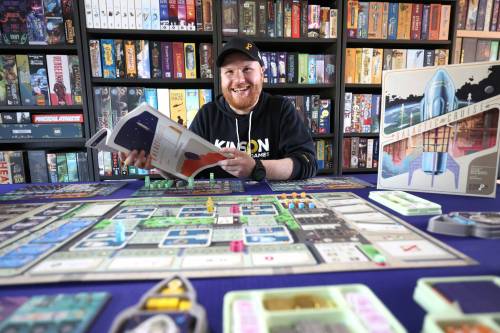
The Winnipeg entrepreneur is the co-designer of Galactic Cruise, a board game published last year by Kinson Key Games LLC, the business he co-founded. Since its release, Galactic Cruise has been translated into 11 languages and sold around 50,000 copies worldwide.

It’s also one of three finalists for this year’s Deutsche Spiele Preis, a prestigious community-voted board game award. Northcott will travel to Essen, Germany, later this month, where the winner will be announced at Spiel Essen, an annual board game trade fair.

“It’s been amazing,” Northcott said of the response to Galactic Cruise during an interview in his Island Lakes neighbourhood home earlier this week. “The sales have been great, but it’s also been amazing in terms of people giving their reviews.”

Read
Friday, Oct. 2, 2026

Living the dream

Ken Wiebe 7 minute read Preview

Living the dream

Ken Wiebe 7 minute read Yesterday at 4:48 PM CDT

DETROIT – As Tyrel Bauer took a left turn out of the tunnel from the Winnipeg Jets dressing room and into the stands, he was met with a hearty round of applause from the 25 friends and family members who had made the trek from various points around North America.

Bauer had just realized a childhood dream and the significance of the moment was not lost on some of his biggest supporters.

“It was a special walk, for sure. A special walk,” Bauer said on Saturday afternoon before the Jets departed for a two-game road trip that begins on Sunday in Detroit against the Red Wings. “Those people who came – and many more that weren’t there and were cheering on from afar – they’ve always been there.

“I wanted that for my family, maybe even more than I wanted it for me. They’ve been through thick and thin. I’ve stressed mom out quite a bit over the years doing my job. That meant a lot for them and I’m really happy they could be there for it.”

Read
Yesterday at 4:48 PM CDT

Volunteer pop-up library axed from Manitoba Youth Centre

Matthew Frank 4 minute read Preview

Volunteer pop-up library axed from Manitoba Youth Centre

Matthew Frank 4 minute read Updated: Yesterday at 11:25 AM CDT

Manitoba Corrections has cancelled a pop-up library program at the Manitoba Youth Centre, leaving inmates without librarian services and fewer options to borrow certain books.

The Prison Libraries Committee, part of the non-profit Manitoba Library Association, operated and funded the volunteer program since 2024 before it was shut down by the province last month. The group previously partnered with the province to offer the service because the facility has no dedicated library of its own.

“It is concerning that community members who are incarcerated, especially youth, are losing out on meaningful programming, access to information and rehabilitation efforts, which are offered at no cost to (Manitoba) Corrections. We urge Manitoba Justice to promote more library services and programming, not less,” said a Sept. 24 letter from the non-profit addressed to the justice minister.

Ashley Huot, chair of the Prison Libraries Committee, said she was puzzled when she received an email last month from Manitoba Corrections stating that the pop-up library was no longer needed.

Read
Updated: Yesterday at 11:25 AM CDT

Mayoral candidate Vogiatzakis criticized for living outside Winnipeg

Malak Abas 4 minute read Preview

Mayoral candidate Vogiatzakis criticized for living outside Winnipeg

Malak Abas 4 minute read Friday, Oct. 2, 2026

A mayoral hopeful took heat from other candidates Friday for living outside Winnipeg while running in the civic election.

Mike Vogiatzakis’s primary residence is in the Rural Municipality of St. Andrews, about 25 kilometres north of Winnipeg — a community with its own mayor and councillors.

But the funeral director said he owns a home in Winnipeg where he divides his time, and he would move to the city full-time if elected mayor.

“It doesn’t matter where a person lives. Why are we dividing St. Andrews and Manitoba and Winnipeg? I’ve met the criteria to run for mayor,” Vogiatzakis said Friday morning.

Read
Friday, Oct. 2, 2026

Moving drama at MTYP gives voice to boy who changed law

Holly Harris 5 minute read Preview

Moving drama at MTYP gives voice to boy who changed law

Holly Harris 5 minute read Yesterday at 2:37 PM CDT

The heroic true tale of Norway House Cree Nation-born Jordan River Anderson came home Friday night, as Manitoba Theatre for Young People presented Yvette Nolan’s Jordan.

The touring production, a collaboration with Geordie Theatre, runs weekends through Oct. 11, with additional stops in Toronto, Vancouver and Ottawa’s National Arts Centre.

Having several of Anderson’s family members witness the local première underscored the evening with poignancy. Elder and Pine Creek First Nation member Barbara Nepinak added her own dignified presence and prayers following MTYP artistic director Pablo Felices-Luna’s welcoming remarks.

The season-opener also marks the Winnipeg-raised playwright’s homecoming; the Algonquin playwright, director, dramaturg, actor and educator was a fixture in our local theatre community for many years before going on to serve as artistic director for Native Earth Performing Arts from 2003 to ‘11, among other contributions.

Read
Yesterday at 2:37 PM CDT

Khan should’ve taken high road: Goertzen

Carol Sanders 5 minute read Preview

Khan should’ve taken high road: Goertzen

Carol Sanders 5 minute read Friday, Oct. 2, 2026

The veteran Progressive Conservative who championed Obby Khan’s leadership bid says the former Blue Bomber dropped the ball by dissing his Tory teammates before he stepped down.

“I wouldn’t recommend it, and I didn’t recommend it,” Kelvin Goertzen (Steinbach) said in an interview Friday.

Khan resigned as PC leader and quit the caucus Monday saying some members were secretly plotting his ouster, even after he won a confidence vote on Sept. 25.

On Tuesday, Khan lashed out in a CJOB interview, naming the alleged plotters, saying constituents deserved to know which of their elected representatives “lacked moral integrity.” Khan told the Free Press he was “deeply emotionally hurt,” and felt stabbed in the back.

Read
Friday, Oct. 2, 2026