Things to know about California’s Proposition 1
Advertisement
Read this article for free:
or
Already have an account? Log in here »
To continue reading, please subscribe:

Digital Subscription
One year of digital access for only $205*
- Enjoy unlimited reading on winnipegfreepress.com
- Read the E-Edition, our digital replica newspaper
- Access News Break, our award-winning app
- Play interactive puzzles
*First annual payment billed as $205.00 + GST for one year. This annual subscription will automatically renew at $233.00 + GST every 52 weeks (10% off the regular annual price of $259.35). Offer available to new and qualified returning subscribers only. Cancel any time.
To continue reading, please subscribe:
Add Free Press access to your Brandon Sun subscription for only an additional
$1 for the first 4 weeks*
- Enjoy unlimited reading on winnipegfreepress.com
- Read the E-Edition, our digital replica newspaper
- Access News Break, our award-winning app
- Play interactive puzzles
*Your next Brandon Sun subscription payment will increase by $1.00 and you will be charged $17.95 plus GST for four weeks. After four weeks, your payment will increase to $24.95 plus GST every four weeks.
Read unlimited articles for free today:
or
Already have an account? Log in here »
Hey there, time traveller!
This article was published 14/02/2024 (961 days ago), so information in it may no longer be current.
SACRAMENTO, Calif. (AP) — California voters this March will decide on a statewide ballot measure that Democratic Gov. Gavin Newsom said would transform the outdated mental health system and address the ongoing homelessness crisis.
Proposition 1, the only statewide initiative on the March 5 ballot, is also one of the most complicated and lengthy measures in recent years. It takes up 68 pages of the 112-page voter information guide.
At the center of the proposition is the question of how counties could use funding that comes from a voter-approved tax on millionaires in 2004. Revenue from the tax, now between $2 billion and $3 billion a year, has mostly gone to counties to fund mental health services as they see fit under broad guidelines. It provides about one-third of the state’s total mental health budget.
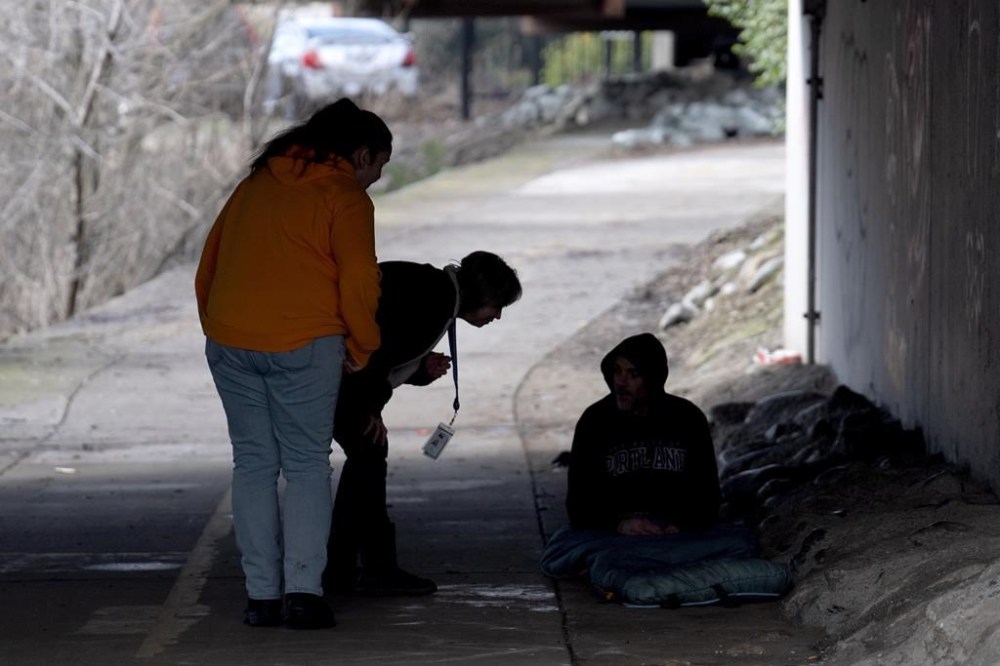
The ballot measure would give the state more power over how it’s spent. It also would allow the state to borrow $6.38 billion to build 4,350 housing units, half of which would be reserved for veterans, and add 6,800 mental health and addiction treatment beds.
Here’s a closer look at the details:
How is the money used now?
Under the current model, of the money going directly to the counties, 76% of the it funds mental health treatments, housing, outreach and crisis programs for people with mental health issues; 19% goes to prevention and intervention programs such as cultural centers and school-based mental health counseling; and 5% goes to innovative projects to increase treatment access.
The state keeps 5% of the tax revenues for administration costs.
How would it change under Proposition 1?
The state would more clearly specify how the money would be spent, with a greater focus on people with serious mental health disorders such as schizophrenia and major depression or substance use issues like excessive drug use or alcohol consumption. About a third would go toward housing and rental assistance for homeless people with serious mental health or addiction problems and 35% would go to mental health treatments and support for that population. Of the remaining roughly 35%, at least half would go to prevention services for youth and the rest would fund all other programs including workforce training, innovation projects and prevention services for adults.
Counties could shift up to 14% of funding between the categories, pending the state’s approval. The state would keep 10% for administration and other initiatives.
What programs would be boosted?
Transitional and permanent housing for chronically homeless people with serious mental health or addiction issues would see more money. Mental health treatment programs and support services such as rental assistance and vocational programs for this population also would see a boost.
What programs are at risk?
County officials can’t say which programs would face the biggest budget hit, but they anticipate some outreach services, homeless drop-in centers, and wellness programs run by peer-support groups would be impacted.
In Butte County, where officials would have to carve at least 28% of funding from existing programs toward housing, even the homeless outreach team that goes out to encampments to get people to sign up for housing and treatment is at risk of budget cuts. The program started more than a year ago and is funded with the mental health innovation money.
Diverting funding from services to housing also would mean less federal matching money, Butte County Behavioral Health Director Scott Kennelly said.
Who supports the proposition?

Newsom has taken the lead in boosting the proposition, fundraising more than $10 million and appearing in television ads to promote the plan.
He also has the support of law enforcement, firefighters, the state’s hospital association, the National Alliance on Mental Illness California and a slew of big city mayors.
Who opposes it?
Opponents of the proposition include mental health and disability rights groups, the Howard Jarvis Taxpayers Association and the League of Women Voters of California.
Several county officials have also expressed concerns with the measure. They worry that the change would threaten programs that keep people from becoming homeless in the first place.