

B.C. announces minimum nurse-to-patient ratios, $237M to recruit and retain staff
Advertisement
Read this article for free:
or
Already have an account? Log in here »
To continue reading, please subscribe:
Monthly Digital Subscription
$0 for the first 4 weeks*
- Enjoy unlimited reading on winnipegfreepress.com
- Read the E-Edition, our digital replica newspaper
- Access News Break, our award-winning app
- Play interactive puzzles
*No charge for 4 weeks then price increases to the regular rate of $19.00 plus GST every four weeks. Offer available to new and qualified returning subscribers only. Cancel any time.
Monthly Digital Subscription
$4.75/week*
- Enjoy unlimited reading on winnipegfreepress.com
- Read the E-Edition, our digital replica newspaper
- Access News Break, our award-winning app
- Play interactive puzzles
*Billed as $19 plus GST every four weeks. Cancel any time.
To continue reading, please subscribe:
Add Free Press access to your Brandon Sun subscription for only an additional
$1 for the first 4 weeks*
*Your next subscription payment will increase by $1.00 and you will be charged $16.99 plus GST for four weeks. After four weeks, your payment will increase to $23.99 plus GST every four weeks.
Read unlimited articles for free today:
or
Already have an account? Log in here »
Hey there, time traveller!
This article was published 01/03/2024 (644 days ago), so information in it may no longer be current.
VANCOUVER – British Columbia has established minimum nurse-to-patient ratios for a range of different hospital settings and is investing $237 million to ensure they are met.
They include a minimum of one nurse for every four patients in adult medical and surgical units, 24 hours a day, seven days a week.
Provincial Health Minister Adrian Dix says the nursing ratios will be a first for Canada, and no other jurisdiction in the world has a minimum ratio that applies at all times.
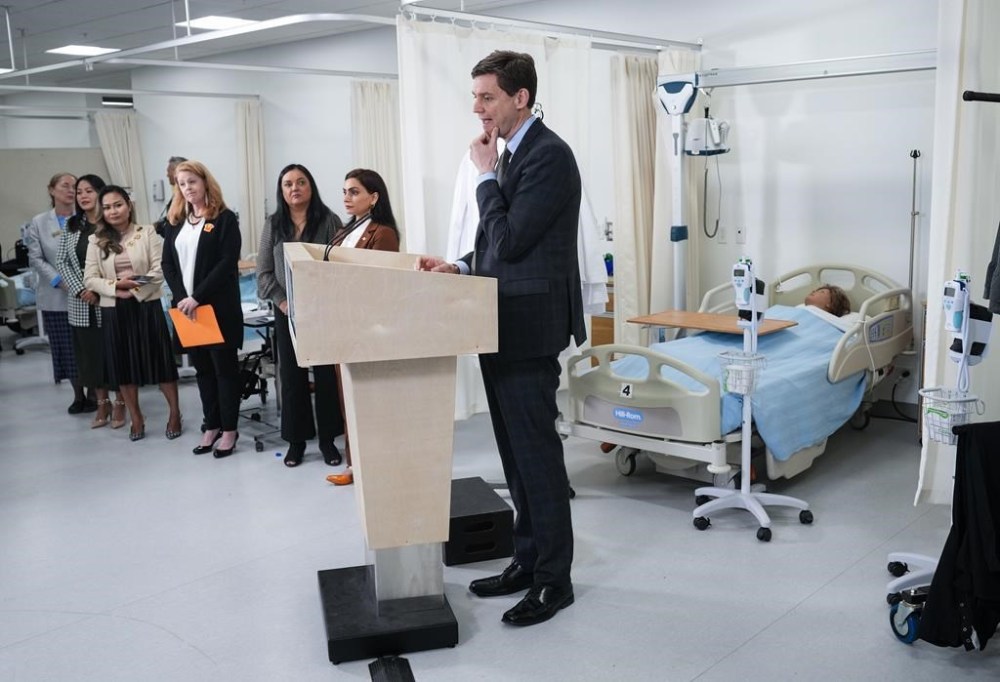
Dix says the province worked with the BC Nurses’ Union to establish the six ratios, which also include one nurse for every two patients in high-acuity units, and a one-to-one ratio in both adult and child intensive care units.
He says the province is working with the nurses’ union to establish more minimum ratios in other areas that will be announced in June.
The minister says work to implement the ratios will begin immediately, and the $237 million in funding will be used to recruit and retain nurses, as well as rehire those who have left the sector.
The funding includes almost $170 million in one-time funding to expand retention incentives in rural areas and signing bonuses for hard-to-fill urban nursing vacancies.
About $68 million will also be spent for training and licensing of nurses who were trained internationally.
Dix says guaranteeing minimum nurse-to-patient ratios has been shown to improve care and reduce burnout among nurses facing an ever-increasing workload.
Palliative units will have to maintain one nurse for every three patients, while rehabilitation units will have a one-to-five ratio during daytime and evening shifts, and a one-to-seven ratio on night shifts.
Dix says B.C. has led Canada “in just about every category” in the recruitment of nurses, but ongoing demand due to rising population and multiple health emergencies has placed persistent pressure on health care across the province.
“We’ve got to take action to make sure that this is the best place in the world to be a nurse,” Dix says. “That’s our joint commitment, and that’s what this announcement is about today.
“It is not enough to be better than Alberta or better than Manitoba. What is important is making things better for patients and for nurses in every workplace in British Columbia.”

BC Nurses’ Union president Adriane Gear called the announcement of the ratios “historic” and a “milestone.”
“The implementation of ratios in hospitals, long-term care and community settings will be a game-changer for how patient care is delivered and received,” Gear says.
In a statement by the Hospital Employees’ Union, spokeswoman Meena Brisard says the province should extend the rural incentives and staffing model to other members of B.C.’s health-care system.
“Only by expanding these investments in improving working and caring conditions across health care can we better ensure all British Columbians have access to high quality care in the future,” Brisard says.
This report by The Canadian Press was first published March 1, 2024.