Two of B.C.’s overdose prevention programs have ‘significant deficiencies’: auditor
Advertisement
Read this article for free:
or
Already have an account? Log in here »
To continue reading, please subscribe:

Digital Subscription
One year of digital access for only $205*
- Enjoy unlimited reading on winnipegfreepress.com
- Read the E-Edition, our digital replica newspaper
- Access News Break, our award-winning app
- Play interactive puzzles
*First annual payment billed as $205.00 + GST for one year. This annual subscription will automatically renew at $233.00 + GST every 52 weeks (10% off the regular annual price of $259.35). Offer available to new and qualified returning subscribers only. Cancel any time.
To continue reading, please subscribe:
Add Free Press access to your Brandon Sun subscription for only an additional
$1 for the first 4 weeks*
- Enjoy unlimited reading on winnipegfreepress.com
- Read the E-Edition, our digital replica newspaper
- Access News Break, our award-winning app
- Play interactive puzzles
*Your next Brandon Sun subscription payment will increase by $1.00 and you will be charged $17.95 plus GST for four weeks. After four weeks, your payment will increase to $24.95 plus GST every four weeks.
Read unlimited articles for free today:
or
Already have an account? Log in here »
Hey there, time traveller!
This article was published 19/03/2024 (886 days ago), so information in it may no longer be current.
VICTORIA – Nearly eight years after British Columbia declared a public-health emergency because of escalating overdoses, it still hasn’t set a standard of care for those struggling with addiction, the auditor general says.
“Minimum level standards are at the core of consistent service quality, access and availability across the province and these should be well established by now,” Michael Pickup told a news conference Tuesday.
The B.C. government and public health officer announced the emergency in April 2016 and since then more than 14,000 people have died, most of them from highly potent opioid fentanyl.
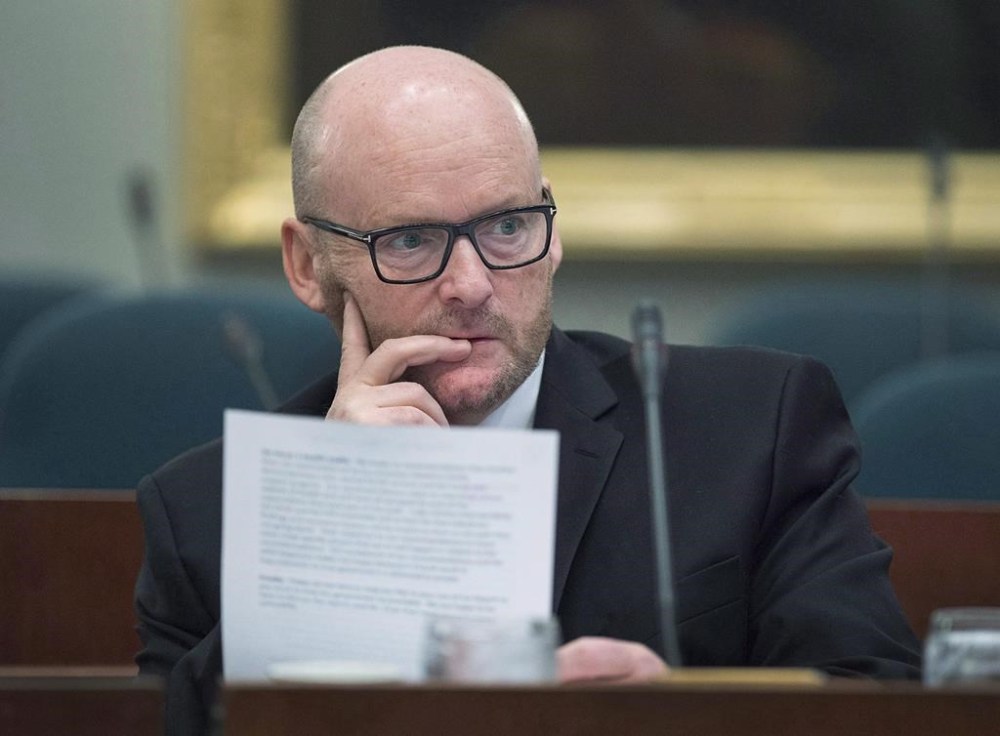
Pickup called for a new provincewide evaluation of overdose prevention and supervised consumption services, saying the last one was done in 2021 and the illicit drug supply has changed since then.
His office released two independent audits Tuesday on the government’s supervised consumption services and the first phase of the prescribed safer-supply program.
“A prominent theme runs through both of these audits, and that is that the Ministry of Mental Health and Addictions and Ministry of Health have not effectively addressed the many challenges and barriers facing each program,” he told the news conference.
The audit found the ministries’ guidance didn’t include minimum service standards that ensured consistent quality and access of services, that it did not adequately respond to barriers such as local government resistance, and that a new program evaluation was needed as the health emergency evolved.
Pickup’s audit of safer supply found the ministries didn’t make “significant progress” in tackling its “most challenging barriers,” such as rural access to the program, health-care providers’ hesitancy about prescribing the drugs and whether the drugs being offered were appropriate.
The auditor said the deficiencies have impacts on the people who need the services, their families and the health-care system.
“Many thousands of people in B.C. are grieving the losses of family and friends from the toxic-drug supply,” Pickup said in a news release. “The crisis is also an immense challenge for those working to provide care and support for people who use substances. My team and I have a deep sense of empathy for everyone who has been touched by this continuing tragedy.”
The reports said both ministries have accepted all seven recommendations, including improving minimum service standards, increasing public reporting on the programs and addressing a lack of doctors who prescribe safer-supply drugs.
The B.C. government has since rebranded the safer-supply program as “prescribed alternatives.”
Addictions Minister Jennifer Whiteside declined an interview in reaction to the report, but said in a statement that the government is building a continuum of care “that includes prevention, harm reduction, treatment and recovery.”
“While we have rapidly expanded access to overdose prevention sites as a critical tool to keep people alive, we acknowledge there are some persistent barriers impacting implementation and service standards,” she said in the statement.
“In the same way, while monitoring is in place for our prescribed alternatives program, we continue to work directly with prescribers to support implementation.”
She said the ministry is already working to address many of the items cited in Pickup’s reports.
At an unrelated news conference on Tuesday, Premier David Eby acknowledged the reports’ findings of barriers to accessing those prevention services, especially in remote parts of B.C.
“There are big challenges for us in delivering rural health care, period, and including in the areas where people are struggling with addiction at risk of overdose,” he said. “It’s important to note (Pickup’s) not saying stop the program, he’s not saying the program doesn’t work, he says he wants more of it in every part of the province. This is a challenge for us.”
The auditor’s report said overdose-prevention and safe-consumption sites provide safer environments for people to use drugs under the supervision of a health-care professional or harm-reduction worker to monitor for signs of drug toxicity.
It found the ministries did not ensure provincewide implementation of those services and said the ministry was “out of step with changes to the toxic drug supply.”
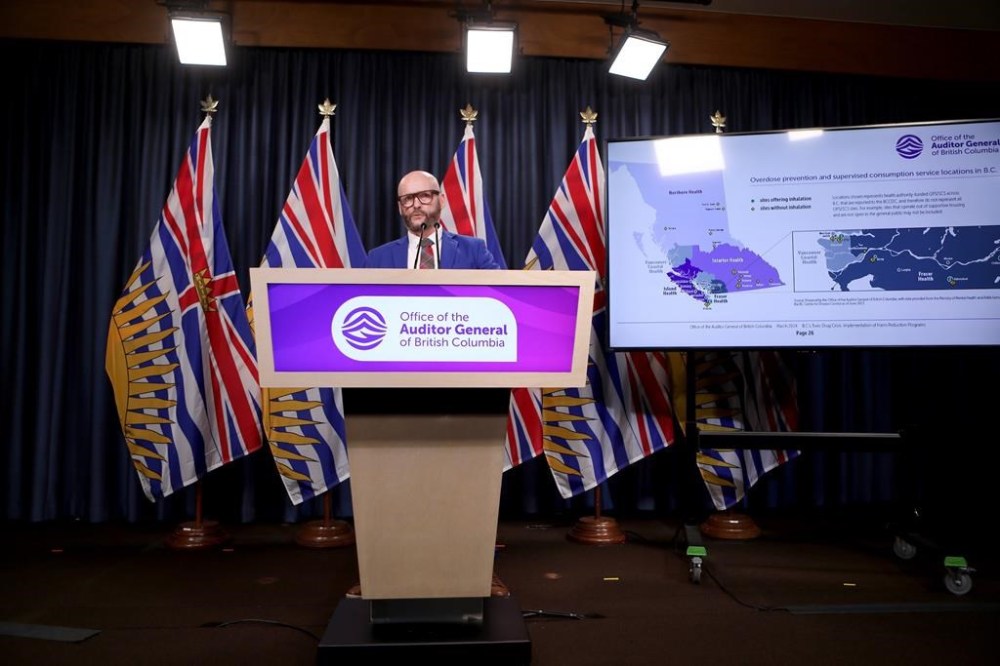
The report says overdose prevention and supervised consumption services are critical to saving lives and connecting people to the supports they need, but it cited municipal resistance, location and accessibility of the sites and human resources as roadblocks to implementation across the province.
The safer-supply prescription program, the report says, is meant to generate evidence, and evaluating that evidence will be “crucial to the program’s continuation.”
Pickup found that assessing the program’s success will require “high-quality evaluation data” because some clinicians are still skeptical due to lack of evidence and the program’s “politicization.”
He said collaboration and communication between ministries and its health partners, as well as its public reporting, is insufficient.
“This is a novel program that required transparency with key partners to build trust,” he said of the safer-supply program. “However, we also found weaknesses in the transparency and communication.”
The program has generated criticism since its implementation, including from federal Conservative Leader Pierre Poilievre and Alberta Premier Danielle Smith, who both claimed that drugs from the program were being diverted into the rest of Canada.
The audit says the most common drug offered, hydromorphone, isn’t strong enough for fentanyl users and substances aren’t given out in “smokable form.”
Pickup told the news conference B.C.’s addictions ministry had “developed an enhanced monitoring plan on diversion.”
“However, they have not publicly reported that this work is underway,” he said.

The report says some service providers are “hesitant” about giving out prescriptions because of stigma and concerns over the drugs being diverted to the illegal market.
People accessing the safe-supply program, the audit says, also face restrictions about getting the drugs because they have to visit a pharmacy each day, and those in rural areas may lack access to “services required to safely and reliably access prescribed safer supply.”
The audit says anti-Indigenous racism and stigma against drug users are also factors, making access more difficult for those in need and limiting the number of health-care providers willing to dole out the drugs.
By Brieanna Charlebois and Darryl Greer in Vancouver
This report by The Canadian Press was first published March 19, 2024.