Tech platforms face ‘whack-a-mole’ situation in battling health misinformation
Advertisement
Read this article for free:
or
Already have an account? Log in here »
To continue reading, please subscribe:

Digital Subscription
One year of digital access for only $205*
- Enjoy unlimited reading on winnipegfreepress.com
- Read the E-Edition, our digital replica newspaper
- Access News Break, our award-winning app
- Play interactive puzzles
*First annual payment billed as $205.00 + GST for one year. This annual subscription will automatically renew at $233.00 + GST every 52 weeks (10% off the regular annual price of $259.35). Offer available to new and qualified returning subscribers only. Cancel any time.
To continue reading, please subscribe:
Add Free Press access to your Brandon Sun subscription for only an additional
$1 for the first 4 weeks*
- Enjoy unlimited reading on winnipegfreepress.com
- Read the E-Edition, our digital replica newspaper
- Access News Break, our award-winning app
- Play interactive puzzles
*Your next Brandon Sun subscription payment will increase by $1.00 and you will be charged $17.95 plus GST for four weeks. After four weeks, your payment will increase to $24.95 plus GST every four weeks.
Read unlimited articles for free today:
or
Already have an account? Log in here »
Hey there, time traveller!
This article was published 22/03/2024 (927 days ago), so information in it may no longer be current.
TORONTO – When Dr. Garth Graham thinks about health misinformation on social media platforms, he envisions a garden.
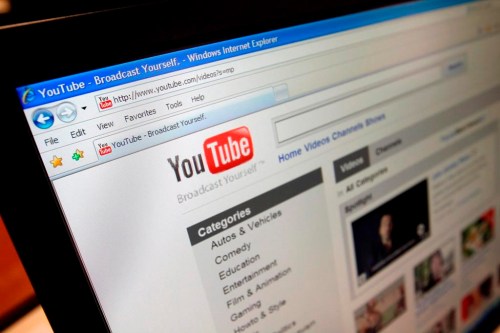
No matter how bountiful or verdant that garden is, even the head of YouTube’s global health division admits it’s often in need of tending.
“How do you weed and pull out the bad information?” he questioned.
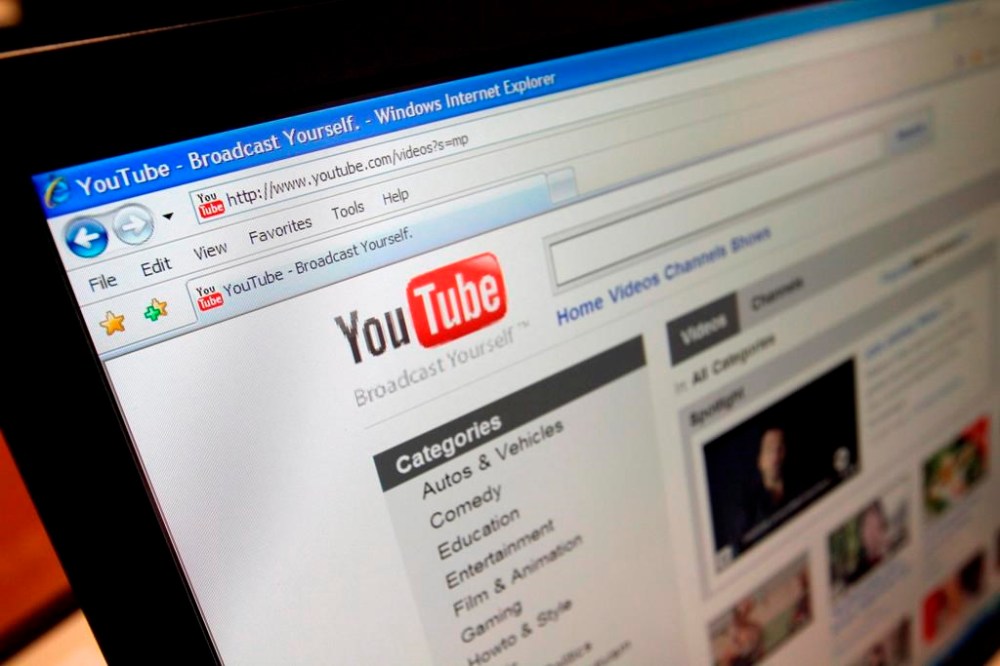
“But also…how do you plant the seeds and make sure people have access to good information as well as high quality information?”
For social media companies, these have become perennial questions that have only grown in importance as the number of platforms multiplied and people began spending increasing amounts of time online.
Now, it’s not uncommon to spot misinformation with almost every scroll.
A 2022 paper published in the Bulletin of the World Health Organization reviewed 31 studies examining how prevalent misinformation is. The analysis found misinformation in up to 51 per cent of social media posts associated with vaccines, up to 28.8 per cent of content associated with COVID-19, and up to 60 per cent of posts related to pandemics.
An estimated 20 to 30 per cent of YouTube videos about emerging infectious diseases were also found to contain inaccurate or misleading information.
The consequences can be harmful, if not deadly.
Research the Council of Canadian Academies released in 2023 said COVID-19 misinformation alone contributed to more than 2,800 Canadian deaths and at least $300 million in hospital and ICU visits.
Platforms take the risks seriously, Graham said in an interview. “We are always concerned about anything that may produce harm.”
That concern often leads platforms to remove anything violating their content policies.
YouTube, for example, has banned content denying the existence of some medical conditions or contradicting health authority guidance on prevention and treatment.
Examples embedded in its medical misinformation policy show the company removes posts promoting turpentine, gasoline and kerosene as a treatment for certain conditions because these substances cause death. Ivermectin, used to treat parasitic worms in animals and humans, and hydroxychloroquine, a malaria drug, are also barred from being promoted as COVID-19 cures.
When it comes to vaccines, YouTube bans videos alleging immunizations cause cancer or paralysis.
Facebook and Instagram parent company Meta Platforms Inc. refused to comment for this story and TikTok did not respond to a request for comment, but in broad strokes, these companies have similar policies to YouTube.
Yet Timothy Caulfield, a University of Alberta professor focused on health law and policy, still spots medical misinformation on platforms. He recently asked his students to search for stem cell content and several posts spreading unproven therapies came up easily.
Still, he sympathizes with some of the challenges tech companies face because he sees conquering health misinformation as a game of “whack-a-mole.”
He says there’s a nimbleness to spreaders of misinformation, who are often motivated to keep finding ways to circumvent removal policies because their posts can boost profits and brands or spread an ideology.
“They can work around the moderation strategies, but that just shows how we’re not going to fix this with one tool,” Caulfield said.
“This is going to be an on ongoing battle.”
In its misinformation policy posted on its website, Meta acknowledges the difficulties, saying “what is true one minute may not be true the next minute.”
“People also have different levels of information about the world around them and may believe something is true when it is not,” the policy says.
In an attempt to keep up with everything, Meta relies on independent experts to assess how true content is and whether it is likely to directly contribute imminent harm before it is removed. Third-party fact checking organizations are also contracted to review and rate the accuracy of its most viral content.
At YouTube, workers, including some who form an “intelligence desk” monitoring posts and news to detect trends that might need to be mitigated, are used along with machine learning programs, which the company says are well suited to detecting patterns in misinformation.
Some responsibility is also put on credible health-care practitioners and institutions, whose content platforms highlight recommendations to make it easier for users to find trustworthy information.
YouTube, for example, has partnered with organizations including the University Health Network and the Centre for Addiction and Mental Health in Toronto.
CAMH runs a YouTube channel where medical professionals explain everything from schizophrenia to eating disorders. Production funding came from YouTube, but the institution’s resources were used for script writing and clinical review, CAMH spokeswoman Hayley Clark said in an email.
Graham sees it as a good example of the health-care profession “meeting people where they are,” which he said is “how we battle misinformation.”
“(Credible information) has to be in the palm of people’s hands so that they can have dinner conversations, so when they’re sitting down in their couch that they’re empowered,” he said.
But when it comes to other organizations and doctors, “we can’t assume that all of them have the capacity to do this,” said Heidi Tworek, an associate professor at the University of British Columbia, whose research focuses on the effects of new media technologies.
These organizations want to get credible information out, but in the cash-strapped and time-lacking health-care industry, there’s always another patient to help.
“Some health-care institutions would say, ‘OK, we’ve got X amount of money, we’ve got to choose what we spend it on. Maybe we want to spend it on something other than communications,'” Tworek said.
In some instances, doctors are also “doing it off the side of their desk…because they think it is valuable,” but that subjects them to new risks like online attacks and sometimes even death threats.
“Some people don’t want to enter those spaces at all because they see what happens to others,” she said.
To better combat medical misinformation, she would like platforms to act more responsibly because she often notices their algorithms push problematic content to the top of social media timelines.
However, she and Caulfield agree health misinformation needs an all-hands-on-deck approach.
“The platforms bear a lot of responsibility. They’re becoming like utilities and we know the impact that they have on public discourse, on polarization,” Caulfield said.
“But we also need to teach critical thinking skills.”
That could begin at school, where students could learn how to identify credible sources and detect when something could be incorrect — lessons he’s heard Finland begins in kindergarten.
No matter when or how that education takes place, he said the bottom line is “we need to give citizens the tools to discern what’s misinformation.”
This report by The Canadian Press was first published March 22, 2024.