Scientists, clinicians across Canada preparing for future pandemic threats
Advertisement
Read this article for free:
or
Already have an account? Log in here »
To continue reading, please subscribe:

Digital Subscription
One year of digital access for only $205*
- Enjoy unlimited reading on winnipegfreepress.com
- Read the E-Edition, our digital replica newspaper
- Access News Break, our award-winning app
- Play interactive puzzles
*First annual payment billed as $205.00 + GST for one year. This annual subscription will automatically renew at $233.00 + GST every 52 weeks (10% off the regular annual price of $259.35). Offer available to new and qualified returning subscribers only. Cancel any time.
To continue reading, please subscribe:
Add Free Press access to your Brandon Sun subscription for only an additional
$1 for the first 4 weeks*
- Enjoy unlimited reading on winnipegfreepress.com
- Read the E-Edition, our digital replica newspaper
- Access News Break, our award-winning app
- Play interactive puzzles
*Your next Brandon Sun subscription payment will increase by $1.00 and you will be charged $17.95 plus GST for four weeks. After four weeks, your payment will increase to $24.95 plus GST every four weeks.
Read unlimited articles for free today:
or
Already have an account? Log in here »
Hey there, time traveller!
This article was published 06/05/2024 (888 days ago), so information in it may no longer be current.
Nearly $574 million will be doled out to researchers across the country for projects aimed at ramping up Canada’s preparedness for future health emergencies, including the next pandemic, the federal government announced on Monday.
One of the 19 projects is a national network of existing emergency departments and primary-care clinics, called Prepared, that will screen for any new viruses or pathogens that start to appear in patients.
“As a public health specialist and as a practising physician, I would very much anticipate there being another respiratory pandemic in the future. The challenge is we don’t know when it will be or what it will be,” said Dr. Andrew Pinto, Prepared project lead and a family physician at St. Michael’s Hospital in Toronto.
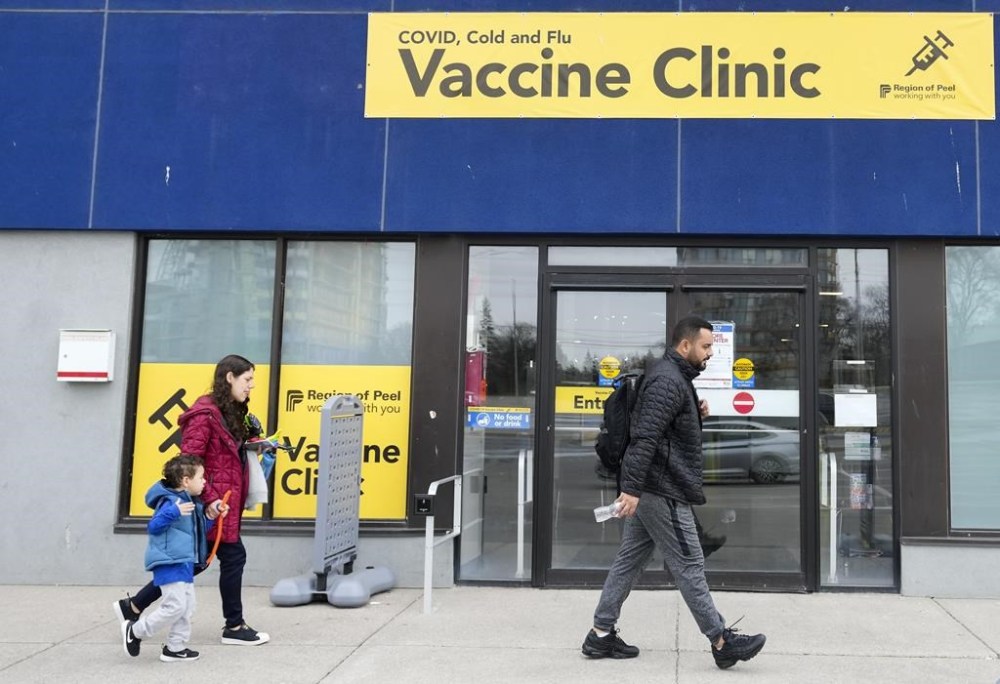
“We should think of this like a protective shield that’s helping detect things early. Far earlier than during COVID,” Pinto said in an interview.
Researchers in British Columbia, Alberta, Manitoba, Ontario, Quebec and Newfoundland and Labrador have signed onto the project, he said, noting he hopes it will expand to include all provinces and territories.
The Prepared network, which received $18.9 million of the federal funding, will also bring in biotechnology companies that make rapid tests, drugs and therapeutics and vaccines, Pinto said, so they can quickly respond if there is early detection of a new virus or other pathogen of concern.
“(We want) to minimize the effect on people … by having detection early and, you know, containment early and really ramping up how quickly people have diagnostics and vaccines. All this can then reduce the impact on society as well,” he said.
Participating hospitals and primary-care clinics will ask patients who come in with respiratory symptoms for their permission to take swabs, which will be sent to labs to determine if they have a known illness — such as regular strains of influenza, COVID or RSV — or if they have an unknown, potentially new, viral or bacterial infection.
Swab samples will only be used for the project if patients give consent, Pinto emphasized.
Another piece of the Prepared project is using artificial intelligence to constantly scan electronic health data to identify patterns that could be an early signal of a new virus, he said.
Researchers from multiple countries will share findings to improve the odds of finding emerging pathogens in different parts of the world.
Another project announced Monday is a new biomanufacturing centre at the Ottawa Hospital.
Researchers there will build on their ongoing biotherapeutic work in gene therapy and cell therapy to treat cancer and other life-threatening diseases and expand into developing vaccines when needed, said Dr. Duncan Stewart, CEO and scientific director of the Ottawa Hospital Research Institute.
“Technology is advanced now that the RNA vaccines, which really were so successful for COVID, these really are the future for many different infectious diseases,” Stewart said in an interview.
“The same technology, the same manufacturing process we’ll be putting in place for RNA therapeutics, can be used for RNA vaccines. So it allows (us) to very rapidly use the same facility to produce a related but different product for a pandemic purpose,” he said.
The Ottawa Hospital received $59 million of the funding announced Monday, both to build the new biomanufacturing centre and to work with similar facilities.
Additional federal funds will go to biomanufacturing partners including McMaster University in Hamilton, Dalhousie University in Halifax and the Vaccine and Infectious Disease Organization in Saskatoon.
“This sort of co-operative suite of biomanufacturing facilities will really be much more powerful than having siloed facilities in just one area,” said Stewart.
The funding was granted to 14 research institutions that applied for project funding through the Canada Biomedical Research Fund and Biosciences Research Infrastructure Fund, said Soraya Martinez Ferrada, the minister responsible for the Economic Development Agency of Canada in Quebec at a news conference in Montreal.
Martinez Ferrada was speaking on behalf of François-Philippe Champagne, minister of innovation, science and industry, and Mark Holland, minister of health.
This report by The Canadian Press was first published May 6, 2024.
Canadian Press health coverage receives support through a partnership with the Canadian Medical Association. CP is solely responsible for this content.
Related Articles
U of M awarded $57M for research
Advertisement Advertise With Us
Advertisement Advertise With Us