After B.C.’s walk-back, uncertainty clouds Toronto decriminalization bid
Advertisement
Read this article for free:
or
Already have an account? Log in here »
To continue reading, please subscribe:

Digital Subscription
One year of digital access for only $205*
- Enjoy unlimited reading on winnipegfreepress.com
- Read the E-Edition, our digital replica newspaper
- Access News Break, our award-winning app
- Play interactive puzzles
*First annual payment billed as $205.00 + GST for one year. This annual subscription will automatically renew at $233.00 + GST every 52 weeks (10% off the regular annual price of $259.35). Offer available to new and qualified returning subscribers only. Cancel any time.
To continue reading, please subscribe:
Add Free Press access to your Brandon Sun subscription for only an additional
$1 for the first 4 weeks*
- Enjoy unlimited reading on winnipegfreepress.com
- Read the E-Edition, our digital replica newspaper
- Access News Break, our award-winning app
- Play interactive puzzles
*Your next Brandon Sun subscription payment will increase by $1.00 and you will be charged $17.95 plus GST for four weeks. After four weeks, your payment will increase to $24.95 plus GST every four weeks.
Read unlimited articles for free today:
or
Already have an account? Log in here »
Hey there, time traveller!
This article was published 10/05/2024 (886 days ago), so information in it may no longer be current.
Toronto’s bid to decriminalize the possession of illegal drugs for personal use has been plunged into uncertainty in recent days, as drug policy experts suggest political debates over British Columbia’s backtracking on the issue have hurt the city’s application.
The prime minister and the federal minister for mental health and addictions have both separately said that the city doesn’t currently have an “active” application for the government to consider. Toronto Public Health, meanwhile, has said its application remains with Health Canada amid ongoing discussions.
Gillian Kolla, a public health researcher, says “it’s not at all clear what the holdup might be” for the more than two-year-old application. But she worries the process has been coloured by politicization, with the “very fulsome” bid at risk of not being judged on its merits.
“There seems to be a total lack of urgency on the part of the federal government to respond to this application,” said Kolla, a Toronto-based drug policy expert.
The city made a request to Health Canada in early 2022 for an exemption under the Controlled Drugs and Substances Act. That application was put back under the spotlight recently after British Columbia scaled back its own decriminalization pilot program.
The B.C. government got federal approval this week to recriminalize public drug possession, a major climb down for the first-of-its-kind pilot in Canada.
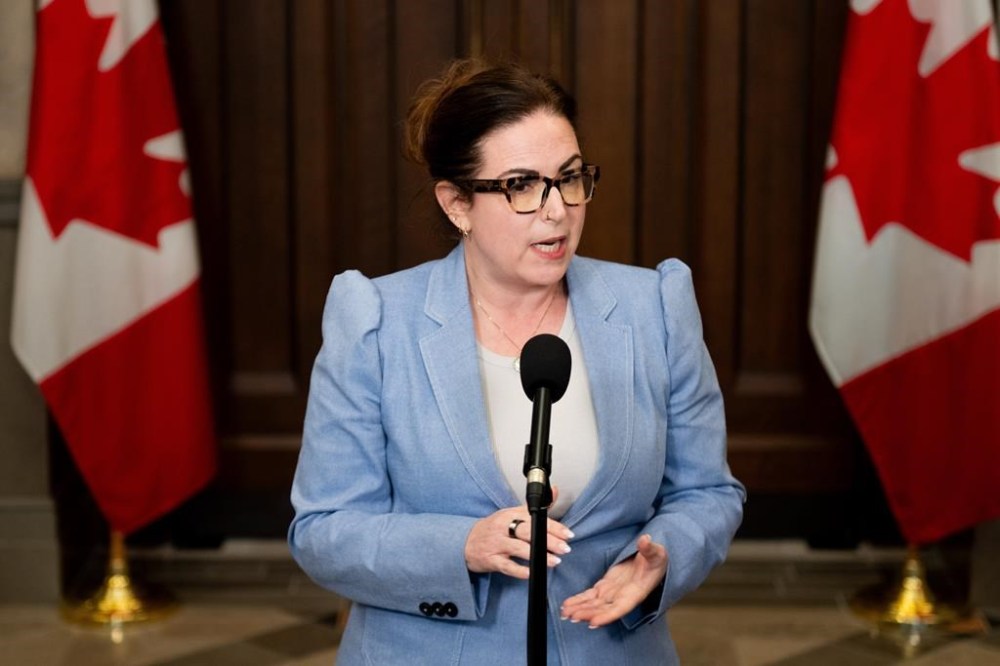
Amid pressure from Conservative opposition to kibosh Toronto’s proposal, federal Minister for Mental Health and Addictions Ya’ara Saks called the city’s application “dormant” and said it has not reached her desk.
Asked to clarify, her office called Toronto’s request “incomplete” and said Health Canada was waiting for responses to questions sent months ago about the application. The questions had to with whether the application – which is backed by Toronto police – “adequately addressed the dual objectives of public health and public safety.”
“As such, the exemption application is not at the state where it would be in front of the Minister for consideration and is not an active application,” Saks’ office wrote in a statement this week.
The office said it would not comment on the specifics of the application when asked what questions Health Canada sent and to whom. Health Canada directed multiple requests for comment to the minister’s office.
Toronto Public Health did not respond to questions about the statement from Saks’ office and declined a request for an interview with the chief medical officer of health, Dr. Eileen de Villa.
The city’s public health unit has said that its application for decriminalization is still with Health Canada, calling the discussions “active and ongoing.”
“We are committed to maintaining an open and constructive partnership with Health Canada,” Toronto Public Heath wrote in a statement earlier this week.
DJ Larkin, the executive director of the Canadian Drug Policy Coalition, said “regardless of who’s waiting on who,” Toronto’s well-supported application is languishing before an overly onerous review process.
“We know that police forces and communities across the country and across the world already know that criminalization does not work,” Larkin said.
“But because we have to go through these applications for exemptions, even in a circumstance where maybe, possession laws are not being heavily enforced already, it shines a light. It creates one of those sparks for controversy.“
The federal government’s pace when it comes to dealing with Toronto’s application has long garnered criticism from drug users and advocates who say it fails to match the urgency required of an overdose crisis that has left hundreds of people dead in the city every year.
Decriminalization has been publicly backed by Toronto officials since at least 2018 for its stated goal to reduce stigma and treat the overdose crisis squarely as a health issue, rather than a criminal one. Criminalizing drug possession, Toronto’s application says, only makes it harder for people who use drugs to get support.
The city sent a preliminary request to Health Canada in January 2022 and, after more consultations, updated its submission in March 2023. The proposal calls for decriminalization to be paired with a host of more direct public health responses, including scaled up harm reduction and mental health services.
The city’s proposal goes further than British Columbia, by also shielding young people from criminal charges and extending the exemption to all drugs for personal possession.
The model was co-sponsored by Toronto police Chief Myron Demkiw, who described the city as already under “de facto” decriminalization in the city’s 2023 submission. Officers have been directed to minimize personal possession charges and federal prosecutors had been told to only pursue the most serious cases of personal possession, such as those tied to impaired driving or posing a risk to children.
The application has nonetheless been lampooned by the province. Premier Doug Ford has promised to fight it “tooth and nail” and on Thursday the province’s associate minister of mental health and addictions called it a “made-in-Toronto disaster.”
A spokesperson for Ontario’s health minister noted, however, that cities are free to ask for a federal exemption without provincial approval.
But Prime Minister Justin Trudeau’s office last week said the province of Ontario would be “required to support any request from Toronto, and they have not done so.”
British Columbia’s recent move to recriminalize possession in public spaces marked a major change of course. Premier David Eby said the move followed police concerns that officers had limited ways to deal with public drug use, though critics argue those concerns are unfounded.
“There’s no data to link decriminalization to increased public safety issues or even increased public drug consumption,” said Larkin, who is based in Vancouver.
The political debate has also inflamed fears over the topic of decriminalization, said Kolla.
“Even with legalized, regulated drugs like alcohol, we do have measures in place that to try to balance, you know, sometimes people are drunk and disorderly in public spaces and how do we deal with that,” she said.
“On the flip side here, one of the worries is that we have such a long history of criminalizing people who use currently illegal drugs even if they were not causing any problems or any public disorder, that this is going to be another tool to just criminalize poverty and criminalize visible homelessness.”
– with files from Stephanie Taylor and Mickey Djuric in Ottawa.
This report by The Canadian Press was first published May 9, 2024.