

New York’s high court upholds requiring insurance to cover medically necessary abortions
Advertisement
Read this article for free:
or
Already have an account? Log in here »
To continue reading, please subscribe:
Monthly Digital Subscription
$0 for the first 4 weeks*
- Enjoy unlimited reading on winnipegfreepress.com
- Read the E-Edition, our digital replica newspaper
- Access News Break, our award-winning app
- Play interactive puzzles
*No charge for 4 weeks then price increases to the regular rate of $19.00 plus GST every four weeks. Offer available to new and qualified returning subscribers only. Cancel any time.
Monthly Digital Subscription
$4.75/week*
- Enjoy unlimited reading on winnipegfreepress.com
- Read the E-Edition, our digital replica newspaper
- Access News Break, our award-winning app
- Play interactive puzzles
*Billed as $19 plus GST every four weeks. Cancel any time.
To continue reading, please subscribe:
Add Free Press access to your Brandon Sun subscription for only an additional
$1 for the first 4 weeks*
*Your next subscription payment will increase by $1.00 and you will be charged $16.99 plus GST for four weeks. After four weeks, your payment will increase to $23.99 plus GST every four weeks.
Read unlimited articles for free today:
or
Already have an account? Log in here »
Hey there, time traveller!
This article was published 21/05/2024 (566 days ago), so information in it may no longer be current.
ALBANY, N.Y. (AP) — New York can continue to require companies with health insurance plans to cover medically necessary abortions, the state’s highest court ruled Tuesday.
The Roman Catholic Diocese of Albany and other church groups challenged the rule, arguing that the policy’s exemption for religious employers was too narrow and would force some businesses to violate their religious freedoms.
State financial regulators approved the policy in 2017. The state Legislature then separately codified the abortion coverage regulation into law in 2022. The religious groups sued over the regulation, not the law.
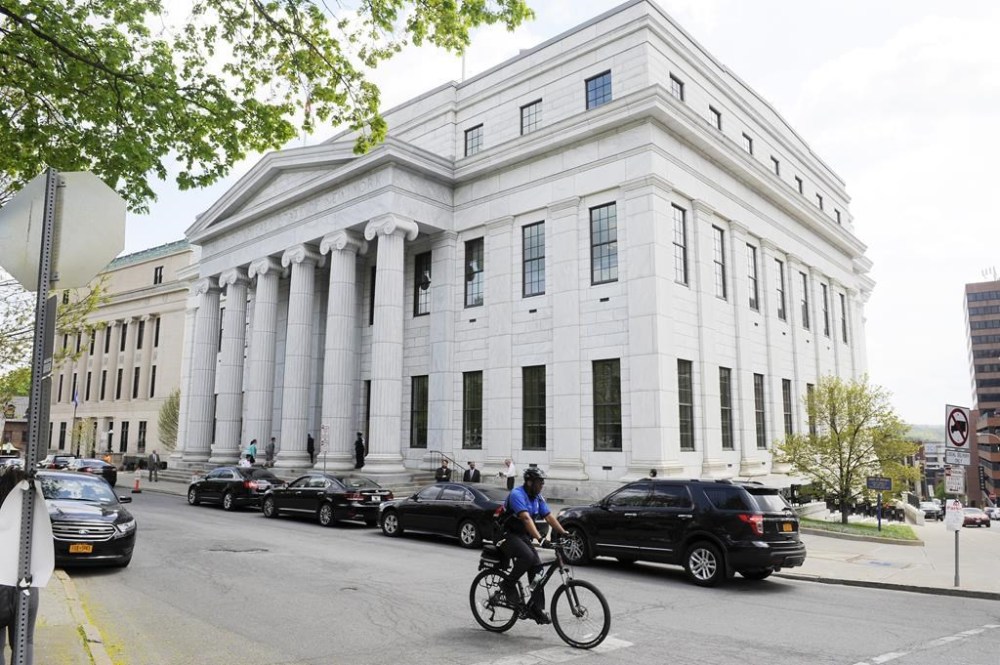
The Court of Appeals case had larger significance because the state’s law could be challenged using a similar legal argument, if the religious groups were successful in their case against the regulation.
Arguments before the high court last month centered on whether the state’s criteria for religious exemptions were too vague and gave officials too much discretion to determine which companies wouldn’t have to follow the rule.
The state defines a religious employer as one whose purpose is to spread religious values, primarily employs and serves people who share the same religious tenets, and is categorized as a religious nonprofit under federal law.
New York Gov. Kathy Hochul, a Democrat, called the ruling a “critical step towards protecting these fundamental freedoms.”

The Roman Catholic Diocese of Albany said it would appeal to the U.S. Supreme Court.
“We believe this is unconstitutional since it involves government entanglement in the fundamental rights of free exercise of faith and conscience,” a statement from the diocese read. “The final decision on constitutionality will be by the United States Supreme Court.”