As Canada warms, infectious disease risks spread north
Advertisement
Read this article for free:
or
Already have an account? Log in here »
To continue reading, please subscribe:

Digital Subscription
One year of digital access for only $205*
- Enjoy unlimited reading on winnipegfreepress.com
- Read the E-Edition, our digital replica newspaper
- Access News Break, our award-winning app
- Play interactive puzzles
*First annual payment billed as $205.00 + GST for one year. This annual subscription will automatically renew at $233.00 + GST every 52 weeks (10% off the regular annual price of $259.35). Offer available to new and qualified returning subscribers only. Cancel any time.
To continue reading, please subscribe:
Add Free Press access to your Brandon Sun subscription for only an additional
$1 for the first 4 weeks*
- Enjoy unlimited reading on winnipegfreepress.com
- Read the E-Edition, our digital replica newspaper
- Access News Break, our award-winning app
- Play interactive puzzles
*Your next Brandon Sun subscription payment will increase by $1.00 and you will be charged $17.95 plus GST for four weeks. After four weeks, your payment will increase to $24.95 plus GST every four weeks.
Read unlimited articles for free today:
or
Already have an account? Log in here »
Hey there, time traveller!
This article was published 26/05/2024 (869 days ago), so information in it may no longer be current.
It was 15 years ago that Ontario student Justin Wood started feeling sick.
A keen soccer player, snowboarder and mountain biker, Wood said he didn’t know the cause but he had to “back off from playing sports and back off from academics.”
It got worse. “I got really, really sick, and I couldn’t really do anything, I couldn’t work, I couldn’t really function or sort of be part of society. And it took me probably about four or five years to get any sort of diagnosis.”
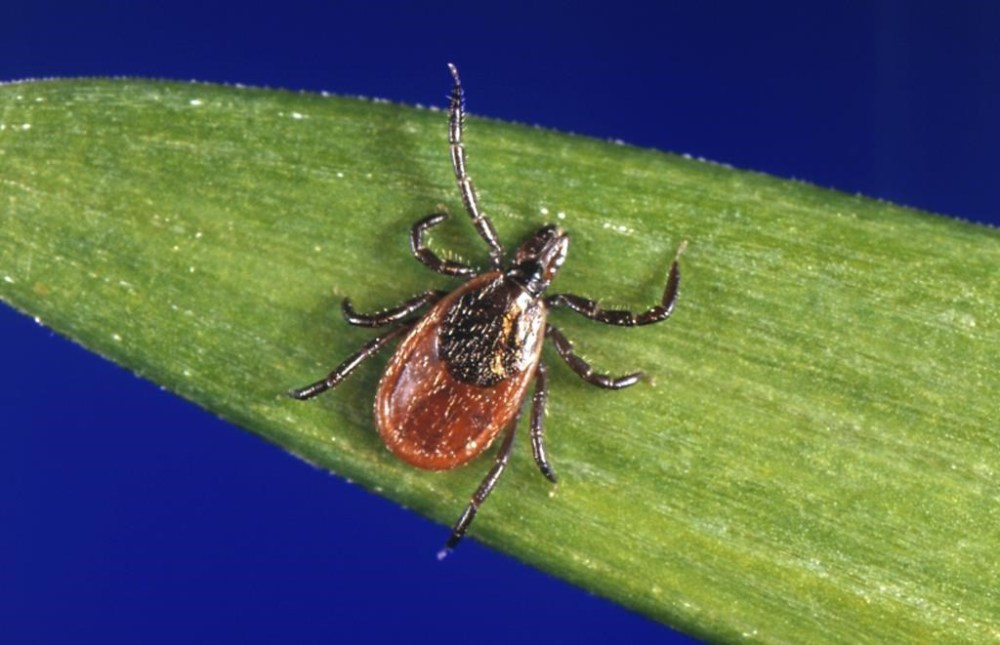
When it came, the diagnosis was a rare one: Lyme disease. At the time, the tick-borne illness was only responsible for a few hundred infections a year in Canada, according to government statistics.
But cases of Lyme disease have now increased more than 1,000 per cent in a decade as the warming climate pushes the boundaries of a range of pathogens and risk factors northward.
Populations of exotic mosquito species that could potentially carry illnesses such as dengue and yellow fever have become established in parts of Ontario, researchers say. Scientists also worry that climate change will increase the risks of microbial disease associated with food contamination and warm weather.
Wood’s experience had at least one positive. It set him on a career path, and he now runs a private lab in Ontario called Geneticks dedicated to testing ticks for diseases.
He said his work allows him to meet many people left “heavily, heavily disabled” from Lyme disease. “It’s very, very severe and the symptoms can be very, very diverse but very, very debilitating.”
Health Canada says symptoms range from rashes and headaches to severe joint pain and memory loss. In rare cases, it can cause death due to heart infections.
Wood said the number of detections of Borrelia burgdorferi, the bacteria that causes Lyme disease, had recently been increasing in his lab by about 0.5 to 1 per cent a year.
That doesn’t sound like much, but the range of the black-legged ticks that carry the bacteria is expanding; they are becoming more active, and they are living longer, he said.
“That means more ticks are born each year and (the) number of ticks in Canada will continue to increase,” said Wood.
He said between 50 million and 175 million ticks came to Canada on migratory songbirds every spring.
“So, you kind of add all that together, and you have more ticks, you have ticks in new places, you have more ticks carrying the bacteria that are dangerous, and it just becomes sort of a growing problem every year,” said Wood.
Surveillance data backs him up. A federal report says there were 3,147 reported cases of Lyme disease in Canada in 2021, up from 266 in 2011.
“This (increase) occurred in part due to changes in climate, which has contributed to increases in the abundance and geographic range of black-legged tick populations in central and Eastern Canada,” the report says, adding that only about 1 per cent of Lyme disease cases in Canada were contracted outside the country.
Canada’s weather has previously served as a barrier against many warm-weather diseases, such as dengue, the Zika virus, malaria, and yellow fever, which are all carried by certain mosquito species.
But conditions are changing, said Victoria Ng, senior scientific evaluator for the Public Health Agency of Canada.
“With climate change, it will be wetter, with more extreme weather events, which could be extreme precipitation events, and mosquitoes require water to be able to survive,” said Ng.
Ng noted that in Windsor, Ont., there was now a population “in small numbers” of Aedes albopictus, known as tiger mosquitoes and native to the tropics and subtropics of Asia.
Public Health Ontario announced the detection of the first reproducing population of Aedes albopictus in the fall of 2016 in Windsor. Another exotic species, Aedes aegypti, originating in Africa, was also detected for the first time.
“These species of mosquitoes are aggressive human biters and potential vectors of dengue, chikungunya, yellow fever and Zika viruses in warmer regions of the world,” the agency said.
At the time, it said it didn’t expect either species to survive the Ontario winter.
But Ng said scientists have not only seen Aedes albopictus coming back year-round in the region, but they also observed them in different life stages.
“We see the eggs of this particular species to adults, which means that they’re actually having their full life cycle and reproducing year to year in this region of Canada,” said Ng.
She said it was an example of a mosquito population, “particularly those that carry exotic viruses,” having “the potential to continue to stay established, but also expand geographically because the climate is getting warmer.”
Dr. Joe Vipond, an emergency physician and past president of the Canadian Association of Physicians for the Environment, said the number of mosquito-borne disease cases has been “slowly growing” over the past 20 years.
“The worry is that at some point, we’ll have diseases like dengue fever or malaria that are able to come all the way up into Canada,” said Vipond.
He pointed to Florida as an example, where dengue fever once did not exist. But last year, the Florida Department of Health placed two counties under a mosquito-borne illness alert after five cases of dengue were reported in less than a month.
It would take “dramatic changes” for dengue fever to become a concern to Canadians, he said, adding that it was not “a current concern” but “a few decades away.”
A 2019 article in the Canada Communicable Disease Report journal said that while there was no evidence of diseases being spread in Canada via new populations of exotic mosquitoes, the issue needed “a careful clinical and public health response.”
“While the short-term risk of exotic (mosquito-borne disease) incursion and establishment in Canada, facilitated or exacerbated by climate change, is very low it is feasible.”
It said that malaria was “of particular concern” because the disease was once endemic in Canada.
Malaria gained a temporary foothold in southern Ontario in the 18th and 19th centuries where it was likely brought by refugees from the American War of Independence and then transmitted by the local Anopheles quadrimaculatus mosquito, according to an article in the Canadian Bulletin of Medical History.
A more current threat is that of food-borne diseases associated with warm weather.
“As climate change continues and/or intensifies, it will increase the risk of an adverse effect on food safety in Canada ranging from increased public health burden to the emergence of risks not currently seen in our food chain,” said a 2019 article in the Canada Communicable Disease Report, by scientists from the National Microbiology Laboratory in Guelph, On.
It cited studies showing a “strong association” between increasing air temperatures and various E. coli, salmonella and vibrio infections.
“The growth, survival, abundance and range of pathogens will be affected by climate change throughout the food chain,” it said.
Extreme weather events and ocean warming would also complicate effects on the food chain and eventually lead to more food-borne diseases, it said.
Lyme disease isn’t the only tick-borne pathogen that scientists worry about as climate change increases the carriers’ range.
A report released by the British Columbia Centre for Disease Control in 2023 said two kinds of tick-borne parasites, Babesia odocoilei and Babesia microti, were recently emerging pathogens in the province. They cause babesiosis, a disease with flu-like symptoms.
“Climate change can be expected to facilitate the presence of these tick-borne diseases,” read the report.
Stefan Iwasawa, vector specialist with BC Centre for Disease Control, agreed that rising temperatures could create good conditions for ticks to expand their population.
“With that increase in temperature, you’re gonna get a longer warm season. What’s going to happen is this is also going to open up new habitats because that warm kind of temperature is also going to be moving north.
“So, as those warm temperatures increase, as you go further up north, you’re not only going to increase habitat for the ticks, but you’re also increasing habitats for the host range,” said Iwasawa, referring to animals including mice, deer, and raccoons.
Donna Lugar, a Nova Scotia-based advocate for Lyme disease awareness who caught the disease in 2011, said Canadians were “complacent” about the risks.
She worried that rising temperatures would mean more ticks in the province.
“I’ve lived in Nova Scotia my whole life (and) there were times when it would get very cold, and everything would freeze; we don’t have that much anymore. Winters have changed over the years,” said Lugar, who said her illness inflicted dozens of symptoms.
She founded the Nova Scotia Lyme Disease Support Group to raise awareness of tick-borne diseases and the importance of prevention. But it’s not easy.
“Probably at some point, I’ll just finally say, I’m moving to a country where there aren’t any ticks,” she said.
This report by The Canadian Press was first published May 26, 2024.
Note to readers: This is a corrected story. A previous version incorrectly said that Victoria Ng lives in Windsor, Ont.

Advertisement Advertise With Us
Advertisement Advertise With Us