Patient went to ER 180 times, says Eby, as he names science adviser on drug crisis

Advertisement

Advertise with us

VANCOUVER - In Vancouver's Downtown Eastside, one person made 180 hospital visits last year, according to Premier David Eby, who said the patient was part of a crisis of repeated emergencies among people with overlapping health and addiction problems.

Read this article for free:


or

Already have an account? Log in here »

To continue reading, please subscribe:

Subscribe and receive a limited-edition Free Press branded hat or tote.

Digital Subscription

One year of digital access for only $205*

  • Enjoy unlimited reading on winnipegfreepress.com
  • Read the E-Edition, our digital replica newspaper
  • Access News Break, our award-winning app
  • Play interactive puzzles

*First annual payment billed as $205.00 + GST for one year. This annual subscription will automatically renew at $233.00 + GST every 52 weeks (10% off the regular annual price of $259.35). Offer available to new and qualified returning subscribers only. Cancel any time.

To continue reading, please subscribe:

Add Free Press access to your Brandon Sun subscription for only an additional

$1 for the first 4 weeks*

  • Enjoy unlimited reading on winnipegfreepress.com
  • Read the E-Edition, our digital replica newspaper
  • Access News Break, our award-winning app
  • Play interactive puzzles
Start now

*Your next Brandon Sun subscription payment will increase by $1.00 and you will be charged $17.95 plus GST for four weeks. After four weeks, your payment will increase to $24.95 plus GST every four weeks.

Hey there, time traveller!
This article was published 05/06/2024 (858 days ago), so information in it may no longer be current.

VANCOUVER – In Vancouver’s Downtown Eastside, one person made 180 hospital visits last year, according to Premier David Eby, who said the patient was part of a crisis of repeated emergencies among people with overlapping health and addiction problems.

They include people with brain injuries from overdoses who show up in British Columbia hospitals far more often than most, he said.

Eby called the situation one of the “biggest challenges” facing the province, as he announced the appointment of a chief scientific adviser to address this “rapidly emerging group” of people with the concurrent disorders who need specialized care.

B.C. Premier David Eby speaks during a news conference about improving access to mental-health and addiction care for people in the Downtown Eastside in Vancouver, on Friday, May 31, 2024. British Columbia has announced the appointment of a chief scientific adviser to address a
B.C. Premier David Eby speaks during a news conference about improving access to mental-health and addiction care for people in the Downtown Eastside in Vancouver, on Friday, May 31, 2024. British Columbia has announced the appointment of a chief scientific adviser to address a "growing population" of people who survived an overdose but were left with life-altering brain injuries. THE CANADIAN PRESS/Ethan Cairns

“As the toxic-drug crisis changes, we’re facing new challenges and grappling with a growing group of people who are very sick and struggling in our streets and emergency rooms,” he said in a news release on Wednesday.

“The current situation is not working for these people and it’s not working for our communities.”

Eby said about 15,000 people in B.C. have died from toxic drugs since a public health emergency was declared in 2016. Many more survived an overdose, but Eby said some were left with life-altering brain injuries that affect their ability to function.

Figures from the BC Centre for Disease Control show that 79 per cent of people who overdosed between January 2015 and December 2021 lived.

Eby cited data from 2023 that found patients with overlapping needs who live and get care in Vancouver’s Downtown Eastside often suffer repeated health emergencies. In addition to the patient who made 180 emergency room visits last year, four patients went to ER more than 140 times, while 612 others went 10 times or more, he said.

“The current situation is clearly not working for these individuals and it is having a very serious impact on our health care system, which is not addressing their needs,” he told a news conference. “One of the biggest challenges we face is that the particular needs of this growing group of people is not understood as well as it should be.”

He said that is why the province decided there was a need for an adviser.

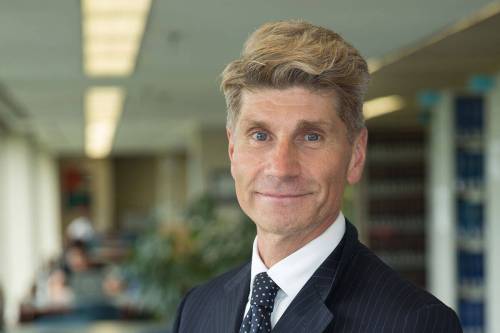
Dr. Daniel Vigo becomes B.C.’s first chief scientific adviser for psychiatry, toxic drugs and concurrent disorders and has a goal to improve care for people with complex mental-health and addiction challenges.

Vigo, who’s a psychiatrist and a public health specialist, told the news conference there is a high prevalence of brain injury in overdose survivors.

“For every overdose death, there are a number of overdose-related permanently injured brains,” he said.

“Overdose produces brain injury, and when that injury is severe enough to be diagnosed, preliminary evidence indicates that person has a 50 per cent chance of dying in the immediate future, and the survivors (have) an additional 30 per cent chance of dying in the near future.”

He said such injuries can also impair insight, judgment and ability to consent, “all of which make treatment-as-usual ineffective.”

“We need a whole new approach, one based on the best insights our evidence can produce,” he said.

Eby noted these people are also “often involved with police, with ambulance response, with emergency rooms. They’re in and out of jail and shelters.”

To address the problem, the premier said Vigo would analyze existing mental health and addiction services, while reviewing data and best practices from elsewhere to determine what could be done in the province.

He said Vigo would work alongside the provincial health officer, health authorities, Indigenous partners and people with lived experience.

“He’ll advise us on new tools and give us advice to help this very specific group of people so they get the help they need, and our communities are safe and healthy for everyone,” Eby said.

This report by The Canadian Press was first published June 5, 2024.

Report Error Submit a Tip

More Stories

A Rocky day on the mayoral campaign trail for Kevin Klein

Malak Abas 12 minute read Preview

A Rocky day on the mayoral campaign trail for Kevin Klein

Malak Abas 12 minute read Friday, Oct. 9, 2026

Kevin Klein acknowledges it’s hard to foresee what he’ll wake up to each morning in the final weeks of a mayoral campaign.

But the seasoned politician, who has served as both a city councillor and a provincial cabinet minister, couldn’t have predicted the events — what he describes as “drama” — that unfolded last Sunday.

Fellow mayoral candidate Mike Vogiatzakis accused Klein’s campaign team of offering him a job to drop out of the race, while a guest writer’s column in the Winnipeg Sun that questioned the deaths of Indigenous children at residential schools, just days after the National Day for Truth and Reconciliation, sparked condemnation from a prominent Indigenous organization. (Klein is the CEO of the Klein Group, the company that owns the Sun. He has maintained he is not involved in its operations while running for mayor.)

The Free Press had already been scheduled to join Klein on the campaign trail Monday, intending to document a day in the life of the front-running candidate to unseat incumbent Scott Gillingham, before the controversies hit.

Read
Friday, Oct. 9, 2026

Landlords will face fines for breaching confidentiality

Carol Sanders 4 minute read Preview

Landlords will face fines for breaching confidentiality

Carol Sanders 4 minute read Friday, Oct. 9, 2026

The province is amending legislation to allow landlords to be penalized if they breach the confidentiality of tenants who break their lease by obtaining a domestic violence certificate.

“Hopefully, now there’s going to be measures in place so that if this happens again, and God forbid it happens again to anyone else, that there would be penalties imposed on landlords who do that,” said one victim whose concerns were published on the front page of the Free Press last month.

Under current legislation, landlords must ensure that any information received from those tenants regarding the termination of the tenancy is kept confidential, but there are no penalties for landlords who violate that section of the act. After hearing from victims put at risk when landlords broke the law by violating their confidentiality, the government announced Monday that it is amending the Residential Tenancies Act to allow for penalties.

The young woman who spoke to the Free Press showed that her landlord copied her alleged abuser in email correspondence that included her personal email address and the domestic violence certificate she obtained in 2025 to end a tenancy agreement early and leave an abusive relationship.

Read
Friday, Oct. 9, 2026

Protein crests current appetite wave

Laura Rance-Unger 4 minute read Preview

Protein crests current appetite wave

Laura Rance-Unger 4 minute read Yesterday at 2:01 AM CDT

Holiday feasts often reflect the latest fads and trends influencing how we eat.

This Thanksgiving’s table is likely to feature more Canadian content than it might otherwise as a point of national pride.

In the recent past, the carb-free craze has made cauliflower a substitute for the mashed potatoes on some family spreads. Some have gone meatless, while others have added more. Still others offer gluten-free, dairy-free or fat-free alternatives.

Nowadays, it seems consumers can’t get enough protein. Desmond Sobool, deputy chief economist Farm Credit Canada, told a recent economic update for the agri-food sector there are two converging influences in play.

Read
Yesterday at 2:01 AM CDT

A Life's Story: Writer built bridges with genuine curiosity, compassion for diversity of religious practices

Janine LeGal 6 minute read Preview

A Life's Story: Writer built bridges with genuine curiosity, compassion for diversity of religious practices

Janine LeGal 6 minute read Yesterday at 6:00 AM CDT

Brenda Suderman knew how to make people feel comfortable. For a journalist, that character trait is a real strength, and it made people trust and appreciate her.

Whether covering musicals, worship spaces, the effects of pandemic shutdowns, death rituals and practices of different traditions, the discovery of the burial of 2,284 infants in unmarked graves, or any other of the countless topics she wrote about in her four- decade career, Suderman did it with genuine interest and care.

Born and raised in Winkler, Suderman grew up on a farm. Much of her childhood was spent in gardens and sugar beet fields.

Baptized at 16, she became a member of the Winkler Bergthaler Mennonite Church. The restrictions against women at the time contributed to planting the seeds of Suderman’s feminist perspective.

Read
Yesterday at 6:00 AM CDT

Patient went to ER 180 times, says Eby, as he names science adviser on drug crisis

The Canadian Press 4 minute read Preview

Patient went to ER 180 times, says Eby, as he names science adviser on drug crisis

The Canadian Press 4 minute read Wednesday, Jun. 5, 2024

VANCOUVER - In Vancouver's Downtown Eastside, one person made 180 hospital visits last year, according to Premier David Eby, who said the patient was part of a crisis of repeated emergencies among people with overlapping health and addiction problems.

They include people with brain injuries from overdoses who show up in British Columbia hospitals far more often than most, he said.

Eby called the situation one of the "biggest challenges" facing the province, as he announced the appointment of a chief scientific adviser to address this "rapidly emerging group" of people with the concurrent disorders who need specialized care.

"As the toxic-drug crisis changes, we're facing new challenges and grappling with a growing group of people who are very sick and struggling in our streets and emergency rooms," he said in a news release on Wednesday.

Read
Wednesday, Jun. 5, 2024

Piece of Winnipeg’s magic history disappears

Kelly-Anne Riess 5 minute read Preview

Piece of Winnipeg’s magic history disappears

Kelly-Anne Riess 5 minute read Updated: Yesterday at 9:38 PM CDT

A piece of Winnipeg’s magic history has vanished, and internationally renowned escape artist Dean Gunnarson is offering a $500 reward to anyone who can make it reappear.

The plaque marked the birthplace of what has become the world’s largest organization of professional and amateur magicians, the International Brotherhood of Magicians, which was founded in Winnipeg more than a century ago.

Gunnarson said fellow magician and local magic historian Bruce Thompson discovered the disappearance Tuesday while on his way to work.

Thompson returned to inspect the site and found what appeared to be evidence it had been forcibly removed.

Read
Updated: Yesterday at 9:38 PM CDT