Five years after historic tobacco ruling, ‘nothing has changed’
Advertisement
Read this article for free:
or
Already have an account? Log in here »
To continue reading, please subscribe:

Digital Subscription
One year of digital access for only $205*
- Enjoy unlimited reading on winnipegfreepress.com
- Read the E-Edition, our digital replica newspaper
- Access News Break, our award-winning app
- Play interactive puzzles
*First annual payment billed as $205.00 + GST for one year. This annual subscription will automatically renew at $233.00 + GST every 52 weeks (10% off the regular annual price of $259.35). Offer available to new and qualified returning subscribers only. Cancel any time.
To continue reading, please subscribe:
Add Free Press access to your Brandon Sun subscription for only an additional
$1 for the first 4 weeks*
- Enjoy unlimited reading on winnipegfreepress.com
- Read the E-Edition, our digital replica newspaper
- Access News Break, our award-winning app
- Play interactive puzzles
*Your next Brandon Sun subscription payment will increase by $1.00 and you will be charged $17.95 plus GST for four weeks. After four weeks, your payment will increase to $24.95 plus GST every four weeks.
Read unlimited articles for free today:
or
Already have an account? Log in here »
Hey there, time traveller!
This article was published 02/07/2024 (808 days ago), so information in it may no longer be current.
TORONTO – In the span of a few short years, Jean-Luc Duval lost two of the most important people in his life to lung cancer.
His wife Monique was diagnosed on her birthday and died on July 3, 2005 – the couple’s 40th wedding anniversary. Months of debilitating chemotherapy treatments couldn’t stop the disease, which had quietly spread and taken root in her digestive system.
Duval then reconnected with a former co-worker, and as they grew closer, they decided to live together as companions in his home in Repentigny, a suburb of Montreal. One night, she started coughing violently and he took her to the emergency room. Doctors found she had cancer in both lungs, and she died within five months.
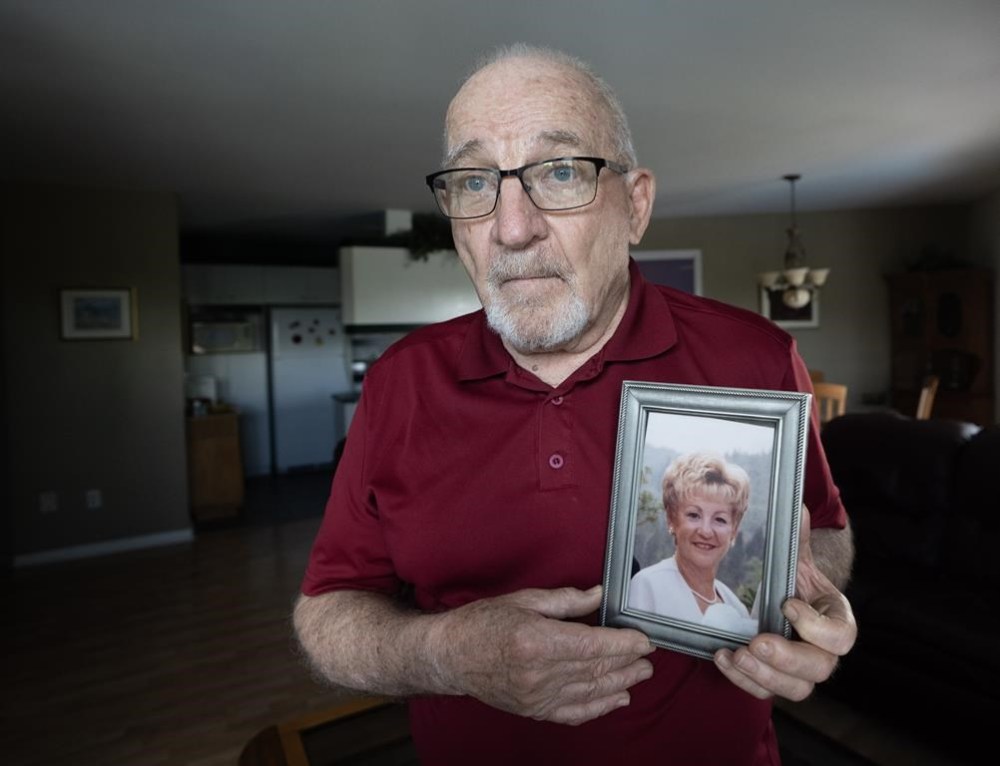
Both women had been smokers, though they had quit years earlier. Duval, too, had smoked for several decades, but managed to kick the habit years before his wife.
Duval joined a lengthy legal battle against three major tobacco companies, and in a historic ruling in 2019, Quebec’s highest court confirmed he and roughly 100,000 other Quebecers were entitled to billions in compensation for the harm they or their loved ones had experienced.
But five years later, none of them have seen even a fraction of that money – and recent court filings suggest hundreds have died in the interim.
“Not only have we not received a cent, but absolutely nothing has changed,” Duval, 80, wrote in French in a recent open letter to the Quebec government. “Cigarettes from these same manufacturers are sold across the province and in every corner of the country.”
“I’m not interested in the money, but I want justice,” he added. “I want this industry to cease to exist.”
Several health advocacy groups have also sounded the alarm about the lack of movement and transparency in the case, warning Canada could miss out on what they call a historic opportunity to reduce tobacco use and regulate the industry.
“We’re never going to have a better opportunity than we do right now and, you know, it cannot be business as usual for tobacco companies after (a) settlement,” said Rob Cunningham, a lawyer for the Canadian Cancer Society. The organization has been named a social stakeholder in the case, meaning it can make submissions to the court.
The lawsuits involved smokers who took up the habit between 1950 and 1998 and either fell ill or were addicted, or involved their heirs, as in Duval’s case.
A Quebec Superior Court judge first ordered the payment in 2015 after finding the three companies – Imperial Tobacco, JTI-Macdonald and Rothmans-Benson & Hedges – had chosen profits over the health of their customers.
The province’s Appeal Court then upheld the landmark decision, prompting the companies to seek creditor protection in Ontario. That protection also suspended legal proceedings against them, which includes lawsuits filed by provincial governments to recoup health-care costs related to smoking.
The initial stay of proceedings lasted a few months, but it has since been renewed roughly a dozen times – most recently in March, when it was extended to September.
The purpose of the stay is to maintain the status quo as the companies negotiate a global settlement with all those who have claims against them, including the class-action members and the provinces.
The talks are confidential, and the participants have largely declined to comment on the proceedings.
In court filings last September, however, one of the lawyers for the class action members said a settlement was “not currently in sight,” alluding to “recent setbacks” and suggesting mediation had been “severely undermined” by participants who had changed their earlier positions.
Philippe Trudel said in his affidavit that about 700 of the class action members have died of tobacco-related illnesses since the first stay was granted, and “many more are becoming increasingly frail.” Some “could wait no longer” and have opted for medically assisted suicide, he said.
Many have simply lost faith in the process, he said in the document. “They fear that due to the seemingly endless delays, there will be few, if any, victims left alive to receive their rightful compensation from the tobacco companies,” he said.
It’s not just the delays that are problematic, but the entire creditor protection process and the secrecy it entails, said Flory Doucas, spokesperson and co-director of the Quebec Coalition for Tobacco Control.
By nature, the process centres on industry viability, sidelining the public health and justice elements of the case, she said. It essentially allows the companies to continue operating as usual as they restructure – and get more people addicted in the process, she said.
The coalition is among several groups calling on the provinces to insist on significant public-health measures to reduce tobacco use as part of a settlement, warning them that focusing on financial compensation would only cause more harm down the line.
“It means you rely on future sales (to fund the payments),” she said. “It means governments have an interest in keeping those companies in business … and their business model is based on addiction and harmful products.”
Until recently, no provincial government had publicly indicated what it was seeking or expecting to receive as part of a settlement. Most reached by The Canadian Press in recent weeks declined to comment on the matter, citing the confidential nature of the negotiations.
A spokesperson for Quebec’s health ministry said only that the province wants compensation for expenses incurred since the implementation of its health insurance program, as well as those expected until 2030.
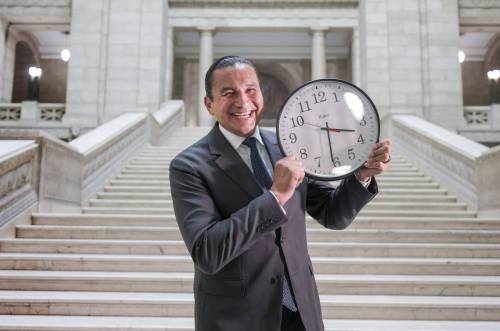
Some details emerged for the first time in May, when Manitoba Premier Wab Kinew told the provincial NDP convention that the province expects to receive an initial payment in the hundreds of millions of dollars soon, possibly by the end of this year or early next year.
Kinew said money from the settlement would be used to build a new CancerCare Manitoba headquarters, among other things.
While the premier’s comments offered a rare and welcome glimpse into the proceedings, they also confirmed the coalition’s “worst fears” in terms of what a settlement could look like, Doucas said.
“It does look like it’s primarily financial and it’s based on instalments,” she said, which means “having future and current victims use products to compensate past victims and provinces.”
It’s additionally concerning because Manitoba is part of a group of provinces represented by the same law firm, which suggests they could all be seeking a similar resolution, she said.
That kind of deal would send a “very troublesome and scary message” about what governments are willing to tolerate from harmful industries, she said.
Last year, the Canadian Cancer Society, the Canadian Lung Association and the Heart and Stroke Foundation compiled a series of measures they believe should be in the settlement.
These include: putting at least 10 per cent of the money received in a fund to reduce tobacco use; banning all remaining tobacco promotion; requiring the companies to make extra payments if tobacco-reduction targets aren’t met; and publicly disclosing millions of pages of internal company documents.
“These are achievable, it’s just (that) provinces need the political intent to do so,” said Cunningham, of the Canadian Cancer Society. “They have tremendous leverage because tobacco companies cannot get out of the creditor protection situation that they’re in unless the provinces agree.”
State governments in the U.S. were able to impose measures in similar lawsuit settlements in 1998, and Canadian provinces should be able to do much better decades later, he said.
Some of the proposed measures, such as releasing documents, wouldn’t cost the companies anything, he noted.
The organization will have the opportunity to make submissions on a possible settlement and would “strongly oppose” any deal that has inadequate tobacco-reduction measures, he said.
The companies have also declined to comment on the negotiations or the concerns raised by smoking-reduction and health groups, nor would they say whether they would seek another stay extension come fall.
In a statement, a spokesperson for JTI-Macdonald said the company has acted in good faith and with due diligence throughout the process, something the court has acknowledged.
Duval said he’s skeptical the matter will be resolved any time soon.

In the meantime, he’ll continue to do what he can to combat smoking, using the persuasive skills he honed in his days as a Kodak microfilm salesman to dissuade smokers he comes across in his day-to-day life, he said in French in a recent interview.
He vowed to continue regardless of the outcome of the negotiations.
“I’m not someone who throws in the towel easily,” he said.
“I’ll do everything I can until the day I die. With all the hardships I’ve had, with all that tobacco has done to me, to my kids and others … (I want) to see it through to the end.”
This report by The Canadian Press was first published July 2, 2024.
Related Articles
Canada puts nicotine pouches behind the counter, bans flavours
Advertisement Advertise With Us
Advertisement Advertise With Us