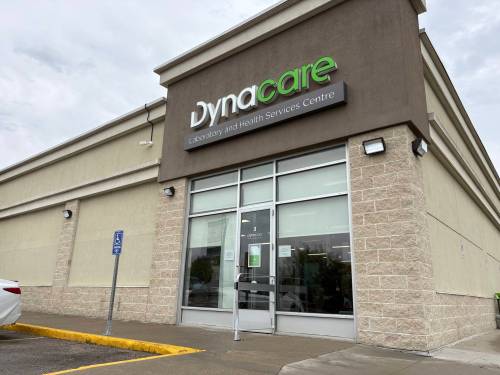
Minor injury clinics called Band-Aid solution
Concern raised staff will leave public system, long-term problems won’t be addressed

Advertisement
Read this article for free:
or
Already have an account? Log in here »
To continue reading, please subscribe:

Digital Subscription
One year of digital access for only $205*
- Enjoy unlimited reading on winnipegfreepress.com
- Read the E-Edition, our digital replica newspaper
- Access News Break, our award-winning app
- Play interactive puzzles
*First annual payment billed as $205.00 + GST for one year. This annual subscription will automatically renew at $233.00 + GST every 52 weeks (10% off the regular annual price of $259.35). Offer available to new and qualified returning subscribers only. Cancel any time.
To continue reading, please subscribe:
Add Free Press access to your Brandon Sun subscription for only an additional
$1 for the first 4 weeks*
- Enjoy unlimited reading on winnipegfreepress.com
- Read the E-Edition, our digital replica newspaper
- Access News Break, our award-winning app
- Play interactive puzzles
*Your next Brandon Sun subscription payment will increase by $1.00 and you will be charged $17.95 plus GST for four weeks. After four weeks, your payment will increase to $24.95 plus GST every four weeks.
Read unlimited articles for free today:
or
Already have an account? Log in here »
Hey there, time traveller!
This article was published 05/07/2024 (794 days ago), so information in it may no longer be current.
The NDP government will open two new clinics in a bid to cut emergency room wait times in Winnipeg, but a former task force chair and union leader warned the plan could have the opposite effect.
Minor injury and illness clinics at Grace Hospital and Misericordia Health Centre are scheduled to open this fall to provide care for non-urgent ailments or needs, such as putting a cast on a broken arm or stitching up a laceration.
Dr. Alecs Chochinov, an ER physician at St. Boniface Hospital who led a provincial wait times reduction task force in 2017, said the clinics won’t address an underlying root cause, which has existed for decades.
“To reduce wait times would require the health-care system to address what we call ‘access block’ across the system,” he said Friday. “Opening minor injury clinics won’t address those wait times, but it will provide a service.”
“Access block,” or overcrowding, occurs when admitted patients in the ER cannot be transferred to a ward, because staffed beds are not available.

Patient flow is snarled when inpatients who can be transferred to an alternative setting, such as chronic or long-term care, are forced to wait on a hospital ward until space opens up elsewhere.
“These clinics will in no way address that continuum of flow,” said Chochinov. “Waiting times can paradoxically increase, because even though the number of patients (in an ER) decreases, the patients you can see quickly have been sent away. Now, you’re just left with the hard stuff.”
The longer people wait in an ER, the greater the risk of adverse occurrences, he noted.
The clinics at Grace and Misericordia will make local residents happy and will be convenient for them, said Chochinov.
The facilities will be privately run with public funding.
“It worries me the two clinics are privately run,” said Manitoba Nurses Union president Darlene Jackson. “Private entities draw funds and staff out of the public health-care system. If nurses are pulled out of the public system, that just increases wait times overall in the public system.”
“It worries me the two clinics are privately run.”–MNU president Darlene Jackson
Chochinov said “innumerable” doctors and nurses are suffering from fatigue and moral distress, and the clinics could lure staff from ERs.
“You provide them with an easier alternative just down the street,” he said. “We will lose good people, because good people work in those clinics.”
Many nurses who work in the public system are looking for a better work-life balance or better working conditions, Jackson added.
“If we want to truly work on wait times, we must do everything to pull nurses into the public system,” she said.
Jackson hopes the recently expanded provincial float pool will help to pull agency nurses back into the public system.
Chochinov chairs a Canadian Associations of Emergency Physicians task force which recently released a report on the emergency care crisis. The report contains 30 recommendations to, among other things, help boost system capacity and accountability to ensure problems are solved.
'Opening minor injury clinics won’t address those wait times, but it will provide a service,' Dr. Alecs Chochinov said.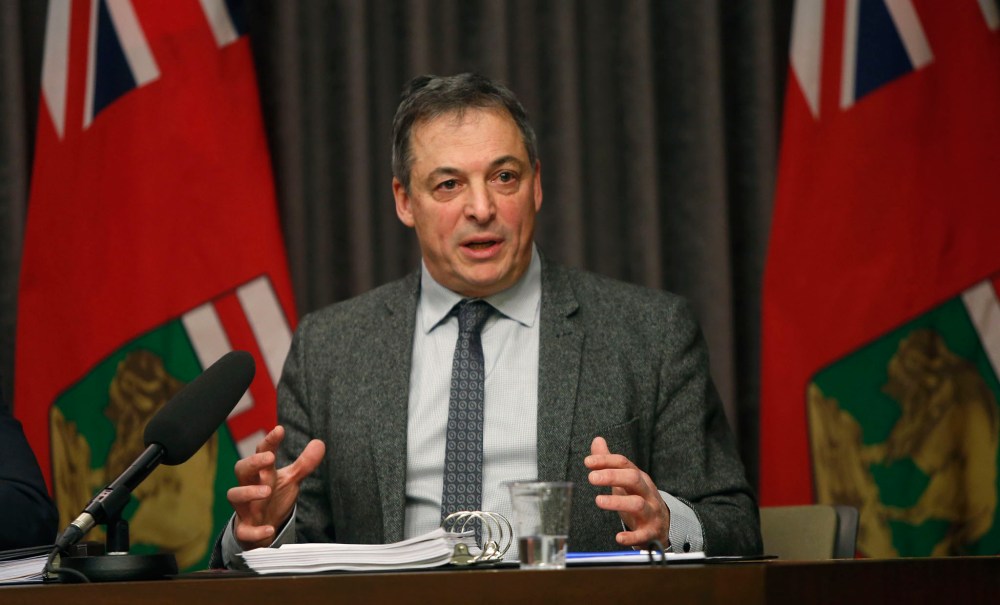
Chochinov said recommendations from the provincial wait times task force in 2017 were ignored by the former Tory government.
He said past governments lacked an understanding of the root causes or focused on short-term solutions to long-term problems, resulting in lost opportunities or money being poorly spent.
“It’s frustrating to people in the field,” the physician said.
It will take decades to fix systemic problems, but governments come and go roughly every four years, he noted.
Health Minister Uzoma Asagwara was not available for an interview Friday.
“Having new locations able to address minor ailments, and cast, stitch, diagnose and test will take a lot of pressure off our emergency departments, make better use of emergency department resources and offer improved service to Manitobans,” the minister said in a news release issued Thursday.
Asagwara and Premier Wab Kinew have pledged to expand hospital bed capacity and hire 1,000 new health-care workers this year.
“The more the better. It’s always been a very positive experience. The doctors here are excellent.”–Lucy Sommerfeld
The two new clinics are drawing comparisons to the Minor Illness & Injury Clinic at Corydon Avenue and Harrow Street, which is private, but publicly funded.
The clinic, which opened in 2019, is staffed with experienced ER physicians and nurses, and pediatricians, its website says.
Care include X-rays, casting for minor fractures, stitches for minor cuts, swabs for people with sore throats and common blood and urine tests.
Lucy Sommerfeld, whose family uses the clinic, welcomed the province’s plan for similar facilities in other areas of Winnipeg.
“The more the better,” she said. “It’s always been a very positive experience. The doctors here are excellent.”
She said her family has been spared hours-long waits in other facilities, such as a hospital, by going to the clinic.
Gary Dahl, who also uses the clinic, agreed it has spared lengthy waits elsewhere.
“I think it’s well-needed. I think the category is underserviced in the city,” he said.
Dahl sympathized with health-care workers in the public system.
“They are caring professionals who are overwhelmed by the system and the need,” he said.
The two new clinics are drawing comparisons to the Minor Illness & Injury Clinic at Corydon Avenue and Harrow Street, which is private, but publicly funded.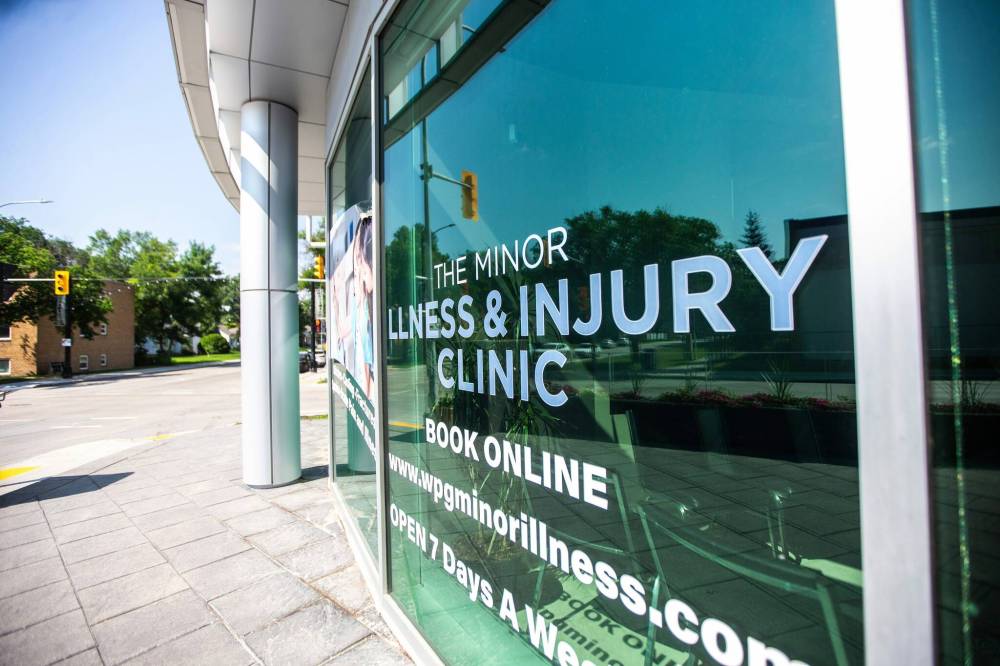
In last fall’s election campaign, the NDP promised to open four new minor injury and illness clinics in Winnipeg and one in Brandon.
At the time, Kinew said the clinics would be staffed by off-duty ER doctors. He said the NDP would spend about $2 million annually to provide financial incentives for teams of physicians to own and operate neighbourhood clinics.
The government’s first budget includes $17 million to expand hours at existing clinics and open two new facilities in Winnipeg and one in Brandon.
In the news release, Asagwara said the former Misericordia urgent care centre — shuttered by the Tories in 2017 — will reopen as a minor injury and illness clinic. It will open in early fall.
The clinic at Grace Hospital will open in September. It will be connected to the Access Winnipeg West walk-in clinic.
Both clinics will be open seven days a week and offer extended hours to fit families’ schedules. Patients will be able to book walk-in, same- or next-day appointments.
The government is currently accepting bids for the operation and management of each clinic.
chris.kitching@freepress.mb.ca
Chris Kitching is a general assignment reporter at the Free Press. He began his newspaper career in 2001, with stops in Winnipeg, Toronto and London, England, along the way. After returning to Winnipeg, he joined the Free Press in 2021, and now covers a little bit of everything for the newspaper. Read more about Chris.
Every piece of reporting Chris produces is reviewed by an editing team before it is posted online or published in print — part of the Free Press‘s tradition, since 1872, of producing reliable independent journalism. Read more about Free Press’s history and mandate, and learn how our newsroom operates.
Our newsroom depends on a growing audience of readers to power our journalism. If you are not a paid reader, please consider becoming a subscriber.
Our newsroom depends on its audience of readers to power our journalism. Thank you for your support.
Chris Kitching is a general assignment reporter at the Free Press. He began his newspaper career in 2001, with stops in Winnipeg, Toronto and London, England, along the way. After returning to Winnipeg, he joined the Free Press in 2021, and now covers a little bit of everything for the newspaper. Read more about Chris.
Every piece of reporting Chris produces is reviewed by an editing team before it is posted online or published in print — part of the Free Press‘s tradition, since 1872, of producing reliable independent journalism. Read more about Free Press’s history and mandate, and learn how our newsroom operates.
Our newsroom depends on a growing audience of readers to power our journalism. If you are not a paid reader, please consider becoming a subscriber.
Our newsroom depends on its audience of readers to power our journalism. Thank you for your support.
Related Articles
Better systems, capacity what hospitals really need



Advertisement Advertise With Us
Advertisement Advertise With Us