

West Virginia is asking the US Supreme Court to consider transgender surgery Medicaid coverage case
Advertisement
Read this article for free:
or
Already have an account? Log in here »
To continue reading, please subscribe:
Monthly Digital Subscription
$0 for the first 4 weeks*
- Enjoy unlimited reading on winnipegfreepress.com
- Read the E-Edition, our digital replica newspaper
- Access News Break, our award-winning app
- Play interactive puzzles
*No charge for 4 weeks then price increases to the regular rate of $19.00 plus GST every four weeks. Offer available to new and qualified returning subscribers only. Cancel any time.
Monthly Digital Subscription
$4.75/week*
- Enjoy unlimited reading on winnipegfreepress.com
- Read the E-Edition, our digital replica newspaper
- Access News Break, our award-winning app
- Play interactive puzzles
*Billed as $19 plus GST every four weeks. Cancel any time.
To continue reading, please subscribe:
Add Free Press access to your Brandon Sun subscription for only an additional
$1 for the first 4 weeks*
*Your next subscription payment will increase by $1.00 and you will be charged $16.99 plus GST for four weeks. After four weeks, your payment will increase to $23.99 plus GST every four weeks.
Read unlimited articles for free today:
or
Already have an account? Log in here »
Hey there, time traveller!
This article was published 25/07/2024 (505 days ago), so information in it may no longer be current.
CHARLESTON, W.Va. (AP) — West Virginia is asking the U.S. Supreme Court to review rulings that found the state’s refusal to cover certain health care for transgender people with government-sponsored insurance is discriminatory, Republican Attorney General Patrick Morrisey said Thursday.
In April, the Richmond-based 4th U.S. Circuit Court of Appeals ruled 8-6 in the case involving coverage of gender-affirming surgery by West Virginia Medicaid, finding that the “coverage exclusions facially discriminate based on sex and gender identity,” according to a majority opinion penned by Judge Roger Gregory.
The state of West Virginia had argued that officials in states with limited resources should have discretion to utilize those resources as they see fit to meet the needs of the population. West Virginia is one of the U.S. states with the most people living under the poverty line and the worst health outcomes.
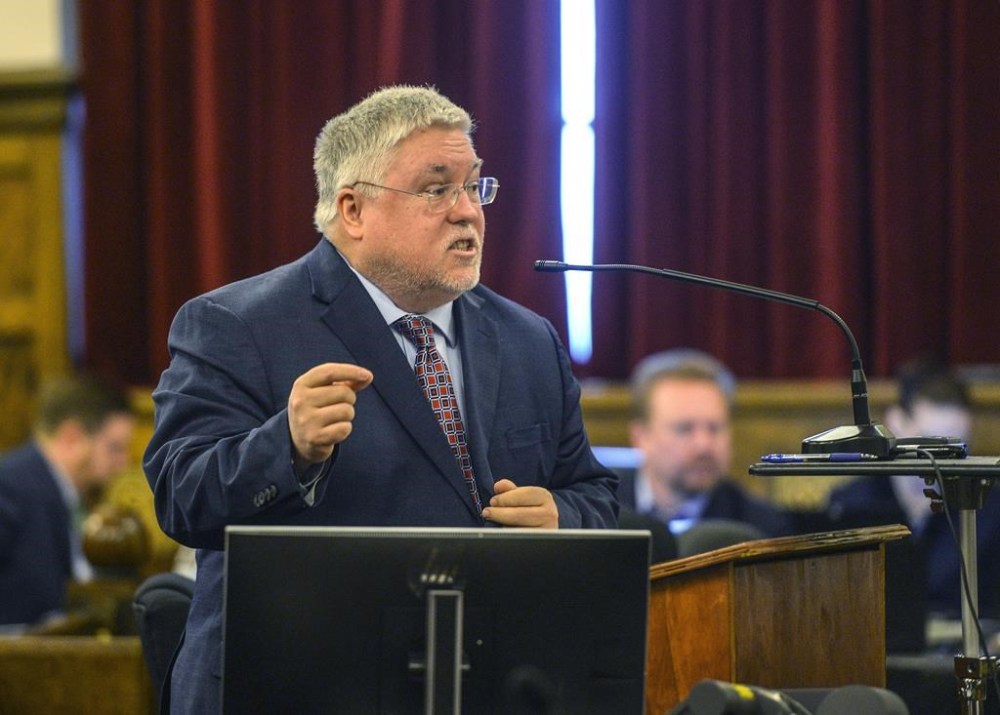
“We’re not a rich state — we can’t afford to do everything,” Morrisey said Thursday during a live-streamed briefing with press. “And that’s one of the challenges that we have with this mandate. There’s only so much money to go around, and spending money on some treatments necessarily takes it away from others.”
West Virginia is “a state that’s trying to help ensure that we’re covering people with heart disease, with diabetes, and all sorts of medical conditions,” Morrisey said, adding that long-term research on gender affirming surgery is still limited.
In the majority 4th Circuit opinion, judges said the cost of treatment is not a sufficient argument to support upholding a policy found to be discriminatory: “Especially where government budgets are involved, there will frequently be a ‘rational’ basis for discrimination,” Judge Gregory wrote.
During Thursday’s briefing, Morrisey said he didn’t have the data in front of him to answer a question from a reporter about how many West Virginia Medicaid recipients had pursued obtaining gender-affirming surgery, and what the actual cost to the state was.
“We can look at it and we can evaluate it, but that’s not the question in this case,” he said.
Andrew Schneider, executive director of LGBTQ+ advocacy organization Fairness West Virginia, said Thursday that the state has “a moral obligation to care for its vulnerable and marginalized citizens.”
“Patrick Morrisey’s decision to appeal this case to the U.S. Supreme Court is at odds with this sacred duty,” Schneider said, adding that other states that have enacted policies granting coverage for gender affirming surgery haven’t seen significant cost increases.
“To the extent that West Virginia Medicaid is struggling, we need only to blame the Republican-controlled Legislature for underfunding the program — not the dozens of transgender people who may use the program in the future,” he said. “You can’t underfund a program for years only to then blame a marginalized group for its problems.”
The 4th Circuit case also involved gender-affirming care coverage by North Carolina’s state employee health plan. Specifically, North Carolina’s policy bars treatment or studies “leading to or in connection with sex changes or modifications and related care,” while West Virginia’s bars coverage of “transsexual surgery.”
A spokesperson for Morrisey’s office said Thursday that North Carolina is also asking the U.S. Supreme Court to take up its case.

Similar cases are under consideration in courts across the country, but April’s was the first U.S. Court of Appeals decision to consider government-sponsored coverage exclusions of gender affirming medical care — and whether those exclusions are lawful.
Both states appealed separate lower court rulings that found the denial of gender-affirming care to be discriminatory and unconstitutional. Two panels of three Fourth Circuit judges heard arguments in both cases last year before deciding to intertwine the two cases and see them presented before the full court.
In August 2022, a federal judge ruled West Virginia’s Medicaid program must provide coverage for gender-affirming care for transgender residents.
An original lawsuit filed in 2020 also named state employee health plans. A settlement with The Health Plan of West Virginia Inc. in 2022 led to the removal of the exclusion on gender-affirming care in that company’s Public Employees Insurance Agency plans.
Unlike North Carolina, West Virginia has covered hormone therapy and other pharmaceutical treatments for transgender people since 2017. Gregory noted in April that West Virginia’s program partially or fully covers surgeries to remove and reconstruct sexual organs for non-gender dysphoria-related diagnoses, such as cancer.