Europe offers clues for solving America’s maternal mortality crisis
Advertisement
Read this article for free:
or
Already have an account? Log in here »
To continue reading, please subscribe:

Digital Subscription
One year of digital access for only $205*
- Enjoy unlimited reading on winnipegfreepress.com
- Read the E-Edition, our digital replica newspaper
- Access News Break, our award-winning app
- Play interactive puzzles
*First annual payment billed as $205.00 + GST for one year. This annual subscription will automatically renew at $233.00 + GST every 52 weeks (10% off the regular annual price of $259.35). Offer available to new and qualified returning subscribers only. Cancel any time.
To continue reading, please subscribe:
Add Free Press access to your Brandon Sun subscription for only an additional
$1 for the first 4 weeks*
- Enjoy unlimited reading on winnipegfreepress.com
- Read the E-Edition, our digital replica newspaper
- Access News Break, our award-winning app
- Play interactive puzzles
*Your next Brandon Sun subscription payment will increase by $1.00 and you will be charged $17.95 plus GST for four weeks. After four weeks, your payment will increase to $24.95 plus GST every four weeks.
Read unlimited articles for free today:
or
Already have an account? Log in here »
Hey there, time traveller!
This article was published 22/08/2024 (782 days ago), so information in it may no longer be current.
ORLANDO, Fla. (AP) — Midwife Jennie Joseph touched Husna Mixon’s pregnant belly, turned to the 7-year-old boy in the room with them and asked: “Want to help me check the baby?”
With his small hand on hers, Joseph used a fetal monitor to find a heartbeat. “I hear it!” he said. A quick, steady thumping filled the room.
It was a full-circle moment for the midwife and patient, who first met when Mixon was an uninsured teenager seeking prenatal care halfway through her pregnancy with the little boy. Joseph has been on a decades-long mission to usher patients like Mixon safely into parenthood through a nonprofit that relies on best practices she learned in Europe, a place that experts say offers answers to an American crisis.
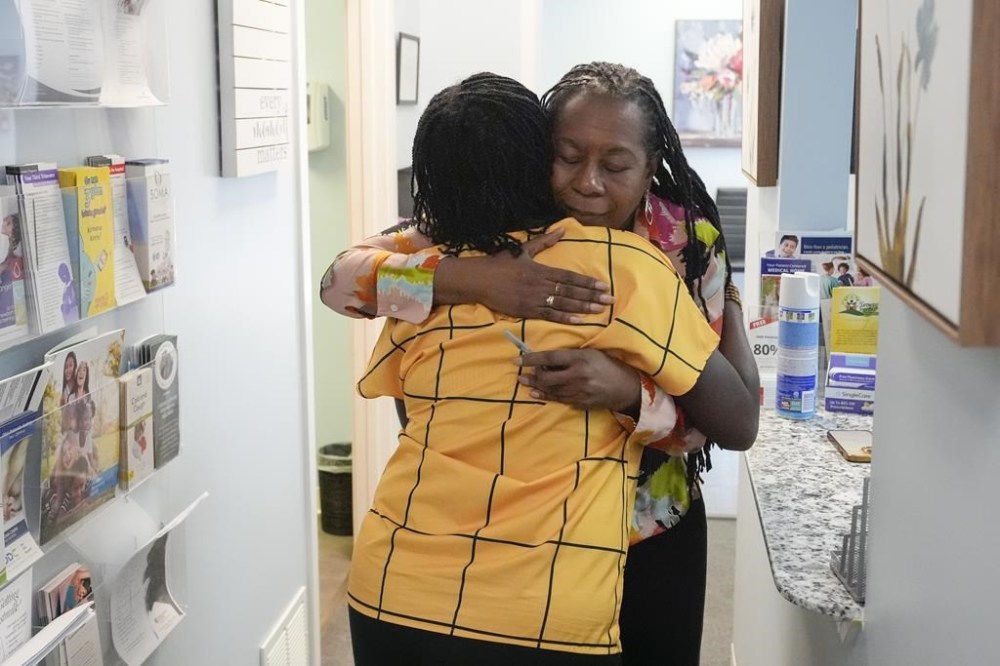
“I consider maternal health to be in a state of emergency here,” said Joseph, a British immigrant. “It’s more than frustrating. It’s criminal.”
The Biden administration, which in part is focusing on maternal mortality in this election year, acknowledges the U.S. has one of the highest rates of any wealthy nation — hovering around 20 per 100,000 live births overall and 50 for Black moms, according to the World Health Organization and U.S. health officials. Several European countries have rates in the single digits.
Research shows the vast majority of pregnancy-related deaths are preventable. Public health experts blame the United States’ high rates on a range of problems, such as inequities in getting needed health care, systemic racism, at times poor-quality medical care and a rise in chronic health conditions among women of childbearing age.
Solutions abroad can be translated to the U.S., experts believe. For example, many European countries make it easier to get prenatal and postpartum care that involves both doctors and non-physicians like midwives, said Dr. Laurie Zephyrin, a senior vice president at the nonprofit Commonwealth Fund who studies maternal care across nations.
Joseph’s organization — called Commonsense Childbirth — is a smaller-scale example of that type of care.
It has clinics, a birthing center and training for health professionals. The midwives who run the program welcome vulnerable patients that other practices turn away, such as those who are uninsured or haven’t had prenatal care until late in pregnancy.
About half the patients and much of the staff, including Joseph, are people of color. Research shows Black Americans are more likely to distrust the medical system than their white counterparts, but Joseph stresses building trust.
“We have these four tenets that go with my model: access, connection, knowledge and empowerment,” she said. Some patients “cry because they’ve never had that kind of care or respect.”
All of this, Joseph said, contributes to better outcomes. With thousands of patients over about 26 years, she and her colleagues have never had a maternal death.
Getting to zero
Maternal mortality — which refers to the death of a woman from pregnancy or childbirth complications during or within 42 days of a pregnancy — generally has been rising in the U.S. About 700 women die each year, with another 60,000 suffering related injuries or severe complications.
A controversial study recently attributed the increase to a change in how they’re recorded: a “pregnancy checkbox” on death certificates recommended by the National Center for Health Statistics partly to fix an undercount. But the U.S. Centers for Disease Control and Prevention and many doctors pushed back against that research, which suggested the rate is about 10 in 100,000 live births. Some say the true rate may be somewhere in between — meaning it’s still higher than other wealthy nations.
U.S. rates remain high despite proven ways to prevent maternal deaths and injuries, experts say — things like ensuring quality medical care at delivery; getting to know patients; addressing issues like addiction or poor nutrition; and providing care and support after the baby is born.
One of the most important things is making sure everyone can get regular prenatal checkups, which requires having enough health care providers.
Consider Norway, which has the lowest maternal mortality rate in the world: zero. Through its universal health care system, people get free prenatal appointments at health centers near their homes. And like Sweden, Germany, France and the U.K., it has a robust supply of midwives.
For every 1,000 live births, Norway has 13 OB-GYNs and 54 midwives, the Commonwealth Fund found, compared with 12 OB-GYNs and four midwives in the U.S. The March of Dimes deems more than a third of American counties maternity care deserts and recommends integrating and expanding midwifery in all states.
Regular care — for every pregnant person, no matter their financial or legal status — means problems are spotted and treated early, said Roosa Sofia Tikkanen, a doctoral candidate at the Center for Global Health Inequalities Research in Norway. She said immigrants lacking permanent legal status are entitled to the same prenatal care as others, plus translation services if necessary.
“Maternal mortality is an entirely preventable event providing you have access to basic health care,” Tikkanen said. “Not high-tech health care but basic health care.”
What happens during and after delivery also makes a difference. The national rate for cesarean sections, which are more likely than vaginal births to lead to complications, is about 16% in Norway and 32% in the U.S.
The Scandinavian country and many other European nations also have generous paid leave, which research links to better postpartum health. Norway mandates a total of 86 weeks between maternity, parental and home care leave. The U.S. requires none.
Virginia Kotzias, who grew up in the U.S. but now lives in Norway, suffered two first-trimester miscarriages. She had the option to stay in the hospital, which she chose to do the first time because she was scared.
“For the entire 13 hours that I was going through the process of the miscarriage, I had midwives that were there on call,” Kotzias said. “I had access to pain medication. And then when I walked out, there was no bill.”
For her two full-term pregnancies, she could have prenatal visits with a doctor, a midwife or both. She had additional regular appointments with a high-risk OB-GYN because of a chronic health condition, and said she “felt very well cared for.”
Kotzias was also able to take “graded” sick leave when she felt nauseous and tired, working 80% of the time, with a national benefits program paying the balance of her salary. A few days after her babies were born, midwives visited her home to assess her for any physical or mental postpartum issues and check on the infant.
“I feel incredibly grateful for the way that Norway takes care of families and prioritizes them,” she said. “From the time that the stick turns pink … there’s this really robust system of support to try and make it as easy as possible for families to succeed.”
‘We have to start somewhere’
But even within America’s fragmented health care system, experts say reducing the death toll is possible.
In Florida, where maternal mortality is higher than the national average, Joseph’s organization relies heavily on philanthropy, which makes up about half its $3.5 million budget. This allows the clinics to accept patients who can pay little or nothing — and midwives to spend more time with them than most OB-GYNs could.
For women with no major health problems, research shows midwifery is cheaper globally than care led by OB-GYNs and leads to fewer medical procedures like C-sections, said Marian Knight, a professor of maternal and child population health at the University of Oxford in England. There are U.S.-based studies that have found the same trend.
Some of Commonsense Childbirth’s patients with complications are referred to specialists, and most choose to give birth at a local hospital, where Joseph has forged strong ties, instead of in Commonsense’s on-site birthing rooms. They then return to a midwife for postpartum care.
“It’s Jennie’s National Health Service,” Joseph said with a sly smile.
At her Orlando and Winter Garden locations, she instructs front desk staff to greet patients warmly, even during busy times. Women are encouraged to bring their children to appointments instead of struggling to find child care. Toys fill corners of the waiting areas.
“They actually care for what else you’ve got going on, not only the pregnancy,” said Mixon, 24, who is now enrolled in Medicaid and began prenatal visits this time at about eight weeks’ gestation.
Joseph hires midwives who can relate to patients. One gave birth to the first of her six children at 16 years old with the help of a midwife. Another was born to a teen mom, grew up without much money and joined the organization to help people who often don’t get access to midwifery care.
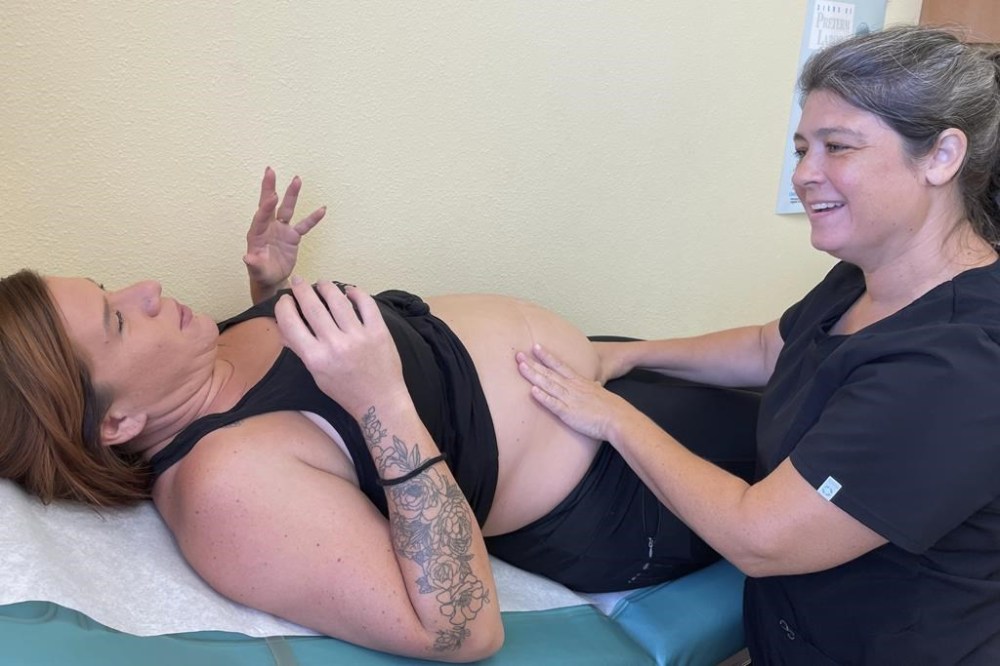
On a recent afternoon, Kayleigh Sturrup arrived for a clinic checkup a few weeks before giving birth to her first child. During the pregnancy, she had uterine fibroids, ligament pain and shortness of breath. She said the midwives gave her “a layer of support.”
Experts say health care providers are more likely to spot potential problems when they listen closely to patients and take what they say seriously.
Before examining Sturrup, midwife Celena Brown asked: “How we feeling?”
“Nervous and excited,” the 31-year-old replied. “As it comes closer, I worry: Am I going to be able to cope with the pain?”
“It’s normal to feel nervous,” Brown assured her. “You want to be open to the entire process. You got this. You can do it!”
Brown said she’s constantly awed by her patients’ strength. She recalled a teen just out of jail who overcame addiction and wound up giving birth vaginally without pain medication.
Joseph has no intention of returning to Europe. She has started a midwifery school, put together training programs for other health care professionals and convenes a national group of professionals and advocates who share ideas to improve maternal health and eliminate disparities over videoconference.
She figures America needs her more.

“This is literally my life’s work,” she said. “I’m not stopping until it’s done.”
___
This story is the first in a two-part series examining how the United States could curb deaths from pregnancy and childbirth.
___
The Associated Press Health and Science Department receives support from the Howard Hughes Medical Institute’s Science and Educational Media Group. The AP is solely responsible for all content.