Nova Scotia’s ambulance service says response times improving in 2024

Advertisement

Advertise with us

HALIFAX - Emergency response times across Nova Scotia, which had risen steadily in recent years, are improving, says the head of the province’s ambulance service.

Read this article for free:


By clicking the button above, an account will be created and you will begin to receive some of our recommended newsletters. You may opt out of any newsletter by visiting your Email and Communication Preferences page or by clicking "unsubscribe" at the bottom of any email.

or

Already have an account? Log in here »

To continue reading, please subscribe:

Digital Subscription

One year of digital access for only $1.44 a week*

  • Enjoy unlimited reading on winnipegfreepress.com
  • Read the E-Edition, our digital replica newspaper
  • Access News Break, our award-winning app
  • Play interactive puzzles

*Billed as $5.77 plus GST every four weeks. After 52 weeks, price increases to the regular rate of $19.95 plus GST every four weeks. Offer available to new and qualified returning subscribers only. Cancel any time.

To continue reading, please subscribe:

Add Free Press access to your Brandon Sun subscription for only an additional

$1 for the first 4 weeks*

  • Enjoy unlimited reading on winnipegfreepress.com
  • Read the E-Edition, our digital replica newspaper
  • Access News Break, our award-winning app
  • Play interactive puzzles
Start now

*Your next Brandon Sun subscription payment will increase by $1.00 and you will be charged $17.95 plus GST for four weeks. After four weeks, your payment will increase to $24.95 plus GST every four weeks.

Hey there, time traveller!
This article was published 11/09/2024 (768 days ago), so information in it may no longer be current.

HALIFAX – Emergency response times across Nova Scotia, which had risen steadily in recent years, are improving, says the head of the province’s ambulance service.

Average response times are down from 36 minutes to 18 minutes provincewide so far this year, Matthew Crossman, president of Emergency Medical Care Inc., told the legislature’s public accounts committee Wednesday.

Crossman attributed the improvement to the use of an air ambulance for long-distance transfers to Halifax hospitals, which has liberated ground crews for shorter trips. Improved wait times are also due to clinical programs, including one that allows paramedics to discharge some patients at the scene of their treatment without having to bring them to hospital, he added.

The head of Nova Scotia’s ambulance service has told a legislature committee that ambulance response times have improved across the province since January. Ambulances are seen at the Dartmouth General Hospital in Dartmouth, N.S. on July 4, 2013. THE CANADIAN PRESS/Andrew Vaughan

Under that program, paramedics are able to consult with physicians and nurses at the ambulance communications centre to determine the severity of any injuries before determining options.

“About a third of our calls result in non-transport, which allows us to be able to get to (other) people quicker,” Crossman told the committee. He said the use of the aircraft has added 11,500 service hours back to the ground ambulance system.

Last September, provincial auditor general Kim Adair released a report showing the average wait time for an ambulance in 2022 had risen to 25 minutes from 14 minutes. Between 2017 and 2022, average response times had grown between two and five per cent annually.

Adair also found that in 2022 paramedics were on average spending one-quarter of their working hours in emergency department hallways waiting for patients to be admitted to hospital, a process known as patient transfers. That year, none of the province’s largest hospitals consistently met the province’s transfer standard of 30 minutes, with her audit finding that standard was met only 23 per cent of the time.

The committee was told that so far this year, over 30 per cent of patient transfers are occurring at the 30-minute mark. Still, patient transfer times remain high, ranging anywhere from 90 minutes to two hours.

Crossman told reporters that he believes patient volumes are at the heart of the problem with the ambulance service now handling about 200,000 calls a year from across the province. “The hospital is also seeing the same amount of patients going in so it’s about finding innovative ways to care for people,” he said.

Karen Oldfield, interim CEO of the province’s health authority, said the current hospital occupancy rate is 104 per cent, which ends up clogging the system as patients try to access care.

Oldfield said a provincewide command centre that provides information on bed availability and patient transfers has helped with system access, as have various clinical teams that assess the level of treatment required by patients at hospital emergency departments.

As for patient transfer times by ambulances, she said there’s still room for improvement.

“Incrementally … it’s a classic case of how do you eat an elephant? One bite at a time,” Oldfield said.

This report by The Canadian Press was first published Sept. 11, 2024.
Report Error Submit a Tip

More Stories

Prosecutions branch reviewing new evidence from police HQ public inquiry

Scott Billeck 3 minute read Preview

Prosecutions branch reviewing new evidence from police HQ public inquiry

Scott Billeck 3 minute read 2:54 PM CDT

Prosecutors are reviewing new evidence from the public inquiry into Winnipeg’s police headquarters project to determine whether criminal charges could be pursued.

The Manitoba Prosecution Service said Monday the review, launched in July, is examining whether evidence presented during the inquiry could change previous decisions not to lay charges in the scandal-plagued project.

The $2.1-million public inquiry took place over 27.5 hearing dates between February and May, and commissioner Garth Smorang released his final report Monday.

The prosecution service has twice previously explored criminal charges stemming from the project.

Read
2:54 PM CDT

‘Make eye contact’: police urge extra caution amid spate of vehicle-pedestrian collisions

Scott Billeck 5 minute read Preview

‘Make eye contact’: police urge extra caution amid spate of vehicle-pedestrian collisions

Scott Billeck 5 minute read 12:32 PM CDT

Winnipeg police are urging motorists and pedestrians to exercise extra caution at intersections following a rash of collisions across the city, including one that claimed the life of a woman.

“Having the right of way does not make you safe,” Insp. Helen Peters of the Winnipeg Police Service’s traffic division said during a news conference Monday morning.

“This isn’t just about who’s at fault. This is about keeping each other safe and doing everything we can as drivers, motor vehicles or pedestrians to help each other out and navigate our roads.”

Police said a woman in her 80s was struck by a vehicle that failed to stop at a stop sign while turning right onto eastbound Roblin Boulevard from Hunterspoint Road on Sept. 29.

Read
12:32 PM CDT

Officials say catastrophic base fire was known ahead of time, allowed to burn

Jack Farrell and Fakiha Baig, The Canadian Press 5 minute read Preview

Officials say catastrophic base fire was known ahead of time, allowed to burn

Jack Farrell and Fakiha Baig, The Canadian Press 5 minute read Updated: Yesterday at 9:33 PM CDT

Canada's military says a grass fire that killed four soldiers and sent scores more to hospital with bad burns was known well beforehand but not considered a threat.

Maj.-Gen. Wade Rutland, commander of 1st Canadian Division, says the grass fire was a kilometre away and considered sufficiently under control that training exercises were allowed to continue Saturday afternoon at Canadian Forces Base Wainwright in central Alberta.

However, he said conditions — including a violent, sudden windstorm — sent those flames racing over the Prairie landscape at lightning speed, landing right on top of the soldiers.

"This was a very uncommon occurrence," Rutland told a news conference Sunday.

Read
Updated: Yesterday at 9:33 PM CDT

New twist in Hellebuyck saga, suspension ends Friday

Ken Wiebe 7 minute read Preview

New twist in Hellebuyck saga, suspension ends Friday

Ken Wiebe 7 minute read Saturday, Oct. 17, 2026

Connor Hellebuyck has played the reverse Uno card. What we don’t know is if he has any intention of coming back to friendly Manitoba or if this is simply the latest attempt to put the Winnipeg Jets' feet to the flames in an effort to move him to an American market.

Read
Saturday, Oct. 17, 2026

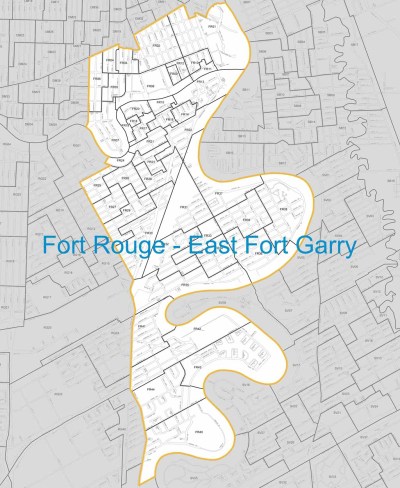
Four councillor candidates vie for wide-open Fort Rouge-East Fort Garry ward

Malak Abas 6 minute read Preview

Four councillor candidates vie for wide-open Fort Rouge-East Fort Garry ward

Malak Abas 6 minute read Yesterday at 3:21 PM CDT

One of Winnipeg’s most densely populated wards is up for grabs come election day.

Four candidates are in the running in Fort Rouge-East Fort Garry, with the councillor position wide open after area Coun. Sherri Rollins announced in July she would be withdrawing her candidacy.

Journalist Brook Jones, hospitality worker and union organizer Carson Mauthe, city planner Jeff Palmer and retired finance worker Kevin Stuart have thrown their hats in the race.

Palmer has worked as a city planner for more than 20 years, in both the non-profit and private sectors, including CentreVenture and the University of Winnipeg Community Renewal Corporation.

Read
Yesterday at 3:21 PM CDT

Consumer apprehension grows as US retailers adopt AI-assisted pricing tools

Dee-ann Durbin And Anne D'innocenzio, The Associated Press 7 minute read Preview

Consumer apprehension grows as US retailers adopt AI-assisted pricing tools

Dee-ann Durbin And Anne D'innocenzio, The Associated Press 7 minute read Yesterday at 2:10 AM CDT

U.S. consumers aren't just frustrated with high prices. They're angry and confused about the increasingly high-tech ways that restaurant chains and major retailers are setting those prices.

Digital price tags are rapidly replacing paper ones in grocery aisles. Artificial intelligence tools help businesses decide what to charge by predicting how customers might respond. Terms like “dynamic pricing” and “surveillance pricing” are stirring anxiety on social media, where users wonder if different people are getting different prices for the same product.

Americans have grown accustomed to changing prices when booking flights, hotel rooms and rides, but the prospect of everyday spending shaped by algorithms they don’t understand and personal data they may not realize they’re sharing has touched a nerve.

“There are major tensions happening right now between who’s really going to have the power with some of these algorithms and usage of bots and AI: the companies or the shopper,” said Katie Thomas, who leads an internal consumer behavior think tank at the management consulting firm Kearney.

Read
Yesterday at 2:10 AM CDT