‘Strike does feel imminent’
Health-care support workers given same proposal they rejected; home care could be affected

Advertisement
Read this article for free:
or
Already have an account? Log in here »
To continue reading, please subscribe:

Digital Subscription
One year of digital access for only $205*
- Enjoy unlimited reading on winnipegfreepress.com
- Read the E-Edition, our digital replica newspaper
- Access News Break, our award-winning app
- Play interactive puzzles
*First annual payment billed as $205.00 + GST for one year. This annual subscription will automatically renew at $233.00 + GST every 52 weeks (10% off the regular annual price of $259.35). Offer available to new and qualified returning subscribers only. Cancel any time.
To continue reading, please subscribe:
Add Free Press access to your Brandon Sun subscription for only an additional
$1 for the first 4 weeks*
- Enjoy unlimited reading on winnipegfreepress.com
- Read the E-Edition, our digital replica newspaper
- Access News Break, our award-winning app
- Play interactive puzzles
*Your next Brandon Sun subscription payment will increase by $1.00 and you will be charged $17.95 plus GST for four weeks. After four weeks, your payment will increase to $24.95 plus GST every four weeks.
Read unlimited articles for free today:
or
Already have an account? Log in here »
Hey there, time traveller!
This article was published 01/10/2024 (738 days ago), so information in it may no longer be current.
Bargaining for health-care support workers appeared to hit a stalemate Tuesday, as Shared Health warned that home care could be affected if staff go on strike next week.
More than 25,000 health support workers represented by Canadian Union of Public Employees Local 204 and the Manitoba Government and General Employees’ Union could walk off the job on Oct. 8.
The workers include health-care aides, laundry workers, dietary aides, ward clerks, recreation co-ordinators and other support staff. A strike would affect patients and clients living in the Winnipeg, Interlake-Eastern, Prairie Mountain and Southern Health regions.
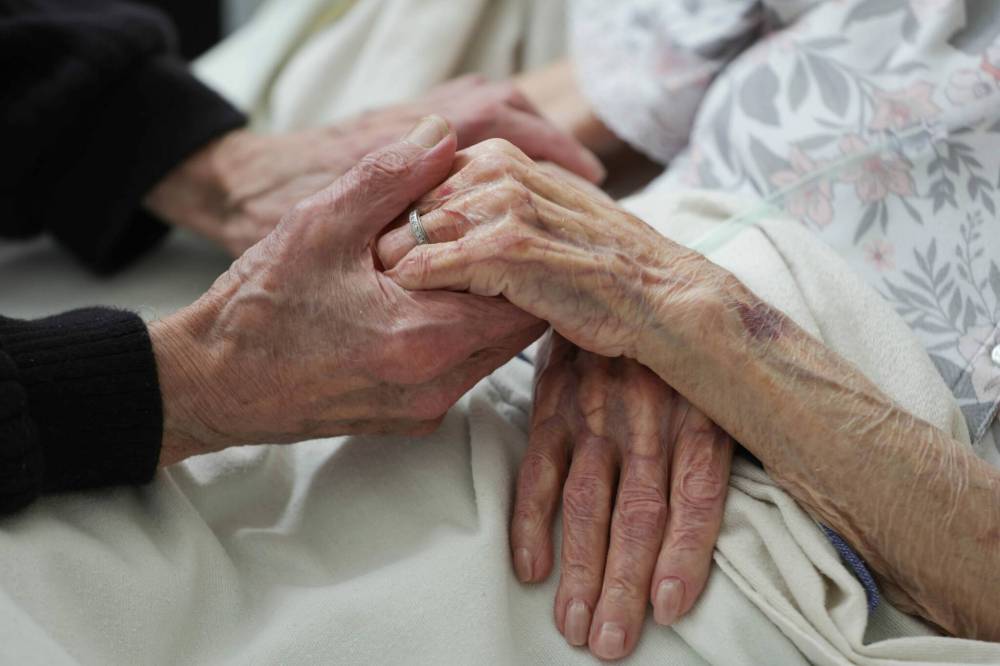
RUTH BONNEVILLE / FREE PRESS FILES
A strike would affect patients and clients living in the Winnipeg, Interlake-Eastern, Prairie Mountain and Southern Health regions.
The union said it received a disappointing offer Tuesday — the exact proposal members voted against in August, said Lee McCleod, Manitoba’s regional director for CUPE.
“The government let the negotiation stall today … a strike does feel imminent, that’s what we feel today,” he said Tuesday afternoon.
“And it’s fast approaching, and we’re all very concerned about that and the impact that it will have, and the services and health care that are provided every day by our members.”
MGEU president Kyle Ross said they were told at the table that Shared Health has no plans to budge.
“Our members overwhelmingly told them that this won’t do, and they even asked us to give them some time to come back with a meaningful response, and in that time, they come back to us with the same exact offer that we’ve already rejected,” he said. “It’s really frustrating.”
Essential-services agreements are in place to continue health services, including priority home care, in the event of a strike. However, clients should expect some delays, changes and possibly cancellations, Shared Health said in a news release Tuesday.
“Service priority will be focused on ensuring clients continue to receive essential services, while some lower-priority tasks are offered less frequently or postponed. Clients whose home visits will be postponed or cancelled can expect to be contacted by phone and notified of the change,” the release said.
Some clinic appointments might also be disrupted next week if the planned job action proceeds, Shared Health said. Affected patients who have a clinical or outpatient appointment will be contacted directly. Staff members began notifying potentially affected clients last week that their home-care plans are being reviewed on a case-by-case basis.
“While essential services will continue to be provided, some clients may benefit from additional support. Families and caregivers are asked to plan accordingly during this time as a part of their backup plan to bridge any gaps in services,” the release said.

The MGEU has said the starting wage for health-care support workers in Manitoba is $17.07 per hour — the lowest in the country. The minimum wage went up to $15.80 Tuesday, a 50-cent increase.
Ross said the provincial government has a responsibility to its health-care providers, and has the power to step in, pointing to the wave of strikes last year that impacted public sector and Crown corporation staff.
“The government has a say in all these bargaining tables. As we learned last summer, the government has a heavy control on what happens, and health care is definitely in the government’s purview,” he said.
The unions are negotiating with Shared Health, and members are employed by Shared Health, the Winnipeg Regional Health Authority, Prairie Mountain Health, the Interlake-Eastern Regional Health Authority and Southern Health. The Northern Regional Health Authority reached a deal in late July.
malak.abas@freepress.mb.ca
Malak Abas is a city reporter at the Free Press. Born and raised in Winnipeg’s North End, she led the campus paper at the University of Manitoba before joining the Free Press in 2020. Read more about Malak.
Every piece of reporting Malak produces is reviewed by an editing team before it is posted online or published in print — part of the Free Press‘s tradition, since 1872, of producing reliable independent journalism. Read more about Free Press’s history and mandate, and learn how our newsroom operates.
Our newsroom depends on a growing audience of readers to power our journalism. If you are not a paid reader, please consider becoming a subscriber.
Our newsroom depends on its audience of readers to power our journalism. Thank you for your support.
Malak Abas is a city reporter at the Free Press. Born and raised in Winnipeg’s North End, she led the campus paper at the University of Manitoba before joining the Free Press in 2020. Read more about Malak.
Every piece of reporting Malak produces is reviewed by an editing team before it is posted online or published in print — part of the Free Press‘s tradition, since 1872, of producing reliable independent journalism. Read more about Free Press’s history and mandate, and learn how our newsroom operates.
Our newsroom depends on a growing audience of readers to power our journalism. If you are not a paid reader, please consider becoming a subscriber.
Our newsroom depends on its audience of readers to power our journalism. Thank you for your support.
Related Articles
Half of support staff looking for new jobs: poll








Advertisement Advertise With Us
Advertisement Advertise With Us
History
Updated on Tuesday, October 1, 2024 5:26 PM CDT: Adds quotes, details.