

Mexican schools have 6 months to ban junk food sales or face heavy fines
Advertisement
Read this article for free:
or
Already have an account? Log in here »
To continue reading, please subscribe:
Monthly Digital Subscription
$0 for the first 4 weeks*
- Enjoy unlimited reading on winnipegfreepress.com
- Read the E-Edition, our digital replica newspaper
- Access News Break, our award-winning app
- Play interactive puzzles
*No charge for 4 weeks then price increases to the regular rate of $19.00 plus GST every four weeks. Offer available to new and qualified returning subscribers only. Cancel any time.
Monthly Digital Subscription
$4.75/week*
- Enjoy unlimited reading on winnipegfreepress.com
- Read the E-Edition, our digital replica newspaper
- Access News Break, our award-winning app
- Play interactive puzzles
*Billed as $19 plus GST every four weeks. Cancel any time.
To continue reading, please subscribe:
Add Free Press access to your Brandon Sun subscription for only an additional
$1 for the first 4 weeks*
*Your next subscription payment will increase by $1.00 and you will be charged $16.99 plus GST for four weeks. After four weeks, your payment will increase to $23.99 plus GST every four weeks.
Read unlimited articles for free today:
or
Already have an account? Log in here »
Hey there, time traveller!
This article was published 21/10/2024 (415 days ago), so information in it may no longer be current.
MEXICO CITY (AP) — Schools in Mexico have six months to implement a government-sponsored ban on junk food or face heavy fines, officials said Monday, as authorities confront what they call the worst childhood obesity problem in the world.
The rules, published on Sept. 30, target products that have become staples for two or three generations of Mexican school kids: sugary fruit drinks, chips, artificial pork rinds and soy-encased, salty peanuts with chili.
School administrators who violate the order will face fines equivalent to between $545 and $5,450, which could double for a second offense. That could amount to nearly a year’s wages for some.
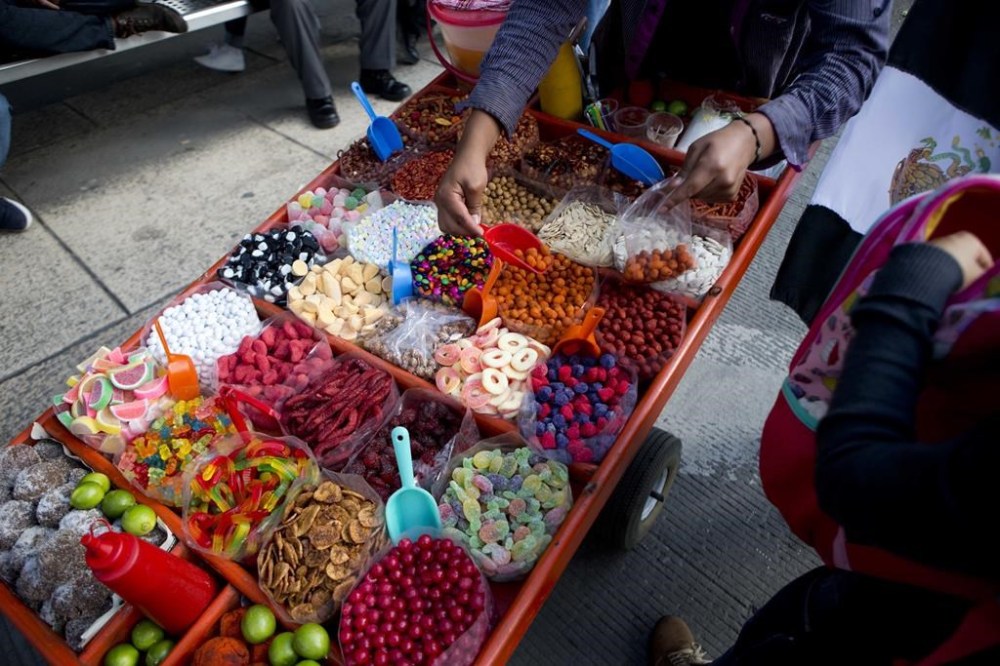
Mexico’s children have the highest consumption of junk food in Latin America and many get 40% of their total caloric intake from it, according to the U.N. children’s agency, which has called child obesity there an emergency.
Authorities say about one-third of Mexico’s children are overweight or obese.
Previous attempts to implement laws against junk food have met with little success.
A survey of over 10,000 schools carried out between 2023 and 2024 found that junk food was available in 98% of them, with sugary drinks in 95% and soft drinks in 79%. Ads for junk food were found in 25% of schools.
New President Claudia Sheinbaum said Monday that schools will have to offer water fountains and alternative snacks, like bean tacos.

“It is much better to eat a bean taco than a bag of potato chips,” Sheinbaum said. “It is much better to drink hibiscus flower water than soda.”
However, the vast majority of Mexico’s 255,000 schools do not have free drinking water available to students. According to a report in 2020, the effort to install drinking fountains succeeded in about 10,900 of the country’s schools, or about 4%. Many schools are in areas so poor or remote that they struggle to maintain acceptable bathrooms, internet connection or electricity.
Mexico instituted front-of-package warning labels for foods between 2010 and 2020 to advise consumers about high levels of salt, added sugar, excess calories and saturated fats. Some snack foods carry all four warning labels.
But under the new rules, schools will have to phase out any product containing even a single warning label from their snack stands.
It wasn’t immediately clear how the government would enforce the ban on the sidewalks outside schools, where vendors usually set up tables of goods to sell to kids at recess; 77% of schools in the recent survey had such stands outside.