

A New York City law used to padlock suspected illegal pot shops is ruled unconstitutional
Advertisement
Read this article for free:
or
Already have an account? Log in here »
To continue reading, please subscribe:
Monthly Digital Subscription
$0 for the first 4 weeks*
- Enjoy unlimited reading on winnipegfreepress.com
- Read the E-Edition, our digital replica newspaper
- Access News Break, our award-winning app
- Play interactive puzzles
*No charge for 4 weeks then price increases to the regular rate of $19.00 plus GST every four weeks. Offer available to new and qualified returning subscribers only. Cancel any time.
Monthly Digital Subscription
$4.75/week*
- Enjoy unlimited reading on winnipegfreepress.com
- Read the E-Edition, our digital replica newspaper
- Access News Break, our award-winning app
- Play interactive puzzles
*Billed as $19 plus GST every four weeks. Cancel any time.
To continue reading, please subscribe:
Add Free Press access to your Brandon Sun subscription for only an additional
$1 for the first 4 weeks*
*Your next subscription payment will increase by $1.00 and you will be charged $16.99 plus GST for four weeks. After four weeks, your payment will increase to $23.99 plus GST every four weeks.
Read unlimited articles for free today:
or
Already have an account? Log in here »
Hey there, time traveller!
This article was published 29/10/2024 (402 days ago), so information in it may no longer be current.
A law that New York City has relied on to padlock scores of suspected unlicensed marijuana shops is unconstitutional because it violates the rights of store owners, a judge ruled Tuesday.
Mayor Eric Adams’ administration moved immediately to appeal, saying the city had successfully shut down more than 1,200 illegal shops in a crackdown on the thousands of stores that opened without a license after the state legalized recreational use of the drug.
The ruling was made in the case of a Queens business padlocked in September following an inspection by the sheriff’s office that found suspected cannabis and cannabis products for sale without a license.
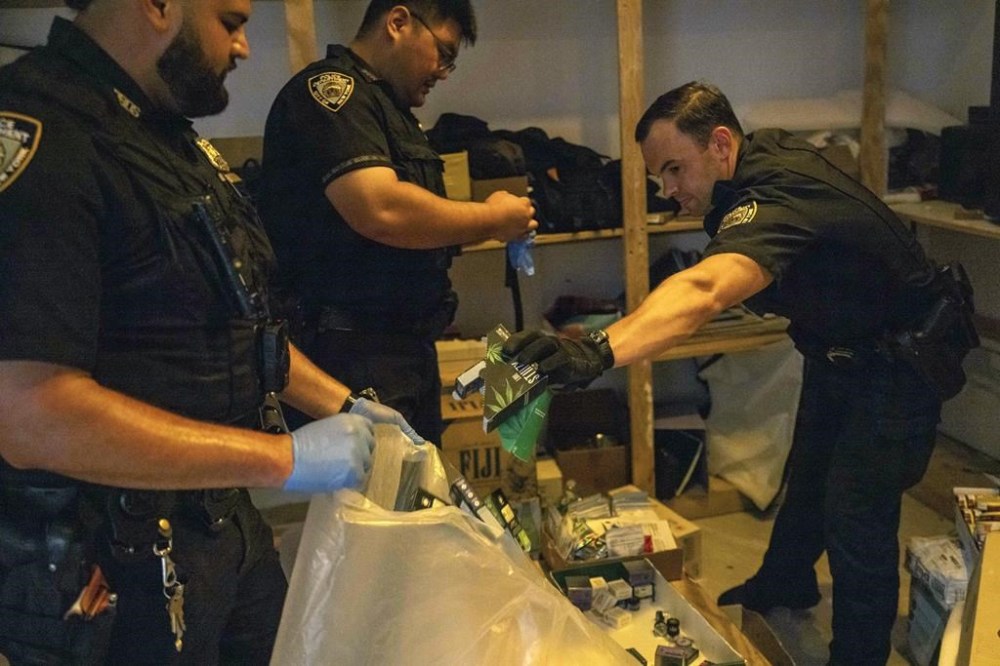
New powers passed in the state budget earlier this year gave local authorities the ability to inspect and immediately shut down suspected illegal stores while administrative hearings play out. But the final decision remains with the sheriff’s office, meaning it can keep a store closed even if a hearing officer recommends otherwise.
That’s what happened in the Queens case — and in many others, attorneys for the businesses say, leading Judge Kevin Kerrigan in his ruling Tuesday to characterize the administrative hearings as “useless, or even a potential farce.”
“Indeed, if the final arbiter has the authority to confer no weight to the hearing, there is no real meaningful ‘opportunity to be heard,’ which vastly increases the risk of erroneous deprivation and raises a due process concern,” he wrote.
Adams’ spokesperson, Liz Garcia, said the city’s law department had filed a notice of appeal.

“Illegal smoke shops and their dangerous products endanger young New Yorkers and our quality of life, and we continue to padlock illicit storefronts and protect communities from the health and safety dangers posed by illegal operators,” she said in an emailed statement.
Attorney Lance Lazzaro predicted the ruling would allow every store that has been shut down to reopen and sue for damages, including for lost business and reputational harm.
“The damages will be astronomical,” said Lazzaro, who represents the Queens store, Cloud Corner.
“The City of New York should be ashamed for allowing this process to happen in the first place,” he said via email.
At an administrative hearing following its closure, Cloud Corner’s owner argued that the store was closed when the sheriff entered to conduct the inspection, so no cannabis products were being sold. The hearing officer agreed but despite his dismissal of the summons, the sheriff’s office opted to keep the closure order in place for one year.