‘We failed her’: CEO apologizes as B.C. starvation inquest seeks pay boost for carers
Advertisement
Read this article for free:
or
Already have an account? Log in here »
To continue reading, please subscribe:

Digital Subscription
One year of digital access for only $205*
- Enjoy unlimited reading on winnipegfreepress.com
- Read the E-Edition, our digital replica newspaper
- Access News Break, our award-winning app
- Play interactive puzzles
*First annual payment billed as $205.00 + GST for one year. This annual subscription will automatically renew at $233.00 + GST every 52 weeks (10% off the regular annual price of $259.35). Offer available to new and qualified returning subscribers only. Cancel any time.
To continue reading, please subscribe:
Add Free Press access to your Brandon Sun subscription for only an additional
$1 for the first 4 weeks*
- Enjoy unlimited reading on winnipegfreepress.com
- Read the E-Edition, our digital replica newspaper
- Access News Break, our award-winning app
- Play interactive puzzles
*Your next Brandon Sun subscription payment will increase by $1.00 and you will be charged $17.95 plus GST for four weeks. After four weeks, your payment will increase to $24.95 plus GST every four weeks.
Read unlimited articles for free today:
or
Already have an account? Log in here »
Hey there, time traveller!
This article was published 24/01/2025 (623 days ago), so information in it may no longer be current.
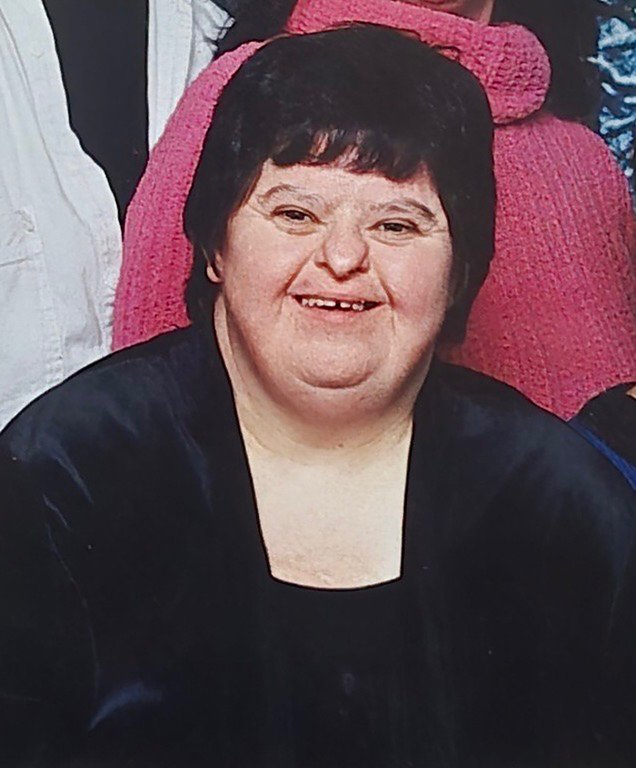
The head of a Crown corporation that funded the care of a B.C. woman with Down syndrome who died of starvation said the organization “failed her,” after an inquest jury ruled the death a homicide and called for better pay for home carers of adults with developmental disabilities.
It was among 13 recommendations made by the coroners inquest jury after hearing evidence about the 2018 death of Florence Girard in the home of her caregiver, where she lived as part of a government-funded program.
The head of a provincial Down syndrome advocacy organization said the detailed recommendations, released Friday after nearly two days of deliberations, are a sign of the need for a “complete reset” of the system.
The homicide ruling is not a determination of criminality and inquest juries are not asked to find fault in cases that they hear, but rather make recommendations on how to prevent similar deaths in the future.
The jury foreman told coroner Donita Kuzma that home-share providers should get “a living wage commensurate with the complexity of care needed” beyond paying for basic necessities.
The foreman said the jury heard “repeatedly” that funding isn’t adequate to attract and retain home-share providers.
Girard was 54 years old when she died weighing only about 50 pounds.
She lived in the home of Astrid Dahl for eight years as part of a home-share program funded by the provincial Crown corporation Community Living BC, which is mandated to support nearly 30,000 adults in the province with developmental disabilities.
Ross Chilton, CEO of CLBC, said in a statement that “the system and CLBC failed Florence.”
“We failed her family who trusted that Florence would receive the emotional and physical supports she required,” he said.
“The checks in place at that time didn’t work. While acknowledging that truth is painful, it’s important to do so we can prevent such a tragedy in the future. On behalf of CLBC I offer an unreserved apology to Florence’s family, friends and loved ones.”
Managing and monitoring home-share programs across the province is contracted out to local organizations. In Girard’s case, that was the Kinsight Community Society.
The jury heard that Girard had not seen a doctor for four years leading up to her death and no one from the society in charge of her care had seen her in person for months before she died.
Dahl told the jury Girard hated going to the doctor and would “melt down” whenever the idea was discussed and said she was not getting enough support.
Dahl was convicted in 2022 for failing to provide the necessities of life to Girard.
Dahl told the jury she received around $2,000 a month to care for Girard, on top of a few hundred dollars to pay for help at times when she needed respite.
Tiffany Wickham, an area supervisor with the Crown corporation, acknowledged that the money provided to caregivers “has not kept up with the rate of inflation and housing costs.”
Wickham told the jury that the corporation “would not be able to maintain the services” it offers if the pay was increased to meet inflation under its current budget.
Krista Maniezzo, who was the shared-living co-ordinator at Kinsight Community Society when Girard died, testified that her workload with other files contributed to Girard’s case slipping through the cracks.
The inquest heard that about 200 home-share co-ordinators across the province are responsible for managing caseloads of 25 people each.
The jury recommendations to the Crown corporation also include reducing the workload for co-ordinators and making their compensation comparable with pay for similar positions with the Ministry of Children and Family Development.
On the final day of testimony, Adam McKinnon, assistant deputy minister at the Ministry of Social Development and Poverty Reduction, said the population of adults with developmental disabilities being supported by Community Living BC is growing at a rate of about five per cent per year.
McKinnon said that in the last round of bargaining for the collective agreement, the gap in pay between co-ordinators and other similar positions was acknowledged.
“Rather than continue to perpetuate that gap, the decision was made to deliberately keep that gap present, but not make it worse,” he said.
“And then, over time, look to see how we can manage the challenges that are resulting from wage gaps.”
Other recommendations from the jury include moving away from a paper-based case tracking system to a more centralized one, conducting unannounced visits to homes and offering families that want to keep their loved ones at home support at “the same level as a home-share provider” if they meet expectations.
Tamara Taggart, the president of Down syndrome B.C., both testified at the inquest and sat through the nearly two weeks of testimony.
In an interview after the recommendations were released, Taggart said she hopes they are heard and respected by the government departments that have been called to act.
“What they said loud and clear is that there needs to be a complete reset of CLBC, and many of their recommendations were for immediate action. I think that says a lot too,” she said.
Taggart said her biggest takeaway from the inquest is the systemic failures that led to Girard’s death.
“What led to Florence’s death (is) systemic failures from Kinsight and really systemic indifference from CLBC and the province. Its indifference towards people with developmental and intellectual disabilities. … We have a lot of work to do.”
The statement from the Crown corporation says it has significantly improved training, standards and polices for home sharing since Girard’s death.
It says agencies that contract home-sharing providers must now visit those homes at least once every three months and doctor’s visits are required once a year.
The statement says $1.5 million has been spent since Girard died for better monitoring and tracking oversight systems within CLBC and that 12 new people have been hired to increase oversight.
The jury also recommended that the ministries of Health and Social Development immediately reinstate a provincial medical consultant position at the Crown corporation which was eliminated in 2015.
Stephen Hall, director of quality assurance at Community Living BC, testified the person was employed by the Health Ministry but worked with the Crown corporation on tasks like reviewing reports and helping those getting services connect with health care.
“That doctor also was very helpful if an individual is in hospital (and) we we’re planning for services,” Hall said.
This report by The Canadian Press was first published Jan. 24, 2025.