

Off-road vehicles not safe for kids, Canadian Paediatric Society warns
Advertisement
Read this article for free:
or
Already have an account? Log in here »
To continue reading, please subscribe:
Monthly Digital Subscription
$1 per week for 24 weeks*
- Enjoy unlimited reading on winnipegfreepress.com
- Read the E-Edition, our digital replica newspaper
- Access News Break, our award-winning app
- Play interactive puzzles
*Billed as $4.00 plus GST every four weeks. After 24 weeks, price increases to the regular rate of $19.95 plus GST every four weeks. Offer available to new and qualified returning subscribers only. Cancel any time.
Monthly Digital Subscription
$4.99/week*
- Enjoy unlimited reading on winnipegfreepress.com
- Read the E-Edition, our digital replica newspaper
- Access News Break, our award-winning app
- Play interactive puzzles
*Billed as $19.95 plus GST every four weeks. Cancel any time.
To continue reading, please subscribe:
Add Free Press access to your Brandon Sun subscription for only an additional
$1 for the first 4 weeks*
*Your next subscription payment will increase by $1.00 and you will be charged $16.99 plus GST for four weeks. After four weeks, your payment will increase to $23.99 plus GST every four weeks.
Read unlimited articles for free today:
or
Already have an account? Log in here »
Hey there, time traveller!
This article was published 24/02/2025 (399 days ago), so information in it may no longer be current.
TORONTO – The Canadian Paediatric Society is calling for better regulation and safety measures to protect kids riding off-road vehicles, including all-terrain vehicles and side-by-sides.
The society says children and adolescents make up about a third of off-road vehicle deaths.
In a statement released today, it says federal, provincial and territorial governments should regulate the use of off-road vehicles the same way they do cars.
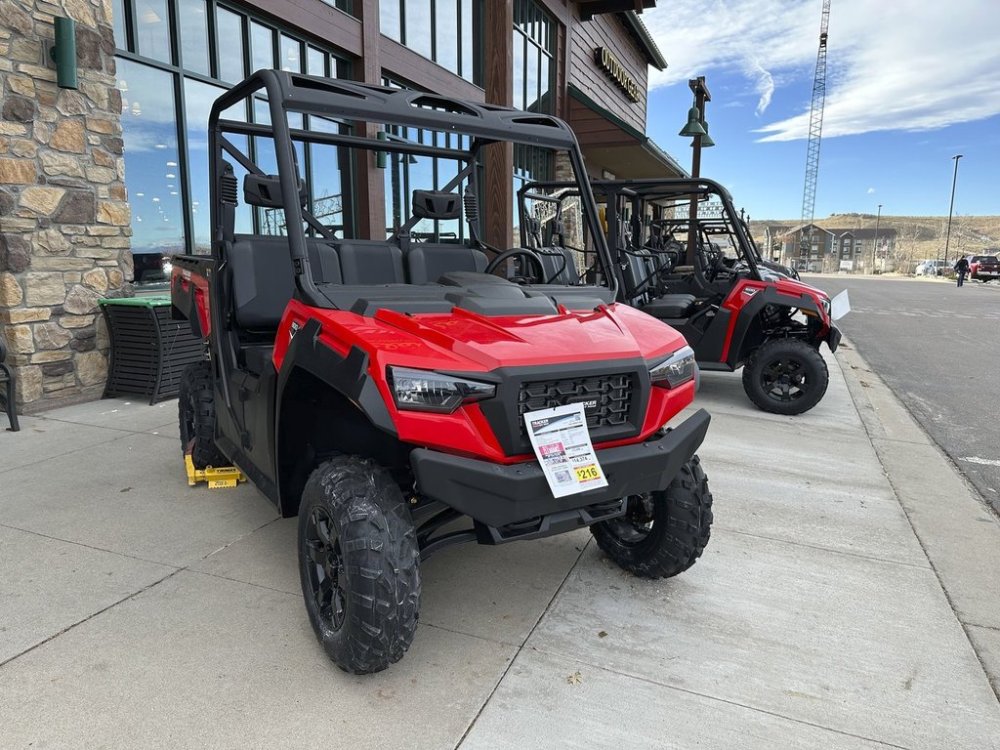
The pediatric society says those regulations should require kids to be at least 16 years old to drive the vehicles and 12 years old to be a passenger.
They should also make wearing government-certified helmets mandatory, as kids and teens not wearing one are five times more likely to suffer severe head or neck injuries.
The society says off-road vehicles are specifically designed to be used on dirt trails and in forested areas and should never be driven on hard-surface roads.
Research suggests that being younger than 16 is a risk factor for losing control of an off-road vehicle because the necessary developmental and cognitive skills may not be fully formed, the statement said.
“Staying alert and responding appropriately to sudden changes in terrain involves ‘active riding’, which requires precise hand-eye coordination, physical strength, balance, spatial awareness, and constant attention,” it said.
“These developmental skills and the cognitive maturity to link actions to consequences — specifically, the implications of unsafe behaviours for self and others and the relationships between distance, speed, and braking — tend to develop in most adolescents between 14 and 16 years of age.”
The pediatric society called on industry to stop marketing and selling off-road vehicles to adolescents under 16 “until safety modifications have been implemented, tested, standardized, and proven to be effective in all Canadian settings.”

Provinces and territories should implement training courses and a graduated driver’s licensing system for off-road vehicles, it said.
Pediatricians and primary-care providers also have a role to play, it said, by educating families about the “significant risks for severe injury and death,” even if the off-road vehicle is a “youth model.”
The pediatric society acknowledged that off-road vehicles are widely used in remote areas, on farms and for Indigenous hunting and fishing. In those cases, pediatric care providers should help families reduce the risk to youth by emphasizing the need to avoid paved roads, wear a helmet at all times and only ride as a passenger on vehicles that are designed to carry more than one person.
This report by The Canadian Press was first published Feb. 24, 2025.
Canadian Press health coverage receives support through a partnership with the Canadian Medical Association. CP is solely responsible for this content.