

USDA ends program that helped schools serve food from local farmers
Advertisement
Read this article for free:
or
Already have an account? Log in here »
To continue reading, please subscribe:
Monthly Digital Subscription
$1 per week for 24 weeks*
- Enjoy unlimited reading on winnipegfreepress.com
- Read the E-Edition, our digital replica newspaper
- Access News Break, our award-winning app
- Play interactive puzzles
*Billed as $4.00 plus GST every four weeks. After 24 weeks, price increases to the regular rate of $19.95 plus GST every four weeks. Offer available to new and qualified returning subscribers only. Cancel any time.
Monthly Digital Subscription
$4.99/week*
- Enjoy unlimited reading on winnipegfreepress.com
- Read the E-Edition, our digital replica newspaper
- Access News Break, our award-winning app
- Play interactive puzzles
*Billed as $19.95 plus GST every four weeks. Cancel any time.
To continue reading, please subscribe:
Add Free Press access to your Brandon Sun subscription for only an additional
$1 for the first 4 weeks*
*Your next subscription payment will increase by $1.00 and you will be charged $16.99 plus GST for four weeks. After four weeks, your payment will increase to $23.99 plus GST every four weeks.
Read unlimited articles for free today:
or
Already have an account? Log in here »
Hey there, time traveller!
This article was published 12/03/2025 (382 days ago), so information in it may no longer be current.
WASHINGTON (AP) — The U.S. Agriculture Department is ending two pandemic-era programs that provided more than $1 billion for schools and food banks to purchase food from local farmers and producers.
About $660 million of that went to schools and childcare centers to buy food for meals through the Local Foods for Schools program. A separate program provided money to food banks.
In Maine, the money allowed the coastal RSU 23 school district to buy food directly from fisherman, dairy producers and farmers for school meals, said Caroline Trinder, the district’s food and nutrition services director.
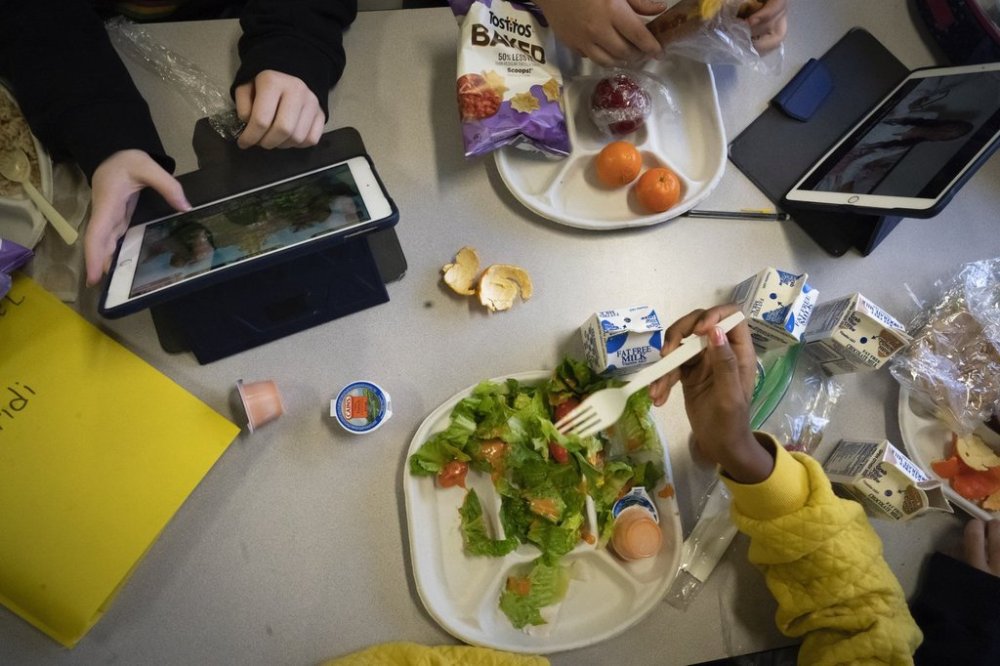
“I think everyone can say that they want kids at school to receive the healthiest meals possible,” Trinder said. “It’s the least processed, and we’re helping our local economy, we’re helping farmers that may be the parents of our students.”
The cuts will hurt school districts with “chronically underfunded” school meal budgets, said Shannon Gleave, president of the School Nutrition Association.
“In addition to losing the benefits for our kids, this loss of funds is a huge blow to community farmers and ranchers and is detrimental to school meal programs struggling to manage rising food and labor costs,” Gleave said in a statement.
USDA said the programs are a legacy of the pandemic and no longer supported the agency’s priorities.
“The COVID era is over — USDA’s approach to nutrition programs will reflect that reality moving forward,” a USDA spokesperson said in a statement.
Massachusetts received roughly $12 million in federal funding for school districts and childcare programs to buy food from local producers.
“The signaling that’s coming out of Washington in recent weeks, it’s obviously deeply disappointing,” said Patrick Tutwiler, the state’s education secretary. “There’s clear misalignment around what is important and what matters. We are seeing this cut of the LFS program as a first step towards deeper cuts.”
School nutrition directors are bracing for potential rollbacks to programs that expanded funding for school meals, which for some children can be their only reliable source of food.
Proposed spending cuts to fund Republican’s tax bill include raising the poverty level needed for schools to provide universal free meals without an application. Restricting eligibility for food assistance programs and requiring income verification for free or reduced price school meals, two proposals for cutting costs, would also likely cut out eligible families from accessing food, the School Nutrition Association said.
___
The Associated Press’ education coverage receives financial support from multiple private foundations. AP is solely responsible for all content. Find AP’s standards for working with philanthropies, a list of supporters and funded coverage areas at AP.org.