HIV soars after a deadly war in Ethiopia’s Tigray. Trump’s aid cuts aren’t helping
Advertisement
Read this article for free:
or
Already have an account? Log in here »
To continue reading, please subscribe:

Digital Subscription
One year of digital access for only $205*
- Enjoy unlimited reading on winnipegfreepress.com
- Read the E-Edition, our digital replica newspaper
- Access News Break, our award-winning app
- Play interactive puzzles
*First annual payment billed as $205.00 + GST for one year. This annual subscription will automatically renew at $233.00 + GST every 52 weeks (10% off the regular annual price of $259.35). Offer available to new and qualified returning subscribers only. Cancel any time.
To continue reading, please subscribe:
Add Free Press access to your Brandon Sun subscription for only an additional
$1 for the first 4 weeks*
- Enjoy unlimited reading on winnipegfreepress.com
- Read the E-Edition, our digital replica newspaper
- Access News Break, our award-winning app
- Play interactive puzzles
*Your next Brandon Sun subscription payment will increase by $1.00 and you will be charged $17.95 plus GST for four weeks. After four weeks, your payment will increase to $24.95 plus GST every four weeks.
Read unlimited articles for free today:
or
Already have an account? Log in here »
Hey there, time traveller!
This article was published 26/03/2025 (559 days ago), so information in it may no longer be current.
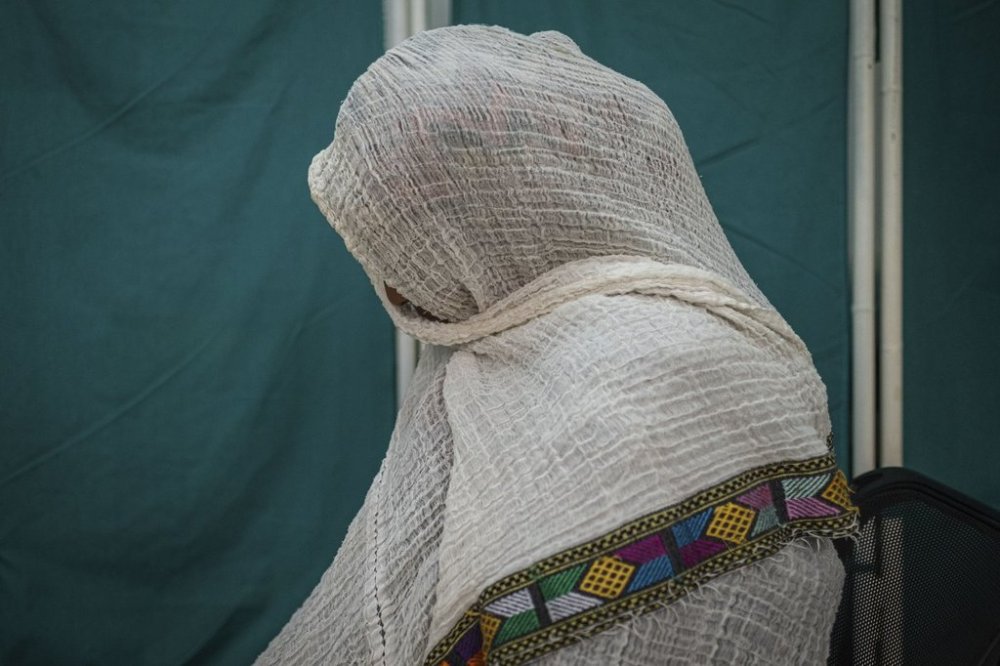
SHIRE, Ethiopia (AP) — The woman survived two brutal attacks in the dying days of the war in Ethiopia’s Tigray region. First, she said, she was dragged to a military encampment and gang-raped by Eritrean soldiers who held dozens of other women. Two days later, she was raped again by a group of militiamen.
Her attackers broke her collarbone and her wrist. They also infected her with HIV. More than two years later, she can sometimes buy antiretroviral drugs by selling part of the wheat she gets as a displaced person, but it’s not enough.
“I am strong, but my disease is getting worse and worse,” the woman told The Associated Press at a clinic in Shire, a town in northwestern Tigray. The AP typically does not identify people who are victims of sexual abuse.
Tigray was once considered a model in the fight against HIV. Years of awareness-raising efforts had brought the region’s HIV prevalence rate to 1.4%, one of the lowest in Ethiopia.
Then, in 2020, war began between Ethiopia’s government, backed by neighboring Eritrea, and Tigray fighters.
Sexual violence was widespread in the two-year conflict, which also had mass killings, hunger and disease. As many as 10% of women and girls aged between 15 and 49 in the region of 6 million people were subject to sexual abuse, mostly rape and gang rape, according to a study published by BMJ Global Health in 2023.
At the same time, Tigray’s health system was systematically looted and destroyed, leaving only 17% of health centers functional, according to another study in the same journal.
As a result, 90% of sexual violence survivors did not get timely medical support.
The woman told the AP she did not get medication for nearly eight months. The window for receiving prophylaxis to prevent HIV is 72 hours.
Today the HIV prevalence rate in Tigray is 3%, more than double the prewar average, according to local health authorities and the United Nations. The rate among the region’s roughly 1 million displaced people is 5.5%.
Among sexual violence survivors, it is 8.6%.
“It was a horrific conflict,” said Amanuel Haile, the head of Tigray’s health bureau. “War was everywhere. Crops failed. Rape was widespread. Hospitals were vandalized. Drugs were interrupted.”
The “complete breakdown” of Tigray’s health services also meant existing HIV patients did not receive antiretrovirals during the war, increasing their risk of transmitting the virus through pregnancy or unprotected sex, Amanuel said.
Few condoms were available during the war, which saw Tigray cut off from the rest of Ethiopia. Today, some destitute displaced people engage in sex work to survive, another factor that health workers believe is contributing to the spike in HIV cases.
The Trump administration’s decision to kill 83% of U.S. Agency for International Development programs globally is worsening the situation.
Ethiopia has already laid off 5,000 health workers who were hired with U.S. funds to combat HIV. Meanwhile, charities helping HIV patients receive treatment have received stop-work orders.
They include the Organization for Social Services, Health and Development, a national agency whose Tigray branch was testing people for HIV and giving HIV patients food and financial support.
“Since the end of the war, things were slowly improving,” said Yirga Gebregziabher, OSSHD’s manager in Tigray. “Now so many services have stopped again.”
Like the rest of Ethiopia, Tigray is also grappling with sharp rises in other infectious diseases because of the effects of conflict, climate change and funding cuts.
Nationally, malaria cases have soared from 900,000 in 2019 to over 10 million last year. The war interrupted efforts to distribute nets and spray high-risk areas with insecticides to prevent the mosquito-borne disease. Measles rose from 1,941 cases in 2021 to 28,129 in 2024. Cholera and tuberculosis are also making comebacks.
Health workers say Tigray is particularly ill-equipped to deal with these outbreaks. It has few ambulances after most of its emergency vehicles were destroyed in the war. Some doctors have not been paid for 17 months. And its biggest health facility, Ayder Referral Hospital, only has 50% of the drugs it needs.
“These outbreaks are extremely damaging,” said Amanuel with the regional health bureau. “We have a lot to rebuild, and outbreaks take up whatever meager resources we have.”
Meanwhile millions in Tigray still rely on humanitarian aid and 18% of children are malnourished, leaving them vulnerable to diseases.
“We are attempting to rebuild, but still in a state of crisis,” said Abraha Gebreegziabher, the clinical director of Ayder Referral Hospital.
Abraha’s institution is grappling with severe budget cuts and debts that mean it cannot afford basic drugs or items like tubes and syringes. The hospital requires patients to pay for services that were previously free.
Crucially, the war also destroyed Tigray’s system of community-based health insurance, a low-cost program that underpinned the region’s health system.
Restarting this scheme is the health bureau’s top priority, Amanuel said.
But Tigray’s political leaders have become locked in a power struggle that escalated this month when a faction took over several government offices. That threatens to deter donors who have memories of the recent war.
___
Associated Press writer Samuel Getachew in Mekele, Ethiopia, contributed to this report.
For more on Africa and development: https://apnews.com/hub/africa-pulse
The Associated Press receives financial support for global health and development coverage in Africa from the Gates Foundation. The AP is solely responsible for all content. Find AP’s standards for working with philanthropies, a list of supporters and funded coverage areas at AP.org.
Related Articles
Is Ethiopia at war again? A look at the rebellion in one of its most powerful regions
Advertisement Advertise With Us
Advertisement Advertise With Us