

A new cholera outbreak in Sudan has killed over 170 people in a week, officials say
Advertisement
Read this article for free:
or
Already have an account? Log in here »
To continue reading, please subscribe:
Monthly Digital Subscription
$1 per week for 24 weeks*
- Enjoy unlimited reading on winnipegfreepress.com
- Read the E-Edition, our digital replica newspaper
- Access News Break, our award-winning app
- Play interactive puzzles
*Billed as $4.00 plus GST every four weeks. After 24 weeks, price increases to the regular rate of $19.95 plus GST every four weeks. Offer available to new and qualified returning subscribers only. Cancel any time.
Monthly Digital Subscription
$4.99/week*
- Enjoy unlimited reading on winnipegfreepress.com
- Read the E-Edition, our digital replica newspaper
- Access News Break, our award-winning app
- Play interactive puzzles
*Billed as $19.95 plus GST every four weeks. Cancel any time.
To continue reading, please subscribe:
Add Free Press access to your Brandon Sun subscription for only an additional
$1 for the first 4 weeks*
*Your next subscription payment will increase by $1.00 and you will be charged $16.99 plus GST for four weeks. After four weeks, your payment will increase to $23.99 plus GST every four weeks.
Read unlimited articles for free today:
or
Already have an account? Log in here »
Hey there, time traveller!
This article was published 27/05/2025 (303 days ago), so information in it may no longer be current.
CAIRO (AP) — A new cholera outbreak in Sudan has killed 172 people and sickened more than 2,500 over the past week, authorities said Tuesday as a leading medical group warned that the country’s existing health facilities were unable to cope with the surge of patients.
The bulk of the cases were reported in the capital, Khartoum, and its twin city of Omdurman, but cholera was also detected in the provinces of North Kordofan, Sennar, Gazira, White Nile and Nile River, health officials said.
According to Joyce Bakker, the Sudan coordinator for Doctors Without Borders — also known as Médecins Sans Frontières or MSF — the alarming spike began in mid-May, with MSF teams treating almost 2,000 suspected cholera cases in the past week alone.
On Saturday, Sudan’s Health Minister Haitham Ibrahim said the increase in cholera cases just in the Khartoum region has been estimated to average 600 to 700 per week over the past four weeks.
Bekker said MSF’s treatment centers in Omdurman are overwhelmed and that the “scenes are disturbing.”
“Many patients are arriving too late to be saved,” she said. “We don’t know the true scale of the outbreak, and our teams can only see a fraction of the full picture.”
She called for a united response, including water, sanitation and hygiene programs and more treatment facilities.
In March, MSF said that 92 people had died of cholera in Sudan’s White Nile State, where 2,700 people had contracted the disease since late February.
The World Health Organization said that the water-borne disease is a fast-developing and highly contagious infection that causes diarrhea and leads to severe dehydration and possible death within hours when not treated. The disease is transmitted through the ingestion of contaminated food or water.

The outbreak is the latest crisis for Sudan, which was plunged into a war more than two years ago, when tensions between the Sudanese army and its rival paramilitary Rapid Support Forces group, or RSF, exploded with street battles in Khartoum that quickly spread across the country.
Since then, at least 20,000 people have been reported killed, though the number is likely far higher, and more than 14 million have been displaced and forced from their homes.
Sudan has also been engulfed by what the United Nations says is the world’s largest humanitarian crisis, and disease outbreaks, famine and atrocities have mounted as the African country entered its third year of war.
Last week, the Sudanese military said it had regained control of the Greater Khartoum area from the paramilitary forces.
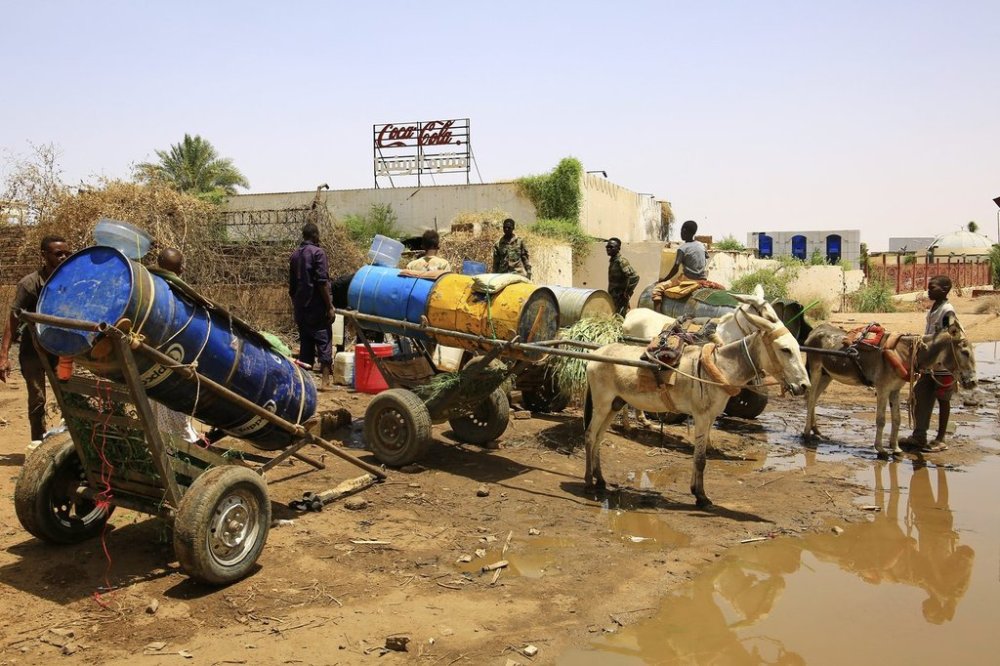
Ibrahim, the health minister, attributed the cholera surge to the return of many Sudanese to the Khartoum region — people who had fled their homes to escape the fighting and are now coming back. Their returns have strained the city’s dwindling water resources, he said.