

Latin America’s top human rights court says states have duty to act on climate crisis
Advertisement
Read this article for free:
or
Already have an account? Log in here »
To continue reading, please subscribe:
Monthly Digital Subscription
$1 per week for 24 weeks*
- Enjoy unlimited reading on winnipegfreepress.com
- Read the E-Edition, our digital replica newspaper
- Access News Break, our award-winning app
- Play interactive puzzles
*Billed as $4.00 plus GST every four weeks. After 24 weeks, price increases to the regular rate of $19.95 plus GST every four weeks. Offer available to new and qualified returning subscribers only. Cancel any time.
Monthly Digital Subscription
$4.99/week*
- Enjoy unlimited reading on winnipegfreepress.com
- Read the E-Edition, our digital replica newspaper
- Access News Break, our award-winning app
- Play interactive puzzles
*Billed as $19.95 plus GST every four weeks. Cancel any time.
To continue reading, please subscribe:
Add Free Press access to your Brandon Sun subscription for only an additional
$1 for the first 4 weeks*
*Your next subscription payment will increase by $1.00 and you will be charged $16.99 plus GST for four weeks. After four weeks, your payment will increase to $23.99 plus GST every four weeks.
Read unlimited articles for free today:
or
Already have an account? Log in here »
Hey there, time traveller!
This article was published 03/07/2025 (266 days ago), so information in it may no longer be current.
BOGOTA, Colombia (AP) — The Inter-American Court of Human Rights on Thursday issued a landmark advisory opinion linking governments’ human rights obligations to their responsibility to address the threat of climate change — a move expected to shape policy and litigation across Latin America and the Caribbean.
The opinion is the first of its kind from the region’s top human rights tribunal and responds to a 2023 request from Colombia and Chile. It says states have a duty under international law to prevent, mitigate and remedy environmental harm that threatens human rights, including through laws, policies and actions aimed at curbing climate change.
The court outlined a series of legal standards, including the recognition of a human right to a healthy climate, the obligation to prevent massive and irreversible environmental harm as well as the duty to protect the rights of current and future generations.
“The Court has declared that we are in a climate emergency that is undermining the human rights of present and future generations and that human rights must be at the center of any effective response,” Nikki Reisch, program director at the Center for International Environmental Law Climate and Energy, told The Associated Press.
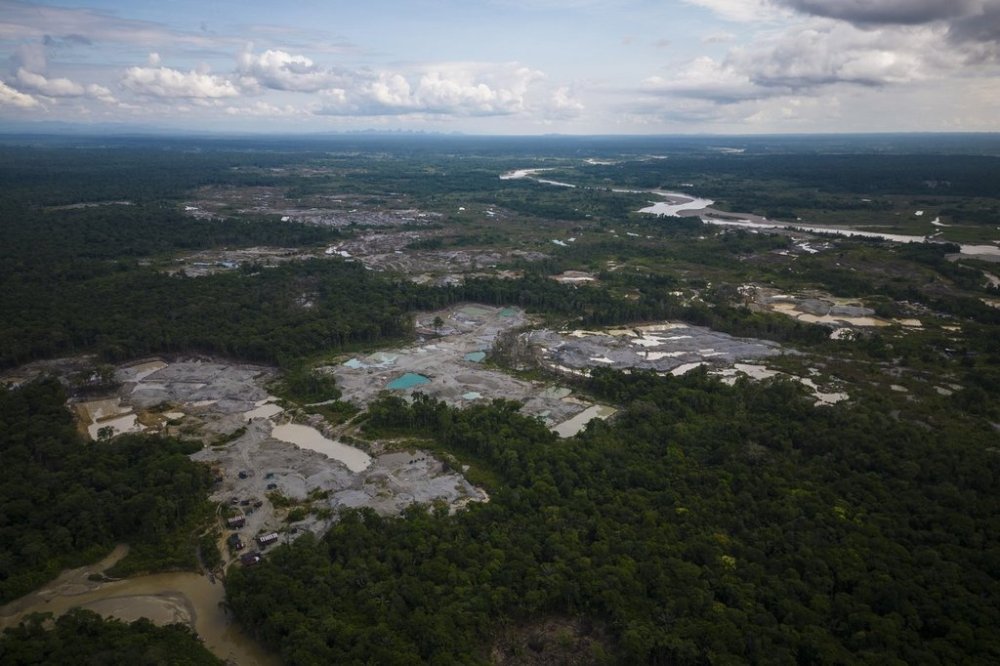
The opinion said states have a legal duty not only to avoid environmental harm but also to protect and restore ecosystems, guided by science and Indigenous knowledge.
“This is a historic opinion,” said Reisch. “It’s not just a legal milestone — it’s a blueprint for action. This opinion will guide climate litigation at the local, regional, and national courts, and provide a foundation for climate policymaking, grounding local legislation and global negotiations in legal obligation, not just in the Americas but around the world.”
Though not binding, the court’s opinions carry legal weight in many member countries of the Organization of American States and often influence domestic legislation, judicial rulings and international advocacy. The court’s findings are expected to bolster climate-related lawsuits and human rights claims in the region, and to influence negotiations ahead of COP30 — the next major United Nations climate summit, set to take place in November in Belem, Brazil.
“States must not only refrain from causing significant environmental damage but have the positive obligation to take measures to guarantee the protection, restoration, and regeneration of ecosystems,” said Court President Judge Nancy Hernández López.
“Causing massive and irreversible environmental harm…alters the conditions for a healthy life on Earth to such an extent that it creates consequences of existential proportions. Therefore, it demands universal and effective legal responses,” López said.
The opinion comes amid growing Indigenous momentum in the region, including a summit in Ecuador’s Amazon last month where hundreds of Indigenous leaders gathered to demand enforcement of court victories recognizing their land and environmental rights.
The Inter-American Court of Human Rights, based in San Jose, Costa Rica, is the region’s top tribunal for interpreting and enforcing the American Convention on Human Rights. Its rulings, though often challenged by weak enforcement, have played a key role in advancing Indigenous rights and environmental protections across Latin America.
In recent years, the court has condemned governments for allowing mining projects on Indigenous land without proper consultation, and advocates have increasingly turned to it as a forum for climate-related accountability.
The advisory builds on the Court’s 2017 advisory ruling that recognized the right to a healthy environment as a standalone human right, deepening its application in the context of climate breakdown.
___
The Associated Press’ climate and environmental coverage receives financial support from multiple private foundations. AP is solely responsible for all content. Find AP’s standards for working with philanthropies, a list of supporters and funded coverage areas at AP.org.