

Smog episodes accumulate and have long-term health effects: Quebec doctors group
Advertisement
Read this article for free:
or
Already have an account? Log in here »
To continue reading, please subscribe:
Monthly Digital Subscription
$1 per week for 24 weeks*
- Enjoy unlimited reading on winnipegfreepress.com
- Read the E-Edition, our digital replica newspaper
- Access News Break, our award-winning app
- Play interactive puzzles
*Billed as $4.00 plus GST every four weeks. After 24 weeks, price increases to the regular rate of $19.95 plus GST every four weeks. Offer available to new and qualified returning subscribers only. Cancel any time.
Monthly Digital Subscription
$4.99/week*
- Enjoy unlimited reading on winnipegfreepress.com
- Read the E-Edition, our digital replica newspaper
- Access News Break, our award-winning app
- Play interactive puzzles
*Billed as $19.95 plus GST every four weeks. Cancel any time.
To continue reading, please subscribe:
Add Free Press access to your Brandon Sun subscription for only an additional
$1 for the first 4 weeks*
*Your next subscription payment will increase by $1.00 and you will be charged $16.99 plus GST for four weeks. After four weeks, your payment will increase to $23.99 plus GST every four weeks.
Read unlimited articles for free today:
or
Already have an account? Log in here »
Hey there, time traveller!
This article was published 16/07/2025 (253 days ago), so information in it may no longer be current.
MONTREAL – A group of Quebec doctors is warning that poor air quality can cause long-term adverse health effects.
The Quebec chapter of the Canadian Association of Physicians for the Environment also believes decision makers are underestimating the impact of air pollution.
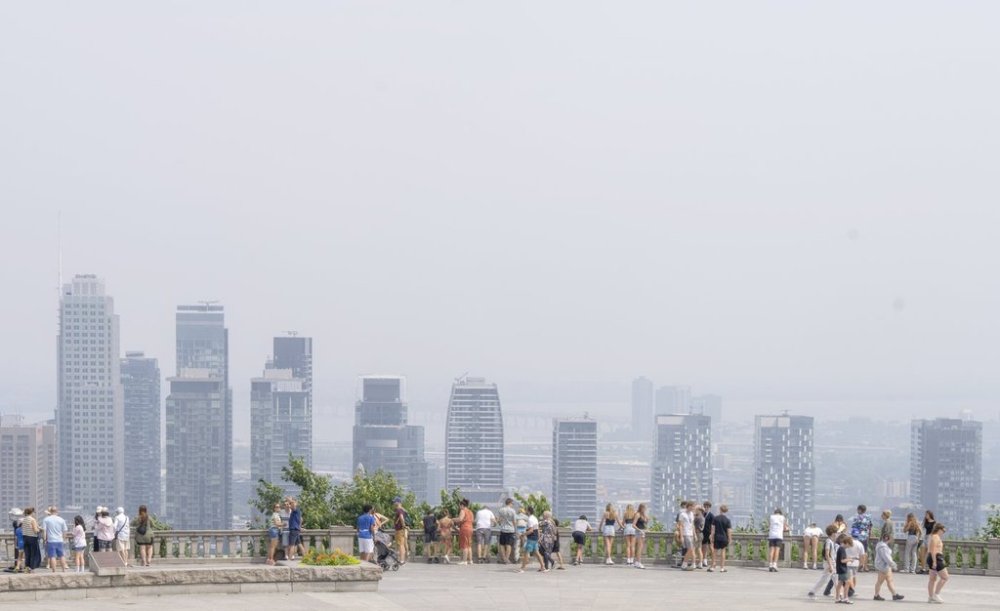
Montreal, Toronto and Quebec City have all experienced poor air quality this week due in part to winds from the west bringing smoke from forest fires in the Prairies and northern Ontario.
Group president Claudel Pétrin-Desrosiers says exposure to fine particles can affect every organ in the body, increasing the risk of everything from premature dementia to lung, heart and kidney problems.
Pétrin-Desrosiers believes decision makers in Quebec need to do more to control polluting companies in order to protect people’s health.
She said many people have the impression that air quality issues are “far away” and only impact people in places such as India or China, but that’s not the case.
“If it takes smog episodes where we experience some of the worst air quality in the world to make us realize that we aren’t immune to these impacts, I hope it will generate conversation and, of course, stricter regulations to address these issues,” Pétrin-Desrosiers said.
“Because we need government regulations, we need to set standards for industry, we need constant vigilance, and we need to be able to communicate these risks.”
When air quality is poor, young and healthy people will experience minor health effects, such as stinging eyes or a sore throat. People with heart or lung problems need to be extra careful since they’re more prone to complications.
Scientific literature shows that when there is more air pollution, there are more deaths from heart disease and stroke, and more people with respiratory problems who have to go to the hospital. In addition, regular exposure to high levels of air pollution can increase the risk of certain types of cancer.
“This is a serious health concern because exposure is somewhat involuntary — we don’t really have a choice about breathing,” Pétrin-Desrosiers said. “And when there are episodes of increased concentration of air pollutants in the atmosphere, it can have harmful short- and long-term effects on the body,” Pétrin-Desrosiers.
In Quebec, air pollution causes 4,000 premature deaths per year, according to a 2021 Health Canada report. This results in costs of more than $30 billion per year for the Quebec health-care system, the document states.
“That’s significant,” says Dr. Pétrin-Desrosiers. “And part of that is related to smog episodes caused by forest fire smoke, but it’s also because our air quality standards are less strict than those recommended by the World Health Organization, particularly for fine particles.”
People are advised to avoid strenuous exercise during smog episodes, as well as limit time outdoors and close windows when inside.
Properly fitted N95 masks can also help, especially for people with asthma or other chronic conditions.
This report by The Canadian Press was first published July 16, 2025.
—
The Canadian Press’s health content is funded through a partnership with the Canadian Medical Association. The Canadian Press is solely responsible for editorial decisions.