Study that said glyphosate herbicide is safe retracted 25 years after publication
Advertisement
Read this article for free:
or
Already have an account? Log in here »
To continue reading, please subscribe:

Digital Subscription
One year of digital access for only $205*
- Enjoy unlimited reading on winnipegfreepress.com
- Read the E-Edition, our digital replica newspaper
- Access News Break, our award-winning app
- Play interactive puzzles
*First annual payment billed as $205.00 + GST for one year. This annual subscription will automatically renew at $233.00 + GST every 52 weeks (10% off the regular annual price of $259.35). Offer available to new and qualified returning subscribers only. Cancel any time.
To continue reading, please subscribe:
Add Free Press access to your Brandon Sun subscription for only an additional
$1 for the first 4 weeks*
- Enjoy unlimited reading on winnipegfreepress.com
- Read the E-Edition, our digital replica newspaper
- Access News Break, our award-winning app
- Play interactive puzzles
*Your next Brandon Sun subscription payment will increase by $1.00 and you will be charged $17.95 plus GST for four weeks. After four weeks, your payment will increase to $24.95 plus GST every four weeks.
Read unlimited articles for free today:
or
Already have an account? Log in here »
Hey there, time traveller!
This article was published 04/12/2025 (301 days ago), so information in it may no longer be current.
OTTAWA – An influential research article that claimed a popular weed-killer was safe has been retracted 25 years after it was published, prompting environment groups in Canada to ask the federal government to review the science on glyphosate use.
Health Canada said Thursday that its decision to approve glyphosate will not be affected by this development.
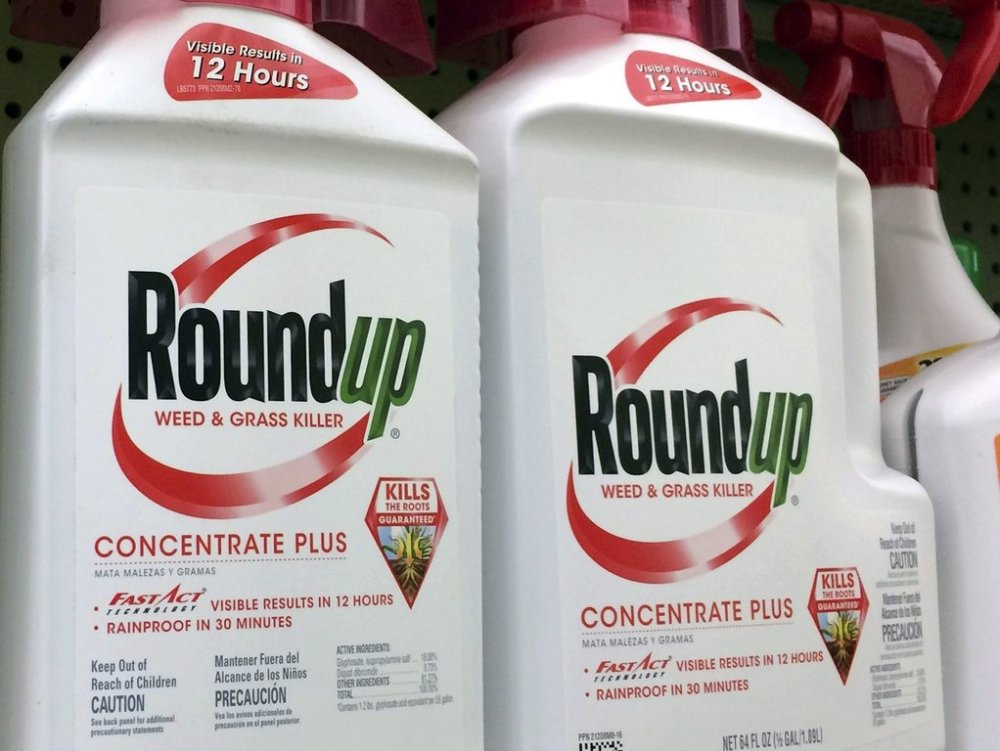
Last week, the journal Regulatory Toxicology and Pharmacology retracted a paper published in 2000 that concluded the herbicide glyphosate, the main ingredient in Roundup, is safe for humans.
“It was like a bomb dropped,” said Beatrice Olivastri, CEO of Friends of the Earth Canada.
“It’s really a foundational paper against which a lot of regulatory agencies made decisions about whether or not glyphosate was safe.”
The retraction notice cited documents made public through litigation in the U.S. that suggest employees of Monsanto, which makes Roundup, may have helped write the article without proper acknowledgment — a practice known as ghostwriting.
The documents also suggest Monsanto may have paid the study’s authors.
The retraction notice said the conclusions on whether glyphosate causes cancer were “solely based on unpublished studies from Monsanto.”
The journal’s editor wrote it is “unclear how much of the conclusions of the authors were influenced by external contributions of Monsanto without proper acknowledgments.”
The study has been cited more than 700 times in scientific publications — including Health Canada’s 2017 re-evaluation of glyphosate use, which concluded that the chemical was “unlikely to pose a human cancer risk.”
That review approved the use of glyphosate-based herbicides until 2032.
Olivastri is calling on Health Canada to impose a moratorium on glyphosate sales while the health minister orders an expedited special review of the pesticide.
“I don’t see how Health Canada cannot act,” she said.
Health Canada said in a written statement that “the retraction of this review does not affect our previous review conclusions” because the department also independently evaluated the primary data sources used in the 2000 review paper.
“Health Canada’s re-evaluation of glyphosate included more than 1,300 studies. This included studies from published scientific literature — including many studies on carcinogenicity and human epidemiology studies — industry-supplied studies, and information from other regulatory authorities,” the statement said.
The department added it monitors glyphosate levels in humans and has found they are “more than 1,000 times below the screening level” that would trigger further analysis.
A spokesperson for Health Minister Marjorie Michel said she has nothing to add to Health Canada’s response.
Cassie Barker, a senior program manager at Environmental Defence, echoed the call for Health Canada to review the latest science.
“What we see in the emerging science on this pesticide is links to a wide range of harms,” she said.
Glyphosate use is increasing. Roughly 50 million kilograms of the chemical are sold in Canada each year, making it the most widely used pesticide in the country and in the world.
It has been on the market since the 1970s and can be found in more than 160 pest control products in Canada.
It’s commonly applied to crops like canola and wheat as a weed-killer, and is used by the forestry industry to clear vegetation where softwood lumber is being harvested.
In response to questions about this story, Bayer sent a statement by email that said it “firmly stands behind the safety of glyphosate-based products,” which have been used for nearly 50 years.
“Leading health regulators around the world, including Health Canada, have repeatedly concluded that glyphosate is not a carcinogen and that glyphosate products are safe when used according to label directions,” the statement said.
Monsanto said in a statement of its own that its involvement in the paper “did not rise to the level of authorship” and that its authors had full control over the study’s manuscript.
Bruce Lanphear, a professor in the faculty of health sciences at Simon Fraser University, said ghostwriting is “part of the playbook” of the pesticide industry.
Lanphear was invited in 2022 to co-chair Health Canada’s Pest Management Regulatory Agency. He said he accepted initially but had to pull out when he learned the committee was not allowed to ask questions.
He pointed out that while Health Canada and the U.S. Environmental Protection Agency both have concluded that glyphosate is safe, the UN’s International Agency for Research on Cancer, a division of the World Health Organization, classified glyphosate as “probably carcinogenic to humans” in 2015.
“If this is a carcinogenic chemical, if it’s toxic, and three-quarters of the public are being exposed, that should be treated as a real, urgent problem,” he said.
Lanphear said the retraction is a good reason to review the latest science.
“Every time we learn something new of consequence — like exposure, like potential carcinogenicity — the regulatory agency should re-evaluate it,” he said.
Some studies around the world have linked glyphosate with cancer.
Monsanto and its parent company Bayer have been the subject about 181,000 lawsuits in the United States, with plaintiffs claiming the pesticide made them sick and that the company failed to warn the public about the risks.
A Georgia jury ordered the company in March to pay US$2.1 billion to a man who said the pesticide caused him to get non-Hodgkin lymphoma.
Bayer disputes the claim that Roundup causes cancer and has set aside US$16 billion to settle cases.
It has asked the U.S. Supreme Court to rule on whether federal laws pre-empt lawsuits at the state level. This week, the Trump administration filed a brief supporting the company’s bid to limit litigation.
Environmental Defence and Friends of the Earth Canada were part of a group of four environmental organizations that took Health Canada to court over its approval of a glyphosate-based pesticide in 2022.
The Federal Court ruled in February of this year that the agency failed to show it considered new scientific evidence identifying new or elevated risks associated with the herbicide when it renewed the registration. It ordered Health Canada to reassess those risks within six months.
The Pesticide Management Regulatory Agency responded to the group in August to say the current risk assessment for glyphosate remains valid.
Barker said the government has a duty to keep Canadians safe.

“We can’t continue to take industry’s word for it that this stuff is safe when they seem to need to shape the research record in their favour to justify its continued use,” she said.
In 2017, litigation against Monsanto led to the publication of internal corporate documents known as the Monsanto Papers, which revealed the company’s influence in scientific research.
It’s not clear why the review paper was retracted now, and the editor-in-chief and the publisher did not answer written questions about the timing of the move.
This report by The Canadian Press was first published Dec. 4, 2025.
— With files from The Associated Press