

Overdose deaths drop by 21 per cent, but 1,826 deaths in 2025 still a ‘profound loss’
Advertisement
Read this article for free:
or
Already have an account? Log in here »
To continue reading, please subscribe:
Monthly Digital Subscription
$1 per week for 24 weeks*
- Enjoy unlimited reading on winnipegfreepress.com
- Read the E-Edition, our digital replica newspaper
- Access News Break, our award-winning app
- Play interactive puzzles
*Billed as $4.00 plus GST every four weeks. After 24 weeks, price increases to the regular rate of $19.95 plus GST every four weeks. Offer available to new and qualified returning subscribers only. Cancel any time.
Monthly Digital Subscription
$4.99/week*
- Enjoy unlimited reading on winnipegfreepress.com
- Read the E-Edition, our digital replica newspaper
- Access News Break, our award-winning app
- Play interactive puzzles
*Billed as $19.95 plus GST every four weeks. Cancel any time.
To continue reading, please subscribe:
Add Free Press access to your Brandon Sun subscription for only an additional
$1 for the first 4 weeks*
*Your next subscription payment will increase by $1.00 and you will be charged $16.99 plus GST for four weeks. After four weeks, your payment will increase to $23.99 plus GST every four weeks.
Read unlimited articles for free today:
or
Already have an account? Log in here »
VICTORIA – More than 1,800 people died in British Columbia last year from illicit drug overdoses, and while the coroner’s service says it still represents a “profound loss of life,” it’s a 21 per cent decrease from the year before and almost 30 per cent down from the peak in 2023.
The service said in a statement that it’s also the first time since 2020 that annual overdose deaths in the province have been under 2,000.
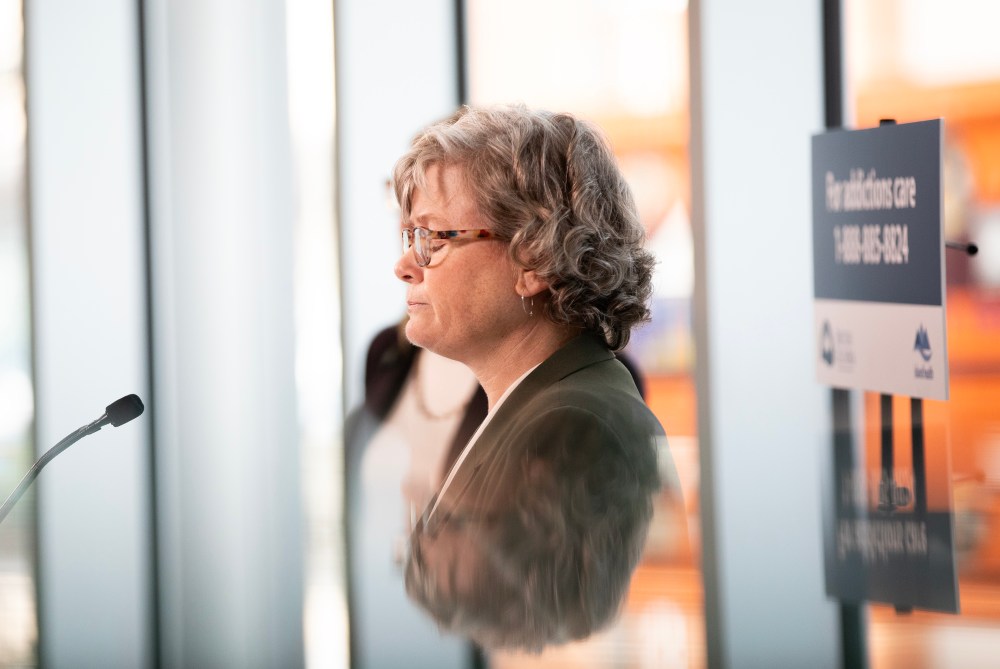
The figures were released on Thursday shortly after Health Minister Josie Osborne announced expanded access to nasal naloxone, which temporarily reverses an overdose.
The coroner’s office says 77 per cent of the 1,826 people who died last year were male and about half of the deaths occurred indoors.
The majority of those — 69 per cent — had fentanyl in their systems, but that figure is trending downward with other drugs also being found, including fluorofentanyl, cocaine and methamphetamine.
Drug deaths have been falling steadily in B.C. since peaking two years ago, part of a steep decline across much of North America.
Osborne says the expansion of the naloxone program is an important response to the overdose crisis, which was declared almost 10 years ago.
More than 16,000 people have died of overdose since April 2016 when the emergency was declared.
“We are taking urgent action to expand these critical services and to do everything we can help people connect to the care they need,” Osborne said. “This investment in nasal naloxone is an important piece of that puzzle.”
Of the $50 million in funding, $18 million will be directed exclusively toward nasal naloxone this fiscal year, while the government says the previously approved $32 million will go toward both injectable and nasal naloxone.
Osborne says the additional nasal kits will soon be distributed in 150 community sites, then in all 2,400 take-home naloxone sites from April.
The funding over two years means the nasal medication will make up about half of the more than 400,000 naloxone kits distributed annually.
A statement from the Health Ministry says injectable take-home naloxone kits have averted nearly 40,000 deaths between January 2019 and October 2025.

“That is thousands of lives saved over the past six years,” she told reporters at the legislature.
Chloe Goodison, executive director of the NaloxHome Society, says the additional nasal kits will make it easier to save lives.
Goodison says drug poisoning is the leading cause of death for British Columbians aged 10 to 59, and nasal naloxone gives youth a tool they feel comfortable carrying and can confidently use in case of emergencies.
This report by The Canadian Press was first published Feb. 19, 2026.
Note to readers:This is a corrected story. A previous version indicated the $50-million expansion was new money.