

UN data shows 6.5 million people in Somalia at risk of severe hunger from drought
Advertisement
Read this article for free:
or
Already have an account? Log in here »
To continue reading, please subscribe:
Monthly Digital Subscription
$1 per week for 24 weeks*
- Enjoy unlimited reading on winnipegfreepress.com
- Read the E-Edition, our digital replica newspaper
- Access News Break, our award-winning app
- Play interactive puzzles
*Billed as $4.00 plus GST every four weeks. After 24 weeks, price increases to the regular rate of $19.95 plus GST every four weeks. Offer available to new and qualified returning subscribers only. Cancel any time.
Monthly Digital Subscription
$4.99/week*
- Enjoy unlimited reading on winnipegfreepress.com
- Read the E-Edition, our digital replica newspaper
- Access News Break, our award-winning app
- Play interactive puzzles
*Billed as $19.95 plus GST every four weeks. Cancel any time.
To continue reading, please subscribe:
Add Free Press access to your Brandon Sun subscription for only an additional
$1 for the first 4 weeks*
*Your next subscription payment will increase by $1.00 and you will be charged $16.99 plus GST for four weeks. After four weeks, your payment will increase to $23.99 plus GST every four weeks.
Read unlimited articles for free today:
or
Already have an account? Log in here »
MOGADISHU, Somalia (AP) — Nearly 6.5 million people in Somalia are facing severe hunger as worsening drought, conflict and global aid cuts intensify the country’s humanitarian crisis, the federal government and U.N. agencies said Tuesday.
New data from the Integrated Food Security Phase Classification report shows that 6.5 million people are projected to face crisis or worse levels of food insecurity by the end of March.
The report also estimates that 1.84 million children under the age of 5 are expected to suffer acute malnutrition in 2026, including nearly 500,000 who will be severely malnourished.
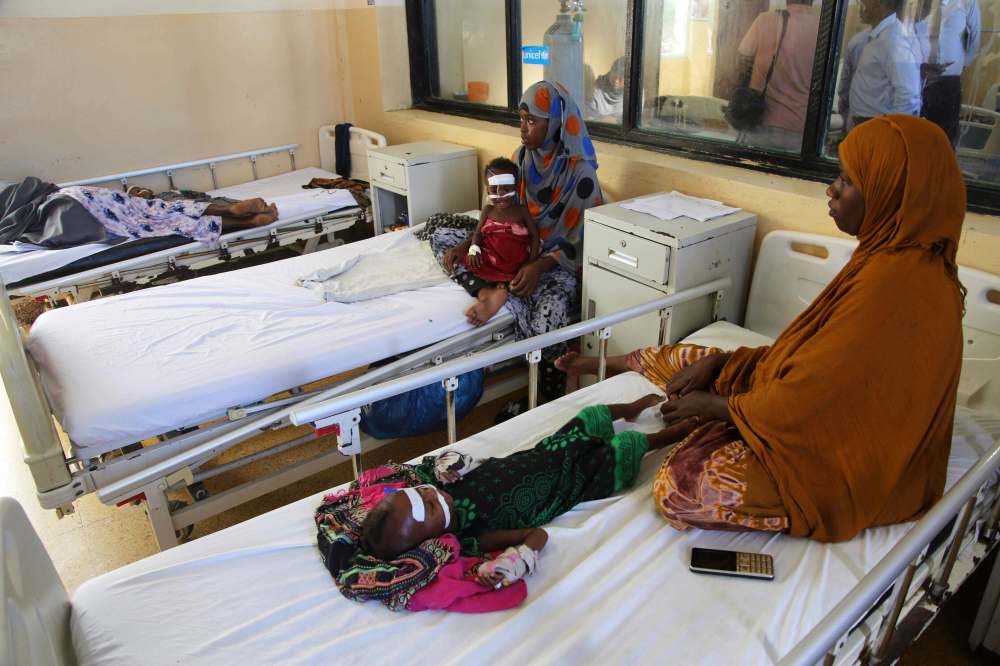
Officials said that the food security situation is deteriorating because of water shortages, insecurity, conflict and historically low levels of humanitarian assistance linked to global funding cuts.
The intensified drought, linked to lower-than-average rainfall, has triggered widespread food insecurity, crop failures, livestock losses, food price increases and displacement.
“The drought emergency in Somalia has deepened alarmingly, with soaring water prices, limited food supplies, dying livestock and very little humanitarian funding,” said George Conway, the U.N. humanitarian coordinator for Somalia.
He said that urgent lifesaving assistance is essential in the coming months, with no rainfall expected until the main rainy season, which runs from April to June.
Even if the upcoming rains perform at average levels, 5.5 million people are expected to remain in crisis or worse later in 2026. Recovery from the extreme drought will take time, officials said.
Water shortages are intensifying in southern and central Somalia and aren’t expected to substantially improve, even if upcoming rains are average.
Drought and conflict displaced about 278,000 people between July and December, disrupting agricultural production, market access and aid delivery, according to U.N estimates.
“The severity of this drought is undeniable and deeply alarming,” said Mohamud Moallim Abdulle, commissioner of the Somalia Disaster Management Agency. He called on international partners, the Somali diaspora, businesses and civil society to scale up immediate support.
The United Nations and the Somali government warned that substantial funding cuts have forced humanitarian partners to decrease or suspend critical lifesaving programs, including food security, health, nutrition and water and sanitation projects.