

Doctors speak out on Saskatchewan’s forced drug treatment legislation
Advertisement
Read this article for free:
or
Already have an account? Log in here »
To continue reading, please subscribe:
Digital Subscription
One year of digital access for only $1.44 a week*
- Enjoy unlimited reading on winnipegfreepress.com
- Read the E-Edition, our digital replica newspaper
- Access News Break, our award-winning app
- Play interactive puzzles
*Billed as $5.77 plus GST every four weeks. After 52 weeks, price increases to the regular rate of $19.95 plus GST every four weeks. Offer available to new and qualified returning subscribers only. Cancel any time.
To continue reading, please subscribe:
Add Free Press access to your Brandon Sun subscription for only an additional
$1 for the first 4 weeks*
- Enjoy unlimited reading on winnipegfreepress.com
- Read the E-Edition, our digital replica newspaper
- Access News Break, our award-winning app
- Play interactive puzzles
*Your next Brandon Sun subscription payment will increase by $1.00 and you will be charged $17.95 plus GST for four weeks. After four weeks, your payment will increase to $24.95 plus GST every four weeks.
Read unlimited articles for free today:
or
Already have an account? Log in here »
REGINA – Groups that represent doctors in Saskatchewan say they’re worried a bill that proposes to force treatment on those battling drug addictions could put additional pressure on squeezed emergency rooms.
“The Saskatchewan Medical Association isn’t able to support the Compassionate Intervention Act in its current draft,” Dr. Pamela Arnold, the association’s president, said in an interview Wednesday.
“We agree that urgent action is needed to save lives, but we do have serious concerns.”
The association, along with the College of Physicians and Surgeons of Saskatchewan, had earlier said in a statement the province should strengthen existing treatment programs before implementing involuntary care.
They said they’re concerned emergency rooms could become intake points for addictions patients, resulting in more overcrowding, delayed care and strain on staff.
Arnold said the province hasn’t explained where patients will be assessed for forced treatment.
“The ministry has told us they don’t feel that the emergency department will be the place of intake, but we are worried that without other defined areas of intake, (emergency rooms) will become the default,” she said.
“We don’t have the capacity to be able to provide this within the current emergency structure.”
Mental Health and Addictions Minister Lori Carr said she doesn’t think the plan will put extra strain on emergency rooms, though the province still has to figure out the intake process.
“We will work that out after the legislation passes,” she told reporters.
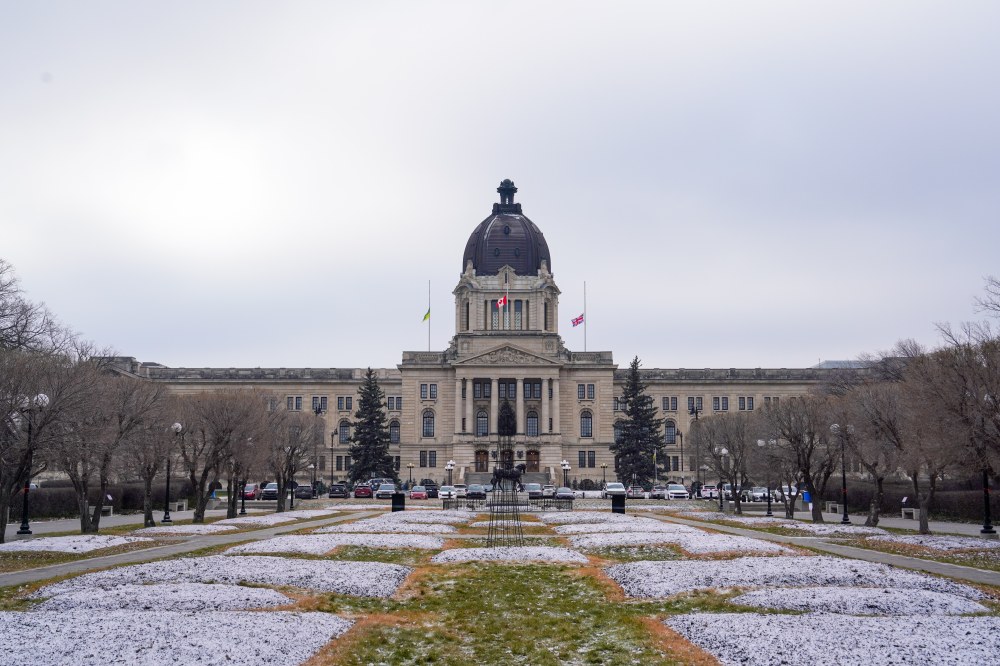
The bill is before Saskatchewan’s assembly, with the province looking to pass it later this spring.
It says law enforcement, medical professionals or family members can refer a person to an addictions tribunal, which would then decide if forced treatment is necessary and for how long.
Carr said the province is working to add more voluntary treatment spaces but needs another option for those who don’t have the capacity to make their own decisions.
“What we’re doing is we’re finding a space for those individuals,” she said.
Doctors have flagged other issues with the legislation.
Dr. Oladapo Mabadeje, president of the College of Physicians and Surgeons of Saskatchewan, said there’s “limited evidence” the tribunal can use when making decisions on forcing someone into treatment.
“Clear definitions, consistent assessment standards, and transparent evaluation of outcomes will be essential for patient safety,” Mabadeje said in the statement.
Carr said the tribunal will include legal and medical professionals.
“It’s going to be culturally sensitive. One of those members is going to be an Indigenous person,” she said. “We’re going to ensure we have the right professionals within that panel to ensure that decisions are made correctly.”

Opposition NDP health critic Meara Conway told reporters the province should have details on how the plan will work.
“We need to make sure that we have clarity about how they’re intending this to play out in terms of those front-line supports,” Conway said.
She added wait times for addictions services are already high and that emergency rooms are strained.
“We know we have a window of opportunity when people are voluntarily looking for help and we know we are failing those people and that’s why we see people die every day in this province,” Conway said.
This report by The Canadian Press was first published April 1, 2026.