

Colorado’s top court orders children’s hospital to resume gender-affirming care for minors
Advertisement
Read this article for free:
or
Already have an account? Log in here »
To continue reading, please subscribe:
Digital Subscription
One year of digital access for only $1.44 a week*
- Enjoy unlimited reading on winnipegfreepress.com
- Read the E-Edition, our digital replica newspaper
- Access News Break, our award-winning app
- Play interactive puzzles
*Billed as $5.77 plus GST every four weeks. After 52 weeks, price increases to the regular rate of $19.95 plus GST every four weeks. Offer available to new and qualified returning subscribers only. Cancel any time.
To continue reading, please subscribe:
Add Free Press access to your Brandon Sun subscription for only an additional
$1 for the first 4 weeks*
- Enjoy unlimited reading on winnipegfreepress.com
- Read the E-Edition, our digital replica newspaper
- Access News Break, our award-winning app
- Play interactive puzzles
*Your next Brandon Sun subscription payment will increase by $1.00 and you will be charged $17.95 plus GST for four weeks. After four weeks, your payment will increase to $24.95 plus GST every four weeks.
Read unlimited articles for free today:
or
Already have an account? Log in here »
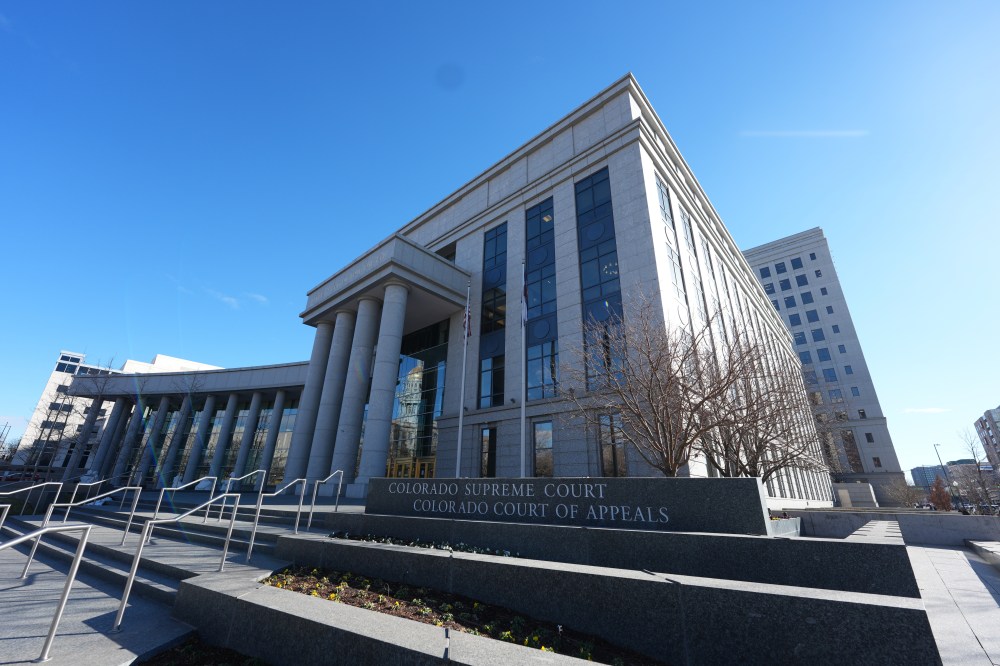
DENVER (AP) — The Colorado Supreme Court has ordered Colorado’s largest provider of gender-affirming care for young people to resume medical treatments like puberty blockers and hormone therapy despite threats that providing the care could lead to losing federal funding.
Children’s Hospital Colorado suspended medical treatments for transgender patients under 18 in January after it said the U.S. Department of Health and Human Services opened an investigation into its treatments following a series of clashes between President Donald Trump’s administration and advocates over transgender health care for children.
The hospital said in a statement that it is reviewing Monday’s court ruling and considering its next steps. It previously said it would continue to provide mental health treatment for minors and also medical treatment for patients aged 18 to 21.
Four transgender girls, ranging from age 10 to 17, sued the hospital, through their parents, alleging that the hospital was violating the state’s antidiscrimination law by refusing to provide them treatment both because of their gender identity and their disability, gender dysphoria. Gender dysphoria is the distress caused when someone’s gender expression doesn’t match their sex assigned at birth.
The girls said they feared not being able to get medication and monitoring to prevent them from undergoing puberty and developing male traits. And they cited mental health fallout, including depression and suicidal ideation.
The court sided with the girls in a 5-2 ruling, finding that the decision to shutter the services for minors violated a state antidiscrimination law. In the majority opinion, Justice William Wood III said, “We conclude that the actual immediate and irreparable harm to petitioners outweighs the speculative harm CHC may face if the federal government further acts against it.”
In a dissent, Justice Brian Boatright said the hospital didn’t make its decision to stop the case because of the gender identity of the patients. Rather, he wrote, “It was a decision driven by the direct threat to the viability of the entire hospital.”
A Kansas judge also sided with transgender minors in a ruling last week.
The Colorado hospital’s TRUE Center, which focuses on gender-affirming care, is one of the largest programs in the country and the only comprehensive care center in the Rocky Mountain region, according to the lawsuit.
Children’s Hospital Colorado said the HHS opened the investigation of the hospital after Health and Human Services Secretary Robert F. Kennedy Jr. issued a declaration that called treatments like puberty blockers, hormone therapy and surgeries unsafe and ineffective for children and adolescents experiencing gender dysphoria, or the distress when someone’s gender expression doesn’t match their sex assigned at birth.
An Oregon-based federal judge ruled in March for Colorado and 20 other states that Kennedy’s declaration went too far.
___
Mulvihill reported from Haddonfield, New Jersey.