Nigeria’s conflict-hit Borno state battles cholera outbreak that has killed 74
Advertisement
Read this article for free:
or
Already have an account? Log in here »
To continue reading, please subscribe:

Digital Subscription
One year of digital access for only $205*
- Enjoy unlimited reading on winnipegfreepress.com
- Read the E-Edition, our digital replica newspaper
- Access News Break, our award-winning app
- Play interactive puzzles
*First annual payment billed as $205.00 + GST for one year. This annual subscription will automatically renew at $233.00 + GST every 52 weeks (10% off the regular annual price of $259.35). Offer available to new and qualified returning subscribers only. Cancel any time.
To continue reading, please subscribe:
Add Free Press access to your Brandon Sun subscription for only an additional
$1 for the first 4 weeks*
- Enjoy unlimited reading on winnipegfreepress.com
- Read the E-Edition, our digital replica newspaper
- Access News Break, our award-winning app
- Play interactive puzzles
*Your next Brandon Sun subscription payment will increase by $1.00 and you will be charged $17.95 plus GST for four weeks. After four weeks, your payment will increase to $24.95 plus GST every four weeks.
Read unlimited articles for free today:
or
Already have an account? Log in here »
MAIDUGURI, Nigeria (AP) — A cholera outbreak in northeastern Nigeria has killed 74 people and infected more than 7,000 others since it started in early May, medical charity Doctors Without Borders said Tuesday.
The outbreak, reported in 14 of Borno state’s 27 local governments, is unfolding in communities with health systems made fragile by nearly two decades of violent extremism from the Boko Haram insurgent group.
The illness is endemic and seasonal in the country, where only 14% of Nigeria’s population of more than 200 million have access to safely managed drinking water supply services, according to government data from 2020.
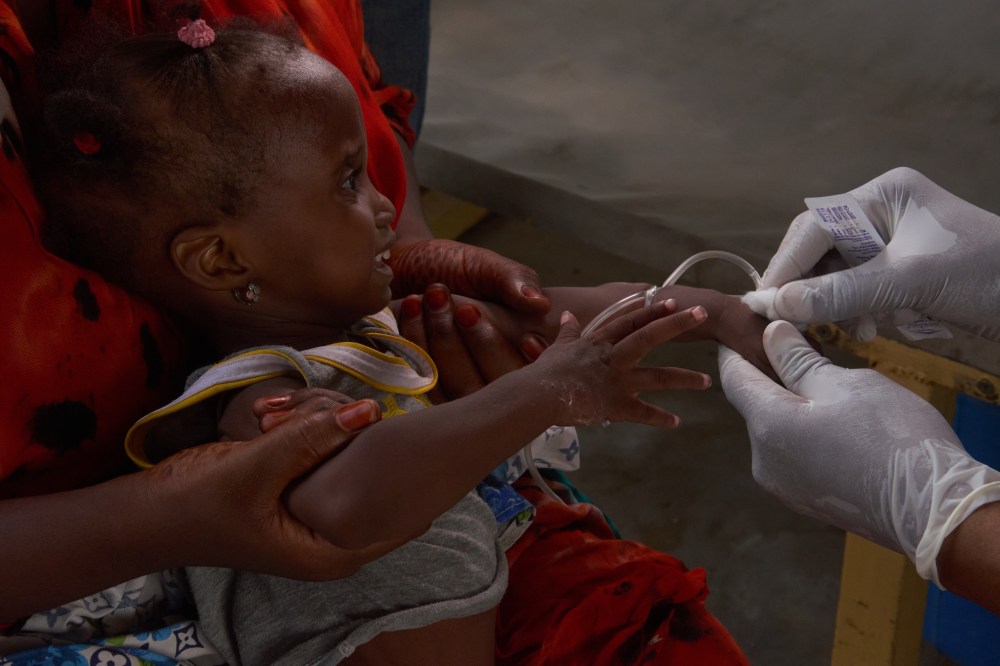
The situation is sometimes worse in Borno, both in Maiduguri, the state’s capital, which is densely populated, and in remote communities with poor sanitation and hygiene due in part to being out of the close reach of health authorities.
The medical group said that it has treated 7,439 cholera patients at its facilities, representing an average of 185 admissions per day. It said that it recorded 500 patients last week on Friday, a single-day record in the outbreak.
“Open defecation is making it worse also, and there is less partners (on the ground),” said Jessie Kurnurkar, a project coordinator with Doctors Without Borders, known by its French acronym MSF.
“By the time we know the cases in the community, the local transmission has happened, and it is difficult to respond, because the spread has become more,” Kurnurkar said.
Patients at an MSF treatment center in Maiduguri spoke to The Associated Press about their experiences in the outbreak.

Aisha Ibrahim, a cholera patient at the facility, said that she has been defecating nonstop since she became ill with cholera and had been in admission for more than four days.
“When they discharged me, the vomiting stopped, and when I got home, I started stooling again, and it became severe (so) I was rushed back to the center,” Ibrahim said.