New York Yankees say Legionella bacteria found in stadium cooling tower not linked to outbreak
Advertisement
Read this article for free:
or
Already have an account? Log in here »
To continue reading, please subscribe:

Digital Subscription
One year of digital access for only $205*
- Enjoy unlimited reading on winnipegfreepress.com
- Read the E-Edition, our digital replica newspaper
- Access News Break, our award-winning app
- Play interactive puzzles
*First annual payment billed as $205.00 + GST for one year. This annual subscription will automatically renew at $233.00 + GST every 52 weeks (10% off the regular annual price of $259.35). Offer available to new and qualified returning subscribers only. Cancel any time.
To continue reading, please subscribe:
Add Free Press access to your Brandon Sun subscription for only an additional
$1 for the first 4 weeks*
- Enjoy unlimited reading on winnipegfreepress.com
- Read the E-Edition, our digital replica newspaper
- Access News Break, our award-winning app
- Play interactive puzzles
*Your next Brandon Sun subscription payment will increase by $1.00 and you will be charged $17.95 plus GST for four weeks. After four weeks, your payment will increase to $24.95 plus GST every four weeks.
Read unlimited articles for free today:
or
Already have an account? Log in here »
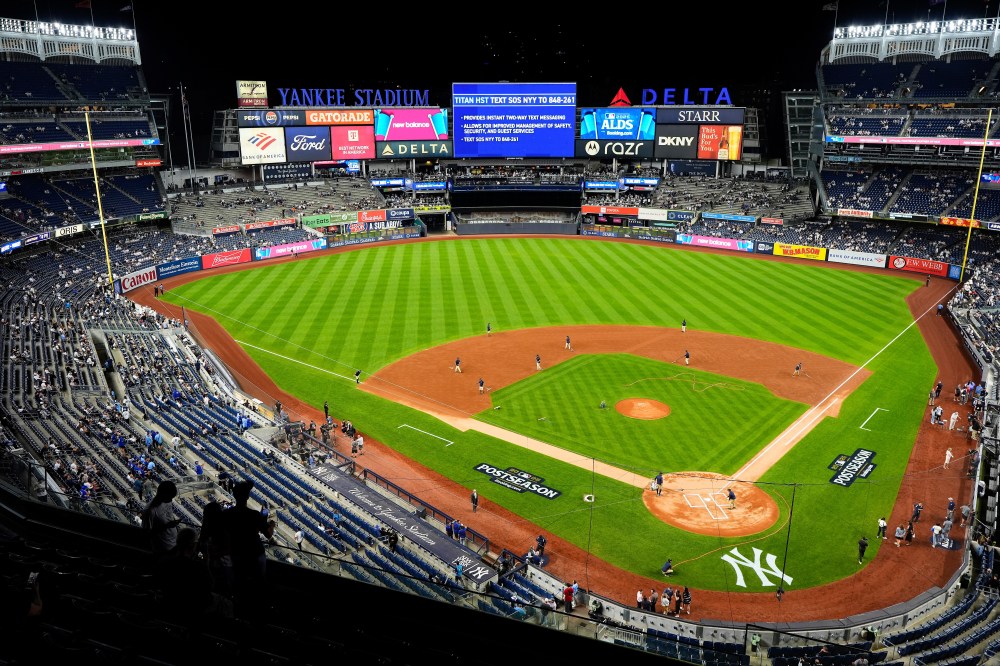
NEW YORK (AP) — Bacteria that cause potentially fatal Legionnaires’ disease were found in a Yankee Stadium cooling tower — one of 10 such towers in the Bronx that tested positive amid several reported cases of the illness including one death, New York City health officials said.
The city’s Health Department said Sunday that more tests were being done to determine whether the Legionella bacteria in the towers was live, and the Yankees said none of the current Legionnaires’ disease cases in the area has been linked to the stadium. Only live bacteria can cause the disease, which is a form of pneumonia. The initial testing performed on the 10 towers last week found traces of living or dead bacteria.
Health officials said they are investigating a likely community cluster of Legionnaires’ in the South Bronx, where Yankee Stadium is located. Ten people have tested positive for the disease including one who died and three who remain hospitalized, the Health Department said. Authorities are still investigating the source or sources of the outbreak.
“I want to assure New Yorkers we are moving aggressively to contain the spread,” New York City Mayor Zohran Mamdani said at a news conference Monday. He later added, “This has been an issue that New Yorkers have had to deal with for far too many years, and we are looking to develop any kind of tool that can help to ensure that Legionnaires’ is something that we’re able to combat.”
Health officials ordered the owners of the 10 towers to clean and disinfect them by Monday. The Yankees said the stadium tower that tested positive was drained and cleaned Sunday morning.
The Health Department said anyone who lives or works in the Melrose and Morrisania sections of the Bronx, or have visited there since late August, and are experiencing flu-like symptoms should contact a healthcare provider immediately.
The Yankees said in a statement that new, state-of-the-art cooling towers were installed at the stadium in 2024 and have been tested weekly for water quality and bacteria since then. Those tests results are reported monthly to the city. The most recent testing on Aug. 20 was negative for Legionella bacteria, the team said, noting it uses a different method than the city used last week for its monthly testing.
“No current cases have been associated with Yankee Stadium,” the team said. “Additionally, the New York City Department of Health has not at any point this month asked us to postpone our games.”
The city is now performing culture tests on samples from the 10 towers than can take up to two weeks to confirm whether bacteria were alive.
Legionnaires’ disease is treatable but kills about 10% of patients, according to the U.S. Centers for Disease Control and Prevention. It’s caused by Legionella bacteria, which grow in warm water and can spread in such places as hot tubs and building cooling equipment. People may contract the disease by inhaling contaminated water droplets, but it doesn’t spread person-to-person.
A Legionnaire’s outbreak earlier this summer on Manhattan’s Upper East Side killed 11 people among more than 90 who tested positive, the Health Department said. The agency said 59 cooling towers at 58 buildings tested positive for live Legionella bacteria. All those towers were cleaned and disinfected.
Last year, another Legionnaires’ outbreak in Harlem killed seven people and sickened dozens of others.
___
Collins reported from Hartford, Connecticut.