Congolese politician is killed for defending Ebola efforts as mistrust complicates response
Advertisement
Read this article for free:
or
Already have an account? Log in here »
To continue reading, please subscribe:

Digital Subscription
One year of digital access for only $205*
- Enjoy unlimited reading on winnipegfreepress.com
- Read the E-Edition, our digital replica newspaper
- Access News Break, our award-winning app
- Play interactive puzzles
*First annual payment billed as $205.00 + GST for one year. This annual subscription will automatically renew at $233.00 + GST every 52 weeks (10% off the regular annual price of $259.35). Offer available to new and qualified returning subscribers only. Cancel any time.
To continue reading, please subscribe:
Add Free Press access to your Brandon Sun subscription for only an additional
$1 for the first 4 weeks*
- Enjoy unlimited reading on winnipegfreepress.com
- Read the E-Edition, our digital replica newspaper
- Access News Break, our award-winning app
- Play interactive puzzles
*Your next Brandon Sun subscription payment will increase by $1.00 and you will be charged $17.95 plus GST for four weeks. After four weeks, your payment will increase to $24.95 plus GST every four weeks.
Read unlimited articles for free today:
or
Already have an account? Log in here »
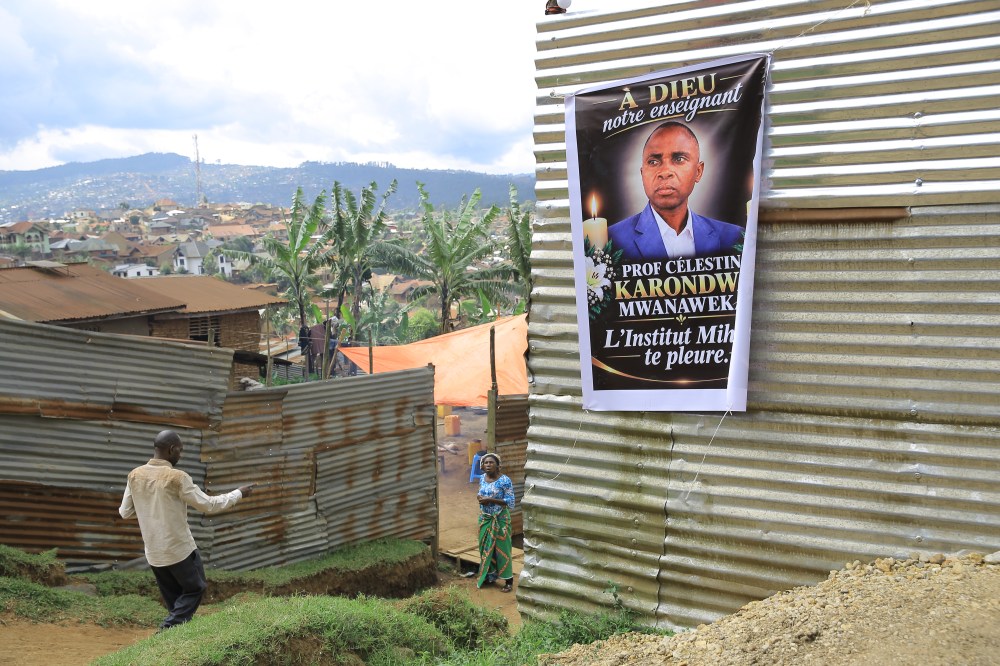
BUTEMBO, Congo (AP) — Mourners gathered Wednesday to bury a Congolese politician who was beaten to death after publicly defending the government’s response to Ebola, a killing that highlights the mistrust health workers say is hampering efforts to slow the fastest-growing Ebola outbreak in history.
Marie-Célestin Karondwa, a local official with Congo’s ruling Union for Democracy and Social Progress party, was attacked Sunday at his home in Butembo, an Ebola hotspot in the eastern North Kivu province, after defending the government’s response efforts during a radio program, the party said.
“They beat him up and then set the house alight,” Sagesse Kavira, Karondwa’s granddaughter, told The Associated Press at his funeral on Wednesday. He later died from his injuries at a local hospital.
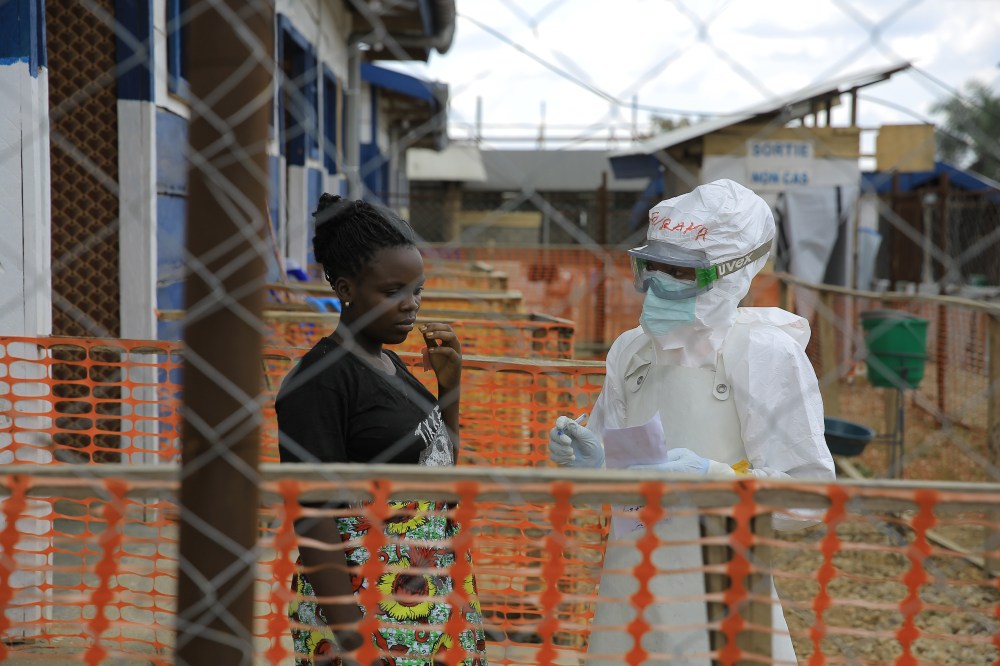
The killing follows a series of attacks on health workers and other responders as the Central African nation battles its 17th and deadliest Ebola outbreak, which has so far recorded over 8,000 cases including nearly 4,000 deaths.
Authorities this month launched a village-centered approach to fight the Ebola outbreak. But those efforts continue to face resistance from some residents who dismiss Ebola as a hoax amid a widespread distrust in the country’s government for various reasons, ranging from how it’s managed past Ebola outbreaks to chronic corruption.
Responders say skepticism about the disease has complicated efforts to work with residents, including in remote communities and emerging hot spots that already face shortages of medical supplies and healthcare workers.
The mistrust is particularly difficult to overcome in eastern Congo’s rebel-controlled territories, where decades of conflict with rebels as well as human rights abuses have left many residents wary of outsiders and state authorities.
The local politician killed in Butembo had been using the radio show to call on the public to obey response measures, particularly social distancing and handwashing, Jean-Baptiste Katsongo Lwatswa, first federal vice-president of UDPS in Butembo, told the AP.
“That is believed to have provoked the anger of certain young people,” he said.
Enoch Muhindo Balimatangi, a resident of Butembo, said there’s fear and mixed feelings about Ebola among locals. “Some say that the illness exists, while others refuse to accept that it does. That’s frightening!” he said.
A key challenge in slowing this particular outbreak is the absence of approved vaccines or treatments for the rare Bundibugyo virus that is causing it. Clinical trials for those are currently ongoing in Ituri province, the epicenter.
In its latest situation report, the World Health Organization warned the disease remains serious and there are “persistent challenges in timely case detection and access to early and adequate patient care.”
WHO has also said the outbreak continues to outpace efforts to track and slow it, and is on track to exceed the deadliest on record, West Africa’s regional outbreak between 2014 and 2016, which killed 11,000 people.
—-

Brennan reported from Dakar, Senegal. Justin Kabumba in Goma, Congo, contributed.
___
For more on Africa and development: https://apnews.com/hub/africa-pulse
___
The Associated Press receives financial support for global health and development coverage in Africa from the Gates Foundation. The AP is solely responsible for all content. Find AP’s standards for working with philanthropies, a list of supporters and funded coverage areas at AP.org.