Moscow’s secrecy about a suspected plague case follows a pattern from the Soviet era
Advertisement
Read this article for free:
or
Already have an account? Log in here »
To continue reading, please subscribe:

Digital Subscription
One year of digital access for only $205*
- Enjoy unlimited reading on winnipegfreepress.com
- Read the E-Edition, our digital replica newspaper
- Access News Break, our award-winning app
- Play interactive puzzles
*First annual payment billed as $205.00 + GST for one year. This annual subscription will automatically renew at $233.00 + GST every 52 weeks (10% off the regular annual price of $259.35). Offer available to new and qualified returning subscribers only. Cancel any time.
To continue reading, please subscribe:
Add Free Press access to your Brandon Sun subscription for only an additional
$1 for the first 4 weeks*
- Enjoy unlimited reading on winnipegfreepress.com
- Read the E-Edition, our digital replica newspaper
- Access News Break, our award-winning app
- Play interactive puzzles
*Your next Brandon Sun subscription payment will increase by $1.00 and you will be charged $17.95 plus GST for four weeks. After four weeks, your payment will increase to $24.95 plus GST every four weeks.
Read unlimited articles for free today:
or
Already have an account? Log in here »
The Kremlin has long maintained a culture of secrecy when it comes to controlling public information, especially involving accidents — from industrial disasters to health emergencies.
The suspicious death last week of a worker at a research lab in Siberia that has fueled global concerns about suspected pneumonic plague is just the latest example of how leaders in Moscow manage the official narrative that often covers up the truth for years.
Russia’s public health watchdog, Rospotrebnadzor, has told the World Health Organization that no case of plague has been registered in the Irkutsk region of southeastern Siberia. In tersely worded statements, the Russian agency said the lab worker contracted pneumonia of “unknown” origin and that tests found no evidence her illness was caused by any of the pathogens she worked with at the Irkutsk Anti-Plague Research Institute of Siberia and the Far East.
The WHO urged Russia to share more information to clarify the cause of the severe pneumonia, the pathogen that prompted the public health measures and media reports that a second employee had pneumonia of undetermined cause.
Scarce official information about the worker’s death, which unconfirmed reports in Russia blamed on pneumonic plague, follows the Soviet-era patterns of secrecy in dealing with outbreaks of infectious diseases, accidents and other emergencies.
Here are other examples of Moscow censoring public health information:
The 1959-60 smallpox outbreak
In the final days of December 1959, leading Soviet graphic artist Alexei Kokorekin fell ill and died shortly after returning from a trip to India.
Doctors initially struggled to identify the cause of death as smallpox, which was considered eradicated decades earlier. Once it became clear, authorities launched a massive effort to contain the outbreak.
The KGB meticulously tracked down Kokorekin’s contacts, and thousands of people were put in isolation. An Aeroflot flight carrying one of his contacts was contacted before it landed in Paris and ordered to return to Moscow.
Authorities halted all travel to and from Moscow and launched an unprecedented effort in which thousands of vaccination teams distributed shots to millions of residents of the capital and the surrounding region. International news outlets reported the massive campaign, but Soviet state media kept silent about it.
The outbreak led to 46 confirmed cases and three deaths in Moscow before it was contained in 44 days. A novel and movie based on the outbreak appeared later, but the true details of what happened were hidden from the public until the waning years of the Soviet Union.
The 1971 Aral Sea smallpox outbreak
During tests of a smallpox bioweapon on a tightly guarded range on Vozrozhdeniya Island in the Aral Sea in August 1971, a research ship accidentally sailed too close to the aerosolized plume of microbes.
A marine biologist on the ship contracted smallpox and spread it to several others in the town of Aralsk in what is now part of Kazakhstan, resulting in 10 infections and three deaths. The town was quarantined and more than 40,000 people were vaccinated against smallpox within days, but the public remained unaware of what happened.
The incident only became widely known in 2002 when U.S. researchers publicized old Soviet archives.
The 1979 anthrax leak
On April 2, 1979, anthrax spores were accidentally released from a secret biological weapons lab in Sverdlovsk, the Ural Mountains city that is now called Yekaterinburg.
The accident was caused by a worker failing to replace a faulty ventilation filter, resulting in the release of the deadly spores into the air. At least 68 people died in the resulting anthrax outbreak.
Soviet authorities officially blamed the deaths on contaminated meat from a street market and the KGB made sure to keep details of the accident under wraps, confiscating medical records.
It wasn’t until after the 1991 collapse of the Soviet Union that the truth about the outbreak became known under Russian President Boris Yeltsin, a former Communist Party boss in Sverdlovsk.
The 1986 Chernobyl nuclear disaster
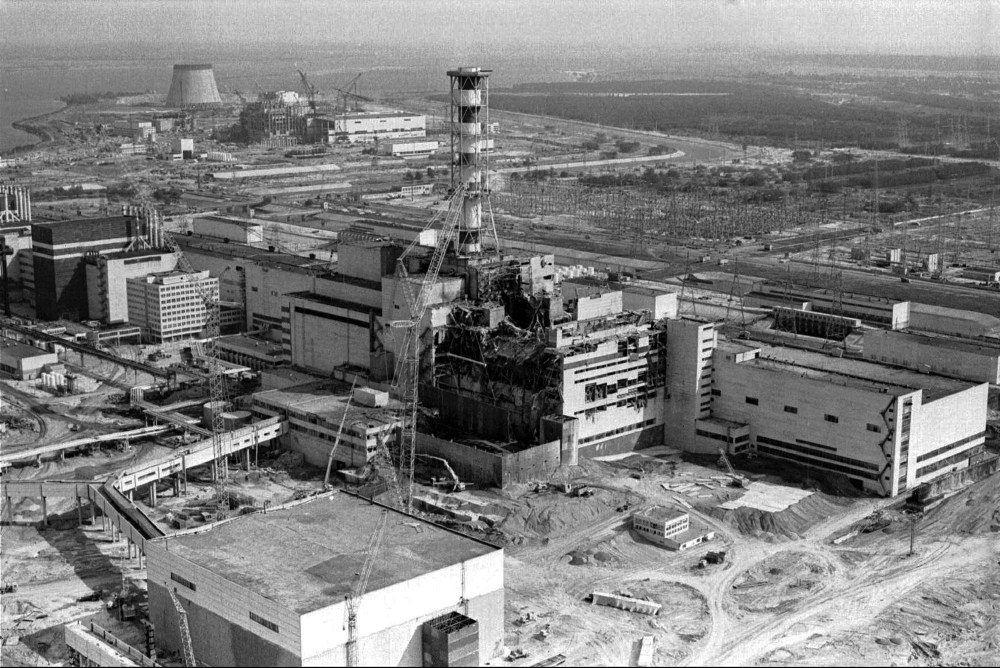
When the reactor No. 4 exploded at the Chernobyl nuclear power plant in the then-Soviet republic of Ukraine on April 26, 1986, it spewed a radioactive cloud across Europe.
Authorities were slow to report the incident and warn the public about the radioactive threat. When Sweden detected the radiation, Moscow initially denied that any accident had occurred.
Soviet officials waited for 36 hours before ordering the evacuation of the town of Pripyat near the plant. Five days later, tens of thousands of people were exposed to radioactive fallout as they marched through the streets of Kyiv during the May Day parade.
Despite Soviet leader Mikhail Gorbachev’s policy of “glasnost,” or greater openness, authorities heavily censored medical data and casualty figures as part of their efforts to conceal the true scale of the disaster. Immediately after the accident, 30 plant workers and firefighters died from acute radiation sickness, and thousands of people later died from radiation-related illnesses.
The COVID-19 pandemic
During the COVID-19 pandemic, some independent Russian news outlets and international media reports claimed the country’s coronavirus death toll could be much higher than government officials said. The reports cited a spike in total mortality rates.
Russian authorities angrily rejected the claims as part of a Western disinformation campaign against Moscow.
Officials in Moscow explained the relatively low death toll by crediting a swift ban on travel from China early in the pandemic, a speedy introduction of restrictions and a broad testing effort that allowed authorities to spot infections quickly and prevent patients from developing life-threatening complications.
Authorities denied claims of widespread shortages of personal protective equipment and questionable infection control procedures at dozens of hospitals. Some medical workers said they were threatened with dismissal or even prosecution for complaining about the situation.

In 2020, Russia criminalized “false information” about threats to public safety, and human rights groups documented that dozens of people were prosecuted for making purportedly fake claims. But at the end of that year, officials effectively conceded the death toll was several times higher than previously reported.
In early 2022, Russian authorities reported a total of over 13.5 million confirmed COVID-19 and 338,091 deaths — by far the highest death toll in Europe at the time. Russia’s state statistics agency Rosstat, which uses broader counting criteria, said there were 681,100 virus-linked deaths between April 2020 and December 2021.
“The system can silence, but it’s not competent enough to coordinate, so it produces contradiction instead of a unified false account,” Judy Twigg, professor of political science at Virginia Commonwealth University, said in written comments this week.
___
Dasha Litvinova in Tallinn, Estonia, contributed.