Illinois medical debt relief program surpasses $1B goal in two years

Advertisement

Advertise with us

The state has erased over $1.4 billion in medical debt for almost 700,000 Illinoisans for pennies on the dollar, two years after launching a new relief program.

Read this article for free:


By clicking the button above, an account will be created and you will begin to receive some of our recommended newsletters. You may opt out of any newsletter by visiting your Email and Communication Preferences page or by clicking "unsubscribe" at the bottom of any email.

or

Already have an account? Log in here »

To continue reading, please subscribe:

Digital Subscription

One year of digital access for only $1.44 a week*

  • Enjoy unlimited reading on winnipegfreepress.com
  • Read the E-Edition, our digital replica newspaper
  • Access News Break, our award-winning app
  • Play interactive puzzles

*Billed as $5.77 plus GST every four weeks. After 52 weeks, price increases to the regular rate of $19.95 plus GST every four weeks. Offer available to new and qualified returning subscribers only. Cancel any time.

To continue reading, please subscribe:

Add Free Press access to your Brandon Sun subscription for only an additional

$1 for the first 4 weeks*

  • Enjoy unlimited reading on winnipegfreepress.com
  • Read the E-Edition, our digital replica newspaper
  • Access News Break, our award-winning app
  • Play interactive puzzles
Start now

*Your next Brandon Sun subscription payment will increase by $1.00 and you will be charged $17.95 plus GST for four weeks. After four weeks, your payment will increase to $24.95 plus GST every four weeks.

The state has erased over $1.4 billion in medical debt for almost 700,000 Illinoisans for pennies on the dollar, two years after launching a new relief program.

At its launch, the Illinois Medical Debt Relief Program aimed to eliminate $1 billion in debt. The state has surpassed that goal by $400 million, spending less than $10 million in state dollars to achieve these results. That means that every state dollar invested in the program wiped out over $100 in debt.

That was possible due to the state’s partnership with Undue Medical Debt — a nonprofit that works with local governments and healthcare providers to purchase and eliminate qualifying medical debt owed by low-income residents.

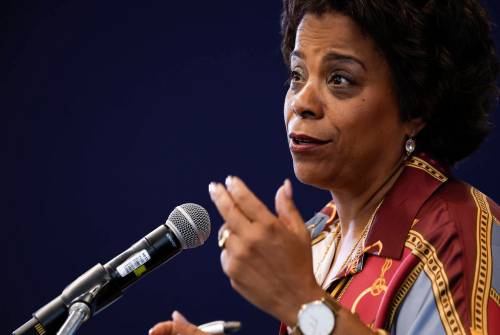
“Medical debt is a leading cause of bankruptcy,” Gov. JB Pritzker said in a news conference Thursday in Chicago. “It can ruin credit, limit financial opportunities, and cause years of uncertainty long after they leave the hospital. That is a symptom of a truly broken system.”

Illinois residents whose household income is at or below 400% of the federal poverty level, or who have medical debt equal to 5% or more of their household income, are eligible.

Residents do not apply to this program — impacted households receive letters after their debts have been erased.

“Healthcare should be about getting people back on their feet, not just keeping them, well, down with years of financial struggle,” Pritzker said.

The statewide initiative was modeled after Cook County’s program that launched in 2022. Since then, the Cook County Medical Debt Relief Initiative has eliminated an additional $1 billion in medical debt, covering 22% of eligible adults.

The American Rescue Plan Act funded the Cook County initiative to support recovery from the COVID-19 pandemic. These funds end this year, Toni Preckwinkle, president of the Cook County Board of Commissioners, said.

“At a time when the Trump administration is stepping back from its federal responsibility to working families, Cook County and the state of Illinois are standing firm in our belief that access to quality healthcare should not depend on your income or your ability to pay,” Preckwinkle said.

Recently, President Donald Trump and the federal government have rolled out cuts to Medicaid, a program that provides free or low-cost coverage to people with limited income and resources.

The Illinois Department of Healthcare and Family Services warned that two policy changes are expected by the beginning of 2027 and may reduce Illinoisans’ eligibility: redeterminations every six months for Medicare eligibility instead of every year and a federal work requirement.

For Steph Willding, CEO of Community Health, a center offering free services for low-income, uninsured and underinsured patients, access to healthcare should never be connected to their ability to pay.

“We know the value of taking away the barrier of cost for our patients, and as federal policy changes continue to threaten healthcare coverage for more and more Illinoisans, this program has never been more important,” said Willding at a news conference.

The average debt relieved of the medical debt relief program per resident was over $1,200, while the highest amount eliminated was over $900,000.

The program relieved debt for residents in all 102 Illinois counties. In 40 counties, more than 5% of residents received debt relief. In 11 counties with populations over 100,000, the percentage was even higher, with Kankakee County at over 21.5%.

Although Cook County will fund this initiative from its own budget, Preckwinkle said they aren’t willing to walk away from the program.

“The next phase of this work will put data from this initiative to use to understand who is being pushed into medical debt and why, and to design policies that address its root causes,” Preckwinkle said.

___

This story was originally published by Capitol News Illinois and distributed through a partnership with The Associated Press.
Report Error Submit a Tip

More Stories

Reviving democracy requires engagement

John R. Wiens 4 minute read 2:00 AM CDT

Democracy is on the ropes everywhere in the world as politics have become extreme, divisive, virulent — just plain toxic.

It would seem like a reasonable, visceral decision not to participate, to not be contaminated or compromised by association. However, like education, where more education is the cure to a lack, a deficit in democratic politics calls for more, not less, political engagement.

In his 1919 poem The Second Coming, W. B. Yeats wrote, “Things fall apart; the centre cannot hold;” as a description of social and political catastrophe and the failure of usual safeguards in the aftermath of the First World War. He ends the first stanza with: “The best lack all conviction, while the worst / Are full of passionate intensity.”

I believe it’s an apt description of what’s going on today — not new but frightening, nonetheless.

Campaign blunder: Klein features wrong city in election video

Malak Abas 4 minute read Preview

Campaign blunder: Klein features wrong city in election video

Malak Abas 4 minute read Yesterday at 4:08 PM CDT

A paid ad from mayoral candidate Kevin Klein on his commitment to Winnipeg has been pulled after commenters noticed one small error: the footage used in the ad was actually of Edmonton.

Read
Yesterday at 4:08 PM CDT

Tire store theft sting nets four arrests

Free Press staff 2 minute read Preview

Tire store theft sting nets four arrests

Free Press staff 2 minute read Yesterday at 2:46 PM CDT

Four people have been arrested after the Winnipeg Police Major Crimes Unit launched an investigation into several break-ins and thefts targeting tire retailers in the city.

Between Sept. 12 and 29, police responded to multiple commercial break-ins resulting in estimated losses of between $50,000 and $60,000, police said in a news release.

During that time, retail stores in the 1600 block of Kenaston Boulevard and the 800 block of Leila Avenue also reported theft of merchandise valued at approximately $3,250 combined.

On the evening of Sept. 26, one of the suspects used false identification to rent a truck from a commercial rental company.

Read
Yesterday at 2:46 PM CDT

Empty desks: Advocates talk chronic school absenteeism

Maggie Macintosh 5 minute read Preview

Empty desks: Advocates talk chronic school absenteeism

Maggie Macintosh 5 minute read 6:00 AM CDT

Concerned school and government leaders are downplaying the state of student absenteeism, as community organizers are strategizing to create urgency around who’s regularly missing class — and why — in Winnipeg.

The inaugural Youth at Risk in Winnipeg Symposium, held over the weekend at the Canadian Mennonite University, drew roughly 100 people to discuss barriers to attendance and brainstorm ways to remove them.

Nearly 20 years after he began calling attention to the issue, first as a volunteer with the Point Douglas Residents Committee, Sel Burrows gave an impassioned speech about the lack of political will to take meaningful action to help students from “dysfunctional homes.”

“I’ve dealt with nine cabinet ministers, Conservative and NDP, and five deputy ministers, and the issue has not gotten any better,” Burrows told teachers, reseachers and community support workers gathered Saturday on CMU’s Shaftesbury campus.

Read
6:00 AM CDT

Surprising announcement opens door slightly for accountability in police HQ saga

Dan Lett 5 minute read Preview

Surprising announcement opens door slightly for accountability in police HQ saga

Dan Lett 5 minute read Yesterday at 4:07 PM CDT

Early Monday afternoon, it looked as if former Mayor Sam Katz, former chief administrative officer Phil Sheegl and contractor Armik Babakhanians were going to finally and successfully escape the long arm of the law for their roles in the Winnipeg Police Service headquarters scandal.

Read
Yesterday at 4:07 PM CDT

Feds hold back on stable health funding

Editorial 4 minute read Preview

Feds hold back on stable health funding

Editorial 4 minute read 2:00 AM CDT

The federal government wants provinces to improve health care, expand treatment services and find better ways to deliver care. But it’s refusing to provide provincial governments with the one thing they need most to plan for the future: stable, predictable funding.

That’s not a serious way to manage public health care.

Provincial and territorial health ministers gathered in Winnipeg last week hoping to secure long-term federal funding commitments to help manage mounting pressures on their health-care systems. They left with little more than a promise to keep talking.

Ottawa agreed to extend a $1.2-billion annual funding agreement for mental-health and substance-use treatment, home care and community care by one year. That’s welcome, but it hardly provides the certainty provinces need to maintain existing programs, never mind expand services to meet growing demand.

Read
2:00 AM CDT