Canada almost self-sufficient in PPE as Canadian businesses step up: PM
Advertisement
Read this article for free:
or
Already have an account? Log in here »
To continue reading, please subscribe:

Digital Subscription
One year of digital access for only $205*
- Enjoy unlimited reading on winnipegfreepress.com
- Read the E-Edition, our digital replica newspaper
- Access News Break, our award-winning app
- Play interactive puzzles
*First annual payment billed as $205.00 + GST for one year. This annual subscription will automatically renew at $233.00 + GST every 52 weeks (10% off the regular annual price of $259.35). Offer available to new and qualified returning subscribers only. Cancel any time.
To continue reading, please subscribe:
Add Free Press access to your Brandon Sun subscription for only an additional
$1 for the first 4 weeks*
- Enjoy unlimited reading on winnipegfreepress.com
- Read the E-Edition, our digital replica newspaper
- Access News Break, our award-winning app
- Play interactive puzzles
*Your next Brandon Sun subscription payment will increase by $1.00 and you will be charged $17.95 plus GST for four weeks. After four weeks, your payment will increase to $24.95 plus GST every four weeks.
Read unlimited articles for free today:
or
Already have an account? Log in here »
Hey there, time traveller!
This article was published 26/06/2020 (2264 days ago), so information in it may no longer be current.
OTTAWA – Prime Minister Justin Trudeau says Canadian companies are now producing so much personal protective equipment needed in the fight against COVID-19 that Canada is almost at the point of being self-sufficient.
He underscored that contention today with a visit to a Kanata, Ont., brewery that has retooled to make hand sanitizer during the pandemic.
The visit to Big Rig Brewery, which has used the federal wage subsidy to rehire workers, is also intended to emphasize Trudeau’s repeated plea to businesses to take advantage of the program to get back on their feet.
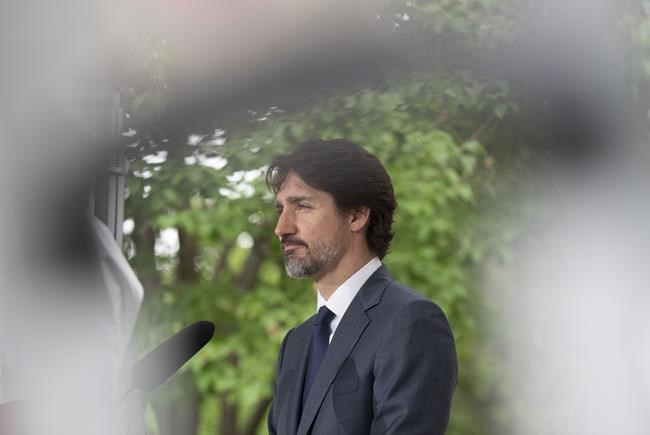
It’s his third visit in as many weeks to a company that’s used the subsidy to hire back laid-off employees.
“As we move into the summer, Canadians can keep counting on our support,” Trudeau said, standing before an array of kegs and cans.
Today’s visit underlines comments Trudeau made during a pre-taped interview that aired Thursday evening at the online Collision tech conference.
He touted the various federal financial support programs aimed at helping businesses survive the pandemic-induced economic shutdown and to promote innovation to help fight the disease.
And he said many Canadian companies have taken advantage of those programs to retool and start producing masks, gowns, ventilators, sanitizer and other personal protective equipment.
Indeed, Trudeau said so many have stepped up that “even as, like every country, we’re having to import massive amounts of PPE because we didn’t have enough from the beginning, we’re now getting to a place where we’re close to self-sufficient on that and able to turn around and share with the world, particularly the developing world.”
Having a secure domestic supply will be particularly important if there is a second wave of the deadly virus that causes COVID-19 in the fall, triggering another wild, global scramble for PPE.

China is the dominant supplier of PPE. With the outbreak starting in that country, there was a severe shortage of equipment as the disease first started spreading around the world in March. Countries were out-bidding one another for supplies that were often never delivered.
According to the Public Services and Procurement Canada website, Canada has vast amounts of protective equipment and supplies on order. Some of the contracts are for delivery much later.
As of June 16, 55.7 million face shields had been ordered but 17.6 million received; over one billion pairs of gloves ordered but 42.3 million received; 126.6 million gowns ordered but 4.6 million received; 20.4 million litres of hand sanitizer ordered but 7.1 million litres received.
As well, Canada had ordered 121.9 million of the coveted N95 respirators and 340.8 million surgical masks, though 12.9 million and 110.9 million respectively had been received. Of the 40,328 ventilators ordered, just 367 had been received.
This report by The Canadian Press was first published June 26, 2020.