‘Every pandemic runs its course,’ Tam assures public in face of Omicron
Advertisement
Read this article for free:
or
Already have an account? Log in here »
To continue reading, please subscribe:
Digital Subscription
One year of digital access for only $1.44 a week*
- Enjoy unlimited reading on winnipegfreepress.com
- Read the E-Edition, our digital replica newspaper
- Access News Break, our award-winning app
- Play interactive puzzles
*Billed as $5.77 plus GST every four weeks. After 52 weeks, price increases to the regular rate of $19.95 plus GST every four weeks. Offer available to new and qualified returning subscribers only. Cancel any time.
To continue reading, please subscribe:
Add Free Press access to your Brandon Sun subscription for only an additional
$1 for the first 4 weeks*
- Enjoy unlimited reading on winnipegfreepress.com
- Read the E-Edition, our digital replica newspaper
- Access News Break, our award-winning app
- Play interactive puzzles
*Your next Brandon Sun subscription payment will increase by $1.00 and you will be charged $17.95 plus GST for four weeks. After four weeks, your payment will increase to $24.95 plus GST every four weeks.
Read unlimited articles for free today:
or
Already have an account? Log in here »
Hey there, time traveller!
This article was published 13/12/2021 (1770 days ago), so information in it may no longer be current.
OTTAWA – COVID-19 is unlikely to be wiped out completely, but it might be tamed, Canada’s chief public health officer said Monday.
Canada is expecting a potentially massive surge in cases in the coming weeks, driven by the new Omicron variant already spreading through communities, said Dr. Theresa Tam.
While COVID-19 might be with us for many years to come, Tam is optimistic the pandemic could end in the foreseeable future.
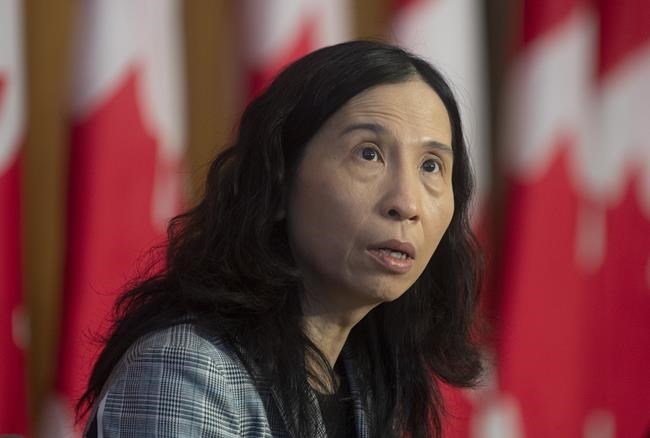
“Every pandemic runs its course,” she assured reporters at a press briefing Monday.
“What we’re looking at is the transition from this urgent crisis response state to one where the virus is more predictable.”
Tam foresees a “bumpy ride” this winter, but Canadians can get through it with increased vaccination, proper testing, public health measures and better treatments for the virus, she said.
“I think all of those points to what is still an optimistic outlook in the next year.”
In the meantime, Tam has urged the federal government to make fundamental changes so the country is better equipped to handle future and present health threats.
The COVID-19 pandemic was a wake-up call on the need for “public health renewal” in Canada, she said.
“Simply put, we were not prepared to face a public health emergency of the magnitude of COVID-19,” Tam said at a press briefing.
The call isn’t new, Tam acknowledged, noting her predecessors have been making the same pleas since 2008.
“Already stretched thin before the pandemic, the public health workforce is overextended and may not have the capacity to counter the next emergency,” Tam wrote in her annual report, tabled Monday in the House of Commons.
“There are still unacceptable delays in getting the right data to inform public health decision-making. Society-wide inequities persist, and key social and economic policies started during COVID-19 may not be sustained. These vulnerabilities could weaken Canada’s resilience to future health threats.”
Tam fears the pandemic recovery will focus solely on the demands of the health-care system, which could overshadow the need to bolster public health.
Shoring up public health means improving Canada’s data collection and surveillance, she wrote.
Tam says gaps in Canada’s ability to collect data about the pandemic hindered the country’s response.
“This fragmentation, alongside outdated technology, has especially pronounced consequences during health emergencies when access to data for real-time decision-making is paramount,” she wrote.
Federal, provincial and territorial governments are working on a countrywide data strategy, but the timelines are not fast enough, Tam said.
The government has tried and failed to improve data collection from health authorities in provinces and territories for decades.
In 2004, Canada attempted to roll out a health-data platform called Panorama, which included a consistent approach to tracking vaccinations in anticipation of future pandemics.
The expert advisory group in charge of steering Canada’s latest health-data overhaul said Panorama failed after eight years and more than $130 million in federal funds because of unclear accountability, and a lack of prioritization and trust between partners.
“All I can say is, we just got to give it a really good go yet again,” Tam said.
Governments did make short-term gains during the pandemic, but data collection is still patchy, Tam added.
Her deputy, Dr. Howard Njoo, said improving data systems may be a matter of harnessing the political will garnered during the pandemic.
The public health workforce also needs bolstering, with sufficient surge capacity to rapidly expand the ranks in an emergency.
In addition, Tam warned the government against scaling back public health funding once the emergency has passed, as governments often do, which could leave Canada at a disadvantage at the onset of the next crisis.
“My ambition is to build a future where public health is viewed as essential to our daily lives,” Tam said.
One estimate suggests public health spending accounts for just under six percent of total health expenditures in Canada, she said.
“It’s not enough if you think about the fact that keeping our population healthy is as important as it is for treatment,” she said.
Tam called for a clearer public health mandate, so that everyone knows what providers are being asked to deliver.
She hopes that will inform coming discussions between the provinces and territories about health-care transfers and the resources required.
The Canadian Public Health Association has gone even further, suggesting federal legislation to harmonize the roles and responsibilities for public health across the country.
“Such legislation would require a national funding accord that incorporates performance measures for the delivery of public health services according to national standards,” the association’s executive director, Ian Culbert, wrote in a statement Monday.
This report by The Canadian Press was first published Dec. 13, 2021.