Trudeau defends not creating universal COVID-19 benefit, announces student aid
Advertisement
Read this article for free:
or
Already have an account? Log in here »
To continue reading, please subscribe:
Digital Subscription
One year of digital access for only $1.44 a week*
- Enjoy unlimited reading on winnipegfreepress.com
- Read the E-Edition, our digital replica newspaper
- Access News Break, our award-winning app
- Play interactive puzzles
*Billed as $5.77 plus GST every four weeks. After 52 weeks, price increases to the regular rate of $19.95 plus GST every four weeks. Offer available to new and qualified returning subscribers only. Cancel any time.
To continue reading, please subscribe:
Add Free Press access to your Brandon Sun subscription for only an additional
$1 for the first 4 weeks*
- Enjoy unlimited reading on winnipegfreepress.com
- Read the E-Edition, our digital replica newspaper
- Access News Break, our award-winning app
- Play interactive puzzles
*Your next Brandon Sun subscription payment will increase by $1.00 and you will be charged $17.95 plus GST for four weeks. After four weeks, your payment will increase to $24.95 plus GST every four weeks.
Read unlimited articles for free today:
or
Already have an account? Log in here »
Hey there, time traveller!
This article was published 22/04/2020 (2372 days ago), so information in it may no longer be current.
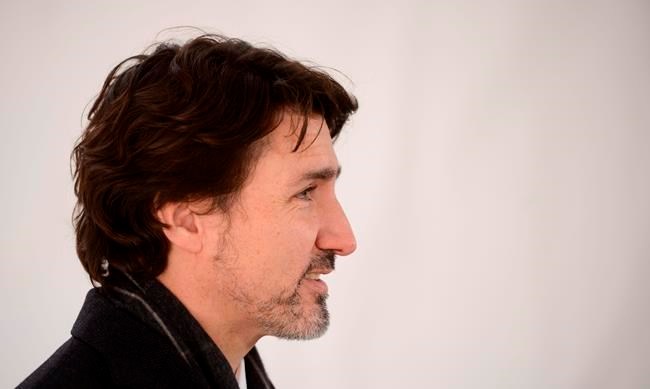
OTTAWA – As he announced yet another emergency financial aid package Wednesday — this one aimed at students — Prime Minister Justin Trudeau defended his decision not to create a universal benefit that would ensure no Canadians affected by COVID-19 fall through the cracks.
Trudeau says his government’s approach has been to try to target its emergency financial assistance in stages to those who need it most, rather than to everyone at once, including those who don’t need it.
“There are millions of Canadians who need help. There are others who do not need help,” Trudeau told the nation Wednesday.
“We feel that targeting the maximum amount of help to the people who needed it quickly was the right way to begin to get through this process.”
His focus for specific help Wednesday was students, announcing a $9-billion suite of programs for students whose education and job prospects are disrupted by the novel coronavirus. They’re aimed at people who are not eligible for the $500-a-week Canada Emergency Response Benefit, or CERB, which is for people who have lost jobs.
The new Canada Emergency Student Benefit, which Trudeau conceded will require Parliament’s approval, will pay $1,250 monthly to Canadian and permanent resident post-secondary students and graduates to make up for lost work and cut hours. This benefit is to be available from May to August 2020.
The amount can increase to $1,750 for students with disabilities or who care for others.
Students who volunteer on COVID-19 response efforts will be rewarded through bursaries of up to $5,000 towards their educations in the fall.
To help students continue their studies when the pandemic restrictions are lifted, the federal government is doubling the Canada Student Grants for all eligible full-time students to up to $6,000 and up to $3,600 for part-time students in 2020-21.
Eligibility for student financial assistance will also be broadened to remove the expected student’s and spouse’s contributions in 2020-21, in recognition that many students and families will struggle to save for school this year.
Existing distinctions-based support for First Nations, Inuit, and Metis Nation students pursuing post-secondary education will be expanded by additional $75.2 million.
The federal government will also expand existing skills development programming for youth to create up to 116,000 jobs and placements to help students find employment this summer and over the coming months.
“The reality is that it’s going to be really hard to find jobs,” said Employment Minister Carla Qualtrough.
“We’re hoping students will find ways to keep themselves occupied to contribute, to upskill and just not stay sitting around for the whole entire summer.”
Qualtrough said her department has been working with provinces on creative ways to find student opportunities in areas like agriculture, food services and health and with community-service organizations to help them get work experience, but “tweaked to address the reality that we don’t have summer festivals or recreational summer camps for kids.”
The package is meant to fill a gap left by the Canada Emergency Response Benefit.
The CERB, which provides $2,000 a month for up to 16 weeks for those who have made at least $5,000 in the last year and have lost income due to the pandemic, has faced growing criticism over the limits on eligibility. Many simply cannot access it, including those who were unemployed before the pandemic began and many marginalized Canadians.
NDP Leader Jagmeet Singh has been calling for the CERB to be made a universal benefit to allow any Canadian in financial distress due to COVID-19 to qualify for benefits.
Sending money to everyone and then clawing back the money from those who don’t need it at tax time is the best way to ensure no one is missed, he said.
“For weeks, we’ve been calling on the government to give direct help to everyone,” Singh said in a statement Wednesday.
“It’s easy. The government should make the CERB universal so that students, and anyone else who needs help, can get the help they need right away.”
A group of 50 senators from different political and partisan backgrounds signed an open letter to Trudeau on Tuesday, also calling for the CERB to be turned into a universal benefit.
The senators say they have been hearing from many Canadians who have made it clear additional patches will be needed to the CERB to stop other groups from falling through the cracks.
A universal payment would ensure greater social and economic equity as well as greater efficiency, the senators say.
“In terms of efficiency, as we are already seeing, it can quickly get support to Canadians who are in dire straits. (The Canada Revenue Agency) can issue these payments by deposit or mail with little more than the push of a button. People in need require support today,” part of the letter reads.
“In the short-term, our focus must be on ensuring the CERB is available for all who need it.”
Trudeau acknowledged the government’s pandemic assistance programs are not reaching everyone who needs help, including seniors. He promised more announcements for seniors would be coming soon.
But he remained firm that his government’s approach is superior to a universal benefit.
“It’s not as easy as saying we’re going to send out a cheque to every Canadian regardless of their age or their region, it’s more complex than that,” Trudeau said in French.
“Our measures from the beginning recognized that some people lost their jobs because of COVID-19, not through any fault of their own, but they require revenue to pay for their groceries, their rent. That’s why we chose to go ahead in a targeted, rapid fashion to put in place what was necessary to help these people in dire need.”
This report by The Canadian Press was first published April 22, 2020.