Diabetes drug triggers neuron growth, potential to regenerate brain cells: study

Advertisement

Advertise with us

TORONTO - A drug commonly used to control Type 2 diabetes can help trigger stem cells to produce new brain cells, providing hope of a potential means to treat brain injuries and even neurodegenerative diseases like Alzheimer's, researchers say.

Read this article for free:


or

Already have an account? Log in here »

To continue reading, please subscribe:

Subscribe and receive a limited-edition Free Press branded hat or tote.

Digital Subscription

One year of digital access for only $205*

  • Enjoy unlimited reading on winnipegfreepress.com
  • Read the E-Edition, our digital replica newspaper
  • Access News Break, our award-winning app
  • Play interactive puzzles

*First annual payment billed as $205.00 + GST for one year. This annual subscription will automatically renew at $233.00 + GST every 52 weeks (10% off the regular annual price of $259.35). Offer available to new and qualified returning subscribers only. Cancel any time.

To continue reading, please subscribe:

Add Free Press access to your Brandon Sun subscription for only an additional

$1 for the first 4 weeks*

  • Enjoy unlimited reading on winnipegfreepress.com
  • Read the E-Edition, our digital replica newspaper
  • Access News Break, our award-winning app
  • Play interactive puzzles
Start now

*Your next Brandon Sun subscription payment will increase by $1.00 and you will be charged $17.95 plus GST for four weeks. After four weeks, your payment will increase to $24.95 plus GST every four weeks.

Hey there, time traveller!
This article was published 05/07/2012 (5203 days ago), so information in it may no longer be current.

TORONTO – A drug commonly used to control Type 2 diabetes can help trigger stem cells to produce new brain cells, providing hope of a potential means to treat brain injuries and even neurodegenerative diseases like Alzheimer’s, researchers say.

A study by scientists at Toronto’s Hospital for Sick Children found the drug metformin helps activate the mechanism that signals stem cells to generate neurons and other brain cells.

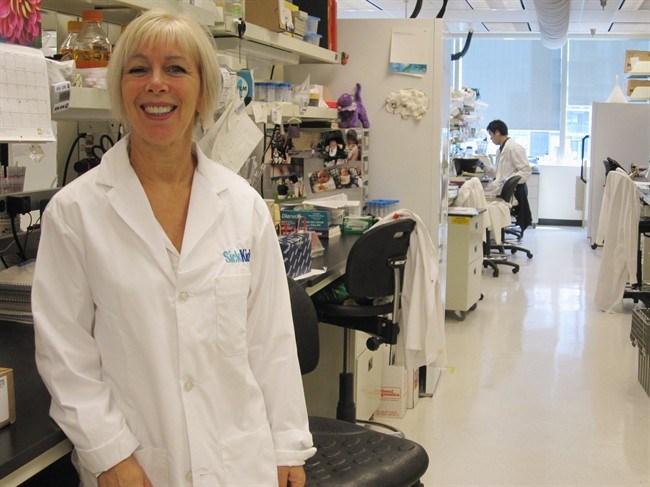
“If you could take stem cells that normally reside in our brains and somehow use drugs to recruit them into becoming appropriate neural cell types, then you may be able to promote repair and recovery in at least some of the many brain disorders and injuries for which we currently have no treatment,” said principal investigator Freda Miller.
Hospital for Sick Children
Principal investigator Dr.Freda Miller.
Hospital for Sick Children Principal investigator Dr.Freda Miller.

“This work is happening against a background of a lot of excitement in the stem cell field about the idea that since we now know that we have stem cells in many of our adult tissues, then perhaps if we could figure out how to pharmacologically tweak those stem cells, then perhaps we could help to promote tissue repair,” added Miller, a senior scientist at SickKids.

The research, published online Thursday in the journal Cell Stem Cell, involved lab-dish experiments using both mouse and human brain stem cells, as well as learning and memory tests performed on live mice given the drug.

Researchers started by adding metformin to stem cells from the brains of mice, then repeated the experiment with human brain stem cells generated in the lab. In both cases, the stem cells gave rise to new brain cells.

They then tested the drug in lab mice and found that those given daily doses of metformin for two or three weeks had increased brain cell growth and outperformed rodents not given the drug in learning and memory tasks.

One standard test involves a water maze in which the mice must swim around until they locate a hidden platform.

“And the remarkable thing is the mice that got the metformin, what they showed was increased flexibility in terms of the way they learned the location of things,” said Miller, explaining that the drug-treated mice had a greater ability to learn and remember.

“If you then, for example, moved the platform some place completely different, the metformin-treated animals were remarkably good at just saying, ‘OK, things have changed’ and learning the new thing and (were) much better than the controls (untreated mice).”

Miller said it was serendipity that led the team to conduct the study. About 18 months ago, they found a pathway known as PKC-CBP that signalled embryonic neural stem cells to make brain cells. At about the same time, some U.S. collaborators at Johns Hopkins University found the same pathway was activated by metformin in liver cells — the means by which the drug controls glucose levels that go awry in diabetes.

Based on those findings, Miller’s team thought metformin might activate the same pathway in neural stem cells.

“I love this story because it’s a classic example of how very basic research into how things work has led to a potential therapeutic endpoint,” she enthused.

One big bonus for researchers is that metformin has been well-tested and long prescribed for a number of diseases, including metabolic disorders in children. The drug also has been shown to have anti-cancer properties.

“The advantage again is that because metformin has been in people from seven until 107, we have lots of safety data on it, we know exactly what kinds of doses, et cetera, et cetera,” she said. “So that’s a really huge plus with moving forward.”

When it comes to progressive neurodegenerative diseases such as Alzheimer’s, Miller said there is a lot of excitement among scientists about finding a drug that could recruit stem cells to produce healthy neurons, “at least to give people just a bit longer healthier cognition, if you will.”

Metformin might be such a drug, but the difficulty is that stem cells age and diminish as people get older, so it’s unclear whether there would be adequate numbers of healthy brain stem cells to produce new neurons that would have a therapeutic benefit.

Still, it’s a possible and worthwhile line of investigation, she said.

Miller’s team is already in discussions with clinical colleagues about launching a pilot study to test metformin in young patients with acquired brain damage, either as result of treating a childhood brain tumour or from a traumatic head injury.

Such a study would try to determine if the drug could increase brain cell mass — using a functional MRI scan, for instance — and measuring any improvement in cognition and behaviour.

If approved, Miller said a pilot study could begin within the next year or so.

———

Online: http://www.youtube.com/watch?v=VHho7SttLzo&list=PL060890238CBB0337&index=8&feature=plpp_video


Report Error Submit a Tip

More Stories

Volunteer pop-up library axed from Manitoba Youth Centre

Matthew Frank 4 minute read Preview

Volunteer pop-up library axed from Manitoba Youth Centre

Matthew Frank 4 minute read 2:01 AM CDT

Manitoba Corrections has cancelled a pop-up library program at the Manitoba Youth Centre, leaving inmates without librarian services and fewer options to borrow certain books.

The Prison Libraries Committee, part of the non-profit Manitoba Library Association, operated and funded the volunteer program since 2024 before it was shut down by the province last month. The group previously partnered with the province to offer the service because the facility has no dedicated library of its own.

“It is concerning that community members who are incarcerated, especially youth, are losing out on meaningful programming, access to information and rehabilitation efforts, which are offered at no cost to (Manitoba) Corrections. We urge Manitoba Justice to promote more library services and programming, not less,” said a Sept. 24 letter from the non-profit addressed to the justice minister.

Ashley Huot, chair of the Prison Libraries Committee, said she was puzzled when she received an email last month from Manitoba Corrections stating that the pop-up library was no longer needed.

Read
2:01 AM CDT

Letters, Oct. 3

7 minute read 2:01 AM CDT

A morning in the life …

My very first lesson does not start when I walk into that lecture hall, oh no — it starts long before. It begins when I walk to my car, check the estimated arrival time to the University of Manitoba and hope that Winnipeg traffic agrees with it.

A drive that appears completely manageable changes almost immediately when I’m greeted by a tsunami of orange pylons and a line of cars that appears to go on forever. Traffic moves by the inch, lanes magically disappear and the detour I took yesterday now has a detour of its own. These factors make me do a calculation that I have become all too familiar with. How late can I arrive and still find parking, run to my class across campus and get to class with enough time left to make it worth it?

I have grown used to people saying, “Why not just leave earlier?” I do. But when I’m already leaving for my 8:30 a.m. class at 7 a.m., there’s only so much I can do. This drive that some would think is relaxing is one that feels like an assignment that I didn’t know I had to complete and is due at 8:30 a.m.

What’s luck got to do with it?

Tim Kist 5 minute read 2:01 AM CDT

We all seek certainty in our daily lives. We expect if we make a decision, the outcome will be just as we planned: a direct correlation between the decision and result.

You, as a business leader, seek the same certainty from the decisions you make. And sometimes, the result is what was expected. Sometimes, it isn’t.

The big question is: why is it so difficult to achieve the business results you expect when you carefully craft your plans and seemingly make good decisions?

The truth is we cannot predict the future. This means we almost never know precisely how customers will respond to a sales quote, what competitors are planning, and a myriad of other external variables at play.

A 22-year-old man is dead and an 18-year-old is in hospital in critical condition after a two-vehicle crash on Highway 8 on Thursday evening.

A Gimli RCMP officer was driving north on the highway, near Riverton, when he witnessed the collision at about 6:45 p.m.

A vehicle headed north had passed the Mountie at a high speed before colliding with an SUV that was turning west onto Provincial Road 329 from Highway 8.

The driver of the first vehicle, an 18-year-old man from Arborg, was rushed to hospital by a helicopter ambulance with injuries RCMP describe as serious and life-threatening.

You’re a solid, loyal sister, so worry not

Maureen Scurfield 5 minute read Yesterday at 2:00 AM CDT

DEAR MISS LONELYHEARTS: I ran into my sister’s husband at the bar recently. He was drinking with a bunch of people from his work. I noticed he was sitting close to a young woman, with his arm around her.

I just nodded without a smile as I slowly passed them. I kept on going, but he knew I saw them together. A few minutes later he came over — obviously drunk — and said, “You’re a good girl! You won’t say anything to your sister, will you?” Ha! I looked at him and said, “Of course I’m going to say something!”

My loyalty will always be to my sister. I phoned my sis in my car and blabbed. She tried to laugh it off, but she’s gone silent since — not answering my calls or messages. So apparently now I’m the troublemaker? That’d be just her style! What should I do?

— Worried About Us, North Kildonan

Health minister warns $1.2 billion in annual federal funding set to expire in March

Scott Billeck 4 minute read Preview

Health minister warns $1.2 billion in annual federal funding set to expire in March

Scott Billeck 4 minute read Thursday, Oct. 1, 2026

Manitoba’s health minister is warning of possible cuts to health care with $1.2 billion in annual funding from Ottawa set to expire next year.

“We’re very concerned that what would be the largest cut to health care in a generation is right in front of us,” Health Minister Uzoma Asagwara said Thursday at the Manitoba legislature. “It means that services that Manitobans depend on will be in jeopardy and be at risk.

“Any reductions, any cuts from Canada, will have direct impacts on the health outcomes of Manitobans.”

Asagwara, who serves as the provincial and territorial health minister lead, chaired a virtual meeting Tuesday with provincial and territorial health ministers to discuss federal funding for health care, mental health care and substance use services, which is scheduled to expire March 31, 2027.

Read
Thursday, Oct. 1, 2026