Donated organs not being used as hospitals scale back transplants for COVID-19

Advertisement

Advertise with us

OTTAWA - Transplant centres across the country have massively scaled back organ transplants as hospitals try to make sure they are able to accommodate COVID-19 cases.

Read this article for free:


or

Already have an account? Log in here »

To continue reading, please subscribe:

Subscribe and receive a limited-edition Free Press branded hat or tote.

Digital Subscription

One year of digital access for only $205*

  • Enjoy unlimited reading on winnipegfreepress.com
  • Read the E-Edition, our digital replica newspaper
  • Access News Break, our award-winning app
  • Play interactive puzzles

*First annual payment billed as $205.00 + GST for one year. This annual subscription will automatically renew at $233.00 + GST every 52 weeks (10% off the regular annual price of $259.35). Offer available to new and qualified returning subscribers only. Cancel any time.

To continue reading, please subscribe:

Add Free Press access to your Brandon Sun subscription for only an additional

$1 for the first 4 weeks*

  • Enjoy unlimited reading on winnipegfreepress.com
  • Read the E-Edition, our digital replica newspaper
  • Access News Break, our award-winning app
  • Play interactive puzzles
Start now

*Your next Brandon Sun subscription payment will increase by $1.00 and you will be charged $17.95 plus GST for four weeks. After four weeks, your payment will increase to $24.95 plus GST every four weeks.

Hey there, time traveller!
This article was published 30/03/2020 (2355 days ago), so information in it may no longer be current.

OTTAWA – Transplant centres across the country have massively scaled back organ transplants as hospitals try to make sure they are able to accommodate COVID-19 cases.

Living-donor surgeries have largely shut down across the country, and deceased-donor transplants are happening only when the case is urgent.

Dr. Atul Humar, past president of the Canadian Society of Transplantation, said that means many organs are not going to good use.
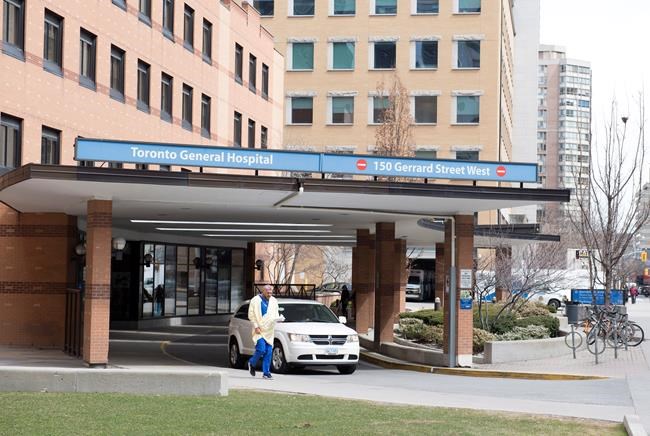
Toronto General Hospital in Toronto is shown on Thursday April 5, 2018. Transplant centres across the country have massively scaled back organ donation surgeries as hospitals try to make sure they are able to accommodate COVID-19 cases. THE CANADIAN PRESS/Doug Ives

“There’s some donors, deceased organ donors, and we’re not sending teams to procure those organs,” said Humar, who is also the director of the transplant program at Toronto General Hospital.

“It’s quite tragic.”

Patients who go through certain types of organ donation often require time in the intensive care unit on a ventilator — resources desperately needed by patients with serious cases of COVID-19.

At Humar’s hospital, organ transplant surgeries have decreased by about 80 per cent, though the numbers vary from province to province.

The slowdown in transplant surgeries also protects patients, because they must be put on drugs to suppress their immune systems after their surgeries to prevent their bodies from rejecting the new organ.

“Basically transplant recipients are forced to become immunocompromised,” said Dr. Sam Shemie, the medical advisor for organ donation at Canadian Blood Services.

That puts them at much greater risk if they come into contact with the novel coronavirus, Shemie said, so that needs to be weighed against the benefit of the transplant in each case.

Still, he said that unlike countries such as Spain or the United Kingdom, Canada’s health system is not so overloaded that it can’t perform urgent transplants when needed.

More than 200 people died on the waiting list for organ donation in Canada in 2018, according to the latest statistics from the Canadian Organ Replacement Register, which is managed by the Canadian Institute for Health Information.

“My biggest fear is that our patients who are waiting for a transplant will die because they’ve waited too long,” Humar said.

People who need kidney transplants are most affected by the reduction in surgeries. While kidneys are by far the most in-demand organ, and transplants are far preferred to dialysis as treatment, people can survive on dialysis for a long time.

“Even in the best of times, there was a long waiting list for kidney donations,” he said. “On average a recipient will wait for five years or longer.”

One reason is patients need to wait not only for an organ to become available, one that is the right match for them.

If a needed organ comes up for someone who is difficult to match, they will likely still get their surgery because it could be that person’s only chance, he said.

Doctors also need to be careful about transplants that could transfer the virus to the recipient along with the new organ.

That means that all donors must be screened for COVID-19 to avoid infecting the recipient.

Restrictions on organ donations will ease as things start to get back to normal, Shemie said.

All these delays could mean longer waits for those patients when the pandemic ends and surgeries ramp up again.

Living-donor surgeries can be planned for and scheduled in advance when the pandemic is finally clear, Shemie said. But hospitals and patient who need transplants from deceased donors are largely at the mercy of whatever donated organs are available at the time.

Shemie said there was a massive response to Canadian Blood Services’ call for blood donations.

He hopes people show the same willingness to give when it comes to registering for organ donation, once the COVID-19 crisis is over.

This report by The Canadian Press was first published March 30, 2020.
Report Error Submit a Tip

More Stories

Council to consider moving ahead with final phase of sewage plant upgrade before securing expected federal cash

Joyanne Pursaga 5 minute read Preview

Council to consider moving ahead with final phase of sewage plant upgrade before securing expected federal cash

Joyanne Pursaga 5 minute read 6:00 PM CDT

City council will consider approving $115 million toward the final phase of the North End sewage treatment plant upgrade, while civic staff warn sewer rates would soar $200 higher per year if more federal funding isn’t provided.

However, several politicians say a response from Ottawa to the city’s request for more money is expected soon.

A water and waste report asks council to waive a condition that the city finalize funding agreements with the provincial and federal governments for the mega-project before awarding the money for a contractor to complete the $115-million development phase agreement for the final project.

The third and final nutrient removal facilities phase is expected to cost $1.57 billion, bringing the total cost of the entire upgrade to $3.1 billion.

Read
6:00 PM CDT

Hydro working to restore service to pockets of River Heights

Malak Abas 6 minute read Preview

Hydro working to restore service to pockets of River Heights

Malak Abas 6 minute read Updated: Yesterday at 8:33 PM CDT

When Sheila Fenby’s basement began filling with water Sunday night, it felt like déjà vu.

Read
Updated: Yesterday at 8:33 PM CDT

‘Dynacare sucks’: premier muses about bringing lab services back into public system

Carol Sanders 6 minute read Preview

‘Dynacare sucks’: premier muses about bringing lab services back into public system

Carol Sanders 6 minute read Updated: 7:45 PM CDT

Premier Wab Kinew says Manitoba may bring Dynacare’s diagnostic lab services back into the public system rather than continue to sign contracts with the for-profit company.

“Dynacare sucks. They’ve made an absolute mess of this situation,” the premier said Wednesday, the day the company’s 350 employees reported back to work after the labour board halted their strike after just one day.

Kinew first made the remark about Dynacare in a CBC radio interview Wednesday morning and added he is “not happy with them.”

Dynacare performs the majority of non-emergency blood and urine tests in the province.

Read
Updated: 7:45 PM CDT

Manitoba-Canada Defence Alliance unveiled

Gabrielle Piché 5 minute read Preview

Manitoba-Canada Defence Alliance unveiled

Gabrielle Piché 5 minute read 8:11 PM CDT

Despite Ottawa’s promises of increased defence spending, Jack Enns has seen slowdowns.

Tit-for-tat tariffs between Canada and the United States have lessened demand for some of A. Adams Supply (1969) Ltd.’s products, the firm’s general manager said.

The Winnipeg company ships specialized tools to aerospace manufacturers, metalworkers and transport firms.

More clients could be useful — and so would local companies winning defence contracts, Enns said. If that happened, vendors such as A. Adams Supply may get more orders, boosting business.

Read
8:11 PM CDT

South Winnipeg neighbourhood will be first to go geothermal

Chris Kitching 4 minute read Preview

South Winnipeg neighbourhood will be first to go geothermal

Chris Kitching 4 minute read Updated: 7:28 PM CDT

A new neighbourhood in south Winnipeg will be Manitoba’s first to use a shared, large-scale geothermal system to heat and cool hundreds of homes over coming decades.

The province is giving up to $4 million to the developers of Southwood Circle, just north of the University of Manitoba’s Fort Garry campus, for a district geothermal system as part of the NDP’s goal to reach net-zero greenhouse gas emissions by 2050.

“It means a whole neighbourhood can tap into geothermal, which means low-carbon heating and cooling for at least 1,000 homes,” Premier Wab Kinew said at a news conference Wednesday.

Geothermal systems, equipped with pumps and pipes, use underground temperatures to heat and cool one or more buildings. Proponents point to long-term energy and cost savings compared with conventional heating and cooling systems.

Read
Updated: 7:28 PM CDT

DNA on beer can helps solve killing

Dean Pritchard 4 minute read Preview

DNA on beer can helps solve killing

Dean Pritchard 4 minute read 2:00 AM CDT

Two years after 74-year-old James Monaghan was stabbed in his Sherburn Street home, DNA found on a beer can led police to his killer.

Shara Harper, 29, pleaded guilty to manslaughter and on Tuesday was sentenced to six years in prison.

A neighbour found Monaghan dead in his home on July 29, 2022. He had been stabbed twice in the chest and back.

The investigation into Monaghan’s killing had stalled until June 2024, when DNA found on an empty beer can in Monaghan’s home was confirmed to be a match for Harper.

Read
2:00 AM CDT