Employment lawyers on returning to work during and after the pandemic
Advertisement
Read this article for free:
or
Already have an account? Log in here »
To continue reading, please subscribe:

Digital Subscription
One year of digital access for only $205*
- Enjoy unlimited reading on winnipegfreepress.com
- Read the E-Edition, our digital replica newspaper
- Access News Break, our award-winning app
- Play interactive puzzles
*First annual payment billed as $205.00 + GST for one year. This annual subscription will automatically renew at $233.00 + GST every 52 weeks (10% off the regular annual price of $259.35). Offer available to new and qualified returning subscribers only. Cancel any time.
To continue reading, please subscribe:
Add Free Press access to your Brandon Sun subscription for only an additional
$1 for the first 4 weeks*
- Enjoy unlimited reading on winnipegfreepress.com
- Read the E-Edition, our digital replica newspaper
- Access News Break, our award-winning app
- Play interactive puzzles
*Your next Brandon Sun subscription payment will increase by $1.00 and you will be charged $17.95 plus GST for four weeks. After four weeks, your payment will increase to $24.95 plus GST every four weeks.
Read unlimited articles for free today:
or
Already have an account? Log in here »
Hey there, time traveller!
This article was published 10/05/2020 (2343 days ago), so information in it may no longer be current.
TORONTO – As provinces begin the slow process of reopening their economies and people start returning to the workplace, questions abound about the rights and responsibilities of employees and employers in the aftermath of COVID-19.
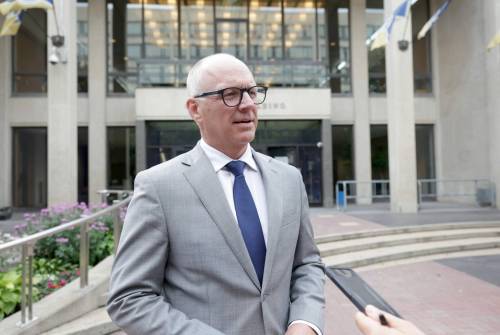
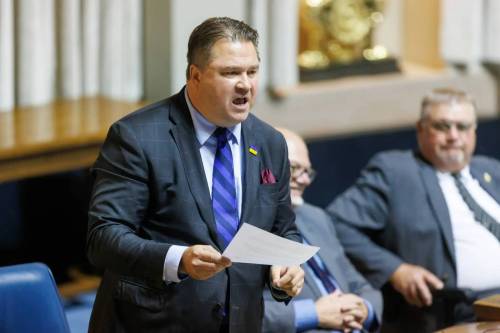
The Canadian Press asked two employment lawyers, Adam Savaglio, a partner at Scarfone Hawkins LLP, and Lior Samfiru of Samfiru Tumarkin LLP, to answer some of those questions.
Do employees have to go back to work if they’re asked to, or can they continue working remotely?

Most employees will have to return to work if their employer is meeting all of the safety guidelines set out by the government, lawyers say. But they note there are some exceptions.
For instance, an employee who is the primary caregiver for a child and doesn’t have alternative care will be able to stay home from work and continue accepting government benefits without fear of losing their job, Savaglio said.
And he said employees don’t have to accept working for fewer hours or less pay.
“Can the employer modify your hours like, hey, come back three days a week? No, they can’t,” Savaglio said. “They have to get into an agreement with you. They’re creating a new employment contract with new employment terms.”
Savaglio said there are some questions that don’t have answers yet.
“We’re in an unprecedented time and lawyers go by legal precedent,” he said.
But it seems some excuses won’t fly. For instance, it’s the employee’s legal responsibility to get to work, which could present difficulties if the employee doesn’t have their own car and worries about the safety of public transit.
Savaglio said in cases like that, it’s in the employer’s interest to be flexible with their workers.
“It’s in these times that really there should be a duty to co-operate between the employer and the employee, where you go back and forth to try to figure out what’s the best circumstance for me to perform my duties under my employment contract,” he said.
What can employees reasonably expect of their employers when it’s time to return to the workplace?
“An employer must follow each and every single requirement that’s imposed by the government and by health authorities that may be industry specific,” Samfiru said.
For instance, in Manitoba, retail stores have been allowed to reopen at half-occupancy, as have restaurant patios. In Ontario, retail locations with a street entrance will be allowed to open for curbside pickup this week.
Samfiru added that those guidelines may change over time, and “it is up to the employer to stay up to date.”
If an employee feels that their employer isn’t doing enough to protect them from the virus, what can they do?
“There is a legal process that an employee can engage in if the work is unsafe. It’s called a work refusal, which may also require the company to call in an inspector from the Ministry of Labour, who can then determine whether in fact the work is safe or not,” Samfiru said.
He said those inspectors will have their work cut out for them, because they’ve been trained to make sure equipment is working properly and safety measures are in place. Evaluating the spread of a virus is untrodden territory.
Does an employee have to tell their employer if they’ve had COVID-19?
A staffer doesn’t have to tell their boss if they were diagnosed and then cleared of the virus before returning to work, Samfiru said. But if the person may have recently been exposed to COVID-19, they have a duty to report it to their employer.
“If you’re in a situation where you could conceivably be putting others at risk and you know about that, you must tell your employer,” he said. “You must allow them to understand how to deal with you and then whether they need to exclude you from work or maybe require other employees to self-isolate or even shut down the business completely.”
He added that if an employee knowingly puts their co-workers at risk without informing them, they could be personally liable.
The decision of whether to disclose is one of common sense, he added.
“If you know someone that had the virus and now you’re not feeling well, reasonably you would expect that there’s a problem,” he said. “If you’ve been self-isolated at home for the last two months, and now you have a cold, you probably are not going to think that there’s a real risk there.”
This report by The Canadian Press was first published May 10, 2020