Military asked to aid nursing homes in Quebec, Ontario; signs COVID-19 slowing

Advertisement

Advertise with us

TORONTO - The Canadian military needs to help in understaffed nursing homes ravaged by COVID-19, the country's two largest provinces said Wednesday, as signs of a slowing pandemic prompted talk of easing the economically crippling measures put in place to curb the spread.

Read this article for free:


or

Already have an account? Log in here »

To continue reading, please subscribe:

Subscribe and receive a limited-edition Free Press branded hat or tote.

Digital Subscription

One year of digital access for only $205*

  • Enjoy unlimited reading on winnipegfreepress.com
  • Read the E-Edition, our digital replica newspaper
  • Access News Break, our award-winning app
  • Play interactive puzzles

*First annual payment billed as $205.00 + GST for one year. This annual subscription will automatically renew at $233.00 + GST every 52 weeks (10% off the regular annual price of $259.35). Offer available to new and qualified returning subscribers only. Cancel any time.

To continue reading, please subscribe:

Add Free Press access to your Brandon Sun subscription for only an additional

$1 for the first 4 weeks*

  • Enjoy unlimited reading on winnipegfreepress.com
  • Read the E-Edition, our digital replica newspaper
  • Access News Break, our award-winning app
  • Play interactive puzzles
Start now

*Your next Brandon Sun subscription payment will increase by $1.00 and you will be charged $17.95 plus GST for four weeks. After four weeks, your payment will increase to $24.95 plus GST every four weeks.

Hey there, time traveller!
This article was published 22/04/2020 (2324 days ago), so information in it may no longer be current.

TORONTO – The Canadian military needs to help in understaffed nursing homes ravaged by COVID-19, the country’s two largest provinces said Wednesday, as signs of a slowing pandemic prompted talk of easing the economically crippling measures put in place to curb the spread.

Both Quebec and Ontario called on the federal government to send in the troops, with Premier Francois Legault asking for 1,000 military personnel. Premier Doug Ford similarly asked for military help in five priority homes in his province.

Coronavirus disease in nursing homes has accounted for a significant proportion of Canada’s 1,974 deaths, with facilities in the two largest provinces hit especially hard.
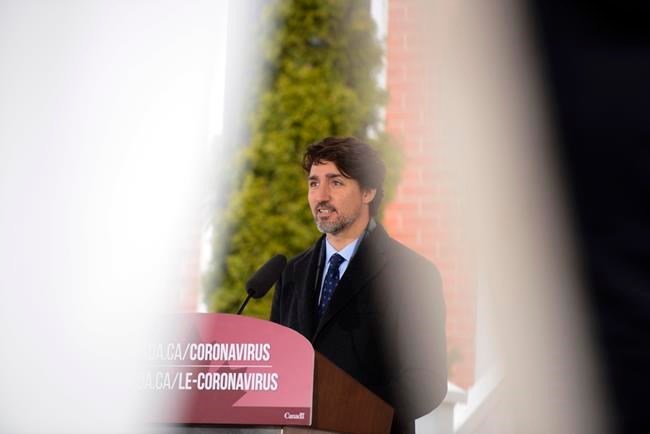
Prime Minister Justin Trudeau addresses Canadians on the COVID-19 pandemic from Rideau Cottage in Ottawa on Tuesday, April 21, 2020. THE CANADIAN PRESS/Sean Kilpatrick

“We’re in the thick of a raging battle against COVID-19 in our long-term care homes,” Ford said.

Despite the lethal spread of the novel coronavirus in long-term care facilities, some bright spots did emerge.

Ontario, for example, reported 510 new cases or 4.3 per cent more over the previous day — the slowest growth in weeks. Also encouraging was that, for the first time, more than half of infections have been resolved and 20 long-term care homes with outbreaks were now virus-free.

Several other provinces reported no new cases amid talk of how and when to get the country moving again.

Ford has mused Ontario could start easing restrictions ahead of next month’s long weekend. Legault, whose province reported 93 more deaths, said he would present a plan next week to reopen schools gradually, starting in stable areas.

Premier Dennis King of Prince Edward Island, which has had just 26 cases and no deaths, said lifting anti-COVID measures could start as early as May 1.

In Saskatchewan, Premier Scott Moe said some businesses could reopen next month under a five-phase plan his government has developed.

“We know there are risks on both sides,” he said in a televised address.

“If we move too quickly, we risk increasing the spread of COVID-19. If we move too slowly, we risk permanent damage to the livelihoods of thousands of Saskatchewan people.”

Moe said more details on what businesses and services will be allowed to reopen will be announced Thursday.

Manitoba said it would release its reopening plan next week.

How exactly Canada starts on the road to normalization depends largely on provincial decisions, Prime Minister Justin Trudeau said on Wednesday. However, the closure of the Canada-U.S. border will stay in place until May 21 at the earliest, he said.

For her part, chief public health officer Dr. Theresa Tam agreed Canada was slowing the epidemic but warned against letting down the country’s collective guard. The focus, Tam said, had to be on stopping outbreaks in seniors homes and other places where vulnerable people live in close quarters.

Regardless, the financial fallout of the anti-COVID measures — social isolation and the shutdown of non-essential commercial activities — has been profound. Trudeau, who had already announced more than $100 billion in various forms of assistance, offered more financial supports on Wednesday.

A total of $9 billion would go to students without access to previously announced emergency assistance. Students will receive $1,250 a month from May to August under the program.

“As young people, what you’re going through matters,” Trudeau said. “We want to make sure that you will be OK.”

In addition, the government said it would create 76,000 new summer jobs for young people in sectors that “need an extra hand,” such as agriculture.

The economic impact of the epidemic was seen on the inflation front, where Statistics Canada reported the consumer price index for March was up a scant 0.9 per cent compared with a year ago. That was the smallest increase since May 2015 and compares with the 2.2 per cent recorded in February.

On Friday, Canadians will hear the government’s fiscal update for February — including a deficit number bound to look microscopic compared to the tsunami of red ink unleashed by a pandemic that idled much of the economy in mid-March.

The prime minister also pledged unspecified aid for older Canadians whose finances have taken a hit. “There is help coming for seniors,” he said.

Globally, the grim pandemic toll continued to mount, with New York City alone reporting almost 15,000 deaths — more than all but four countries worldwide: Italy, Spain, France and the U.K. COVID-19 has now killed more than 45,000 people in the U.S.

On a more optimistic note, New Zealand, with about 1,500 cases and 14 deaths, said it was moving to a Level 3 alert next week from the highest Level 4 now in place, meaning reopening some businesses and schools and easing travel restrictions.

— With files from Canadian Press reporters across the country.

This report by The Canadian Press was first published April 22, 2020.

Report Error Submit a Tip

More Stories

Man who killed truck passenger handed new 12-year sentence

Erik Pindera 4 minute read Preview

Man who killed truck passenger handed new 12-year sentence

Erik Pindera 4 minute read 2:00 AM CDT

Manitoba’s highest court has given a man who shot at a passing truck and killed a 20-year-old woman a 12-year prison sentence for manslaughter.

William Ryerson Thomas Comber, now in his mid 20s, was found guilty of second-degree murder by a jury in December 2022 for the killing of Hailey Dugay on Nov. 17, 2018. Comber was later sentenced to life in prison with no chance of parole for 12 years.

Dugay died after the truck she was travelling in was struck by gunfire late at night on a gravel road near Fraserwood, 90 kilometres north of Winnipeg.

The Court of Appeal struck down Comber’s murder conviction earlier this year and ruled he was instead guilty of the lesser offence of manslaughter.

Read
2:00 AM CDT

Military asked to aid COVID-hit nursing homes

Colin Perkel, The Canadian Press 5 minute read Preview

Military asked to aid COVID-hit nursing homes

Colin Perkel, The Canadian Press 5 minute read Wednesday, Apr. 22, 2020

TORONTO - The Canadian military needs to help in understaffed nursing homes ravaged by COVID-19, the country's two largest provinces said Wednesday, as signs of a slowing pandemic prompted talk of easing the economically crippling measures put in place to curb the spread.

Both Quebec and Ontario called on the federal government to send in the troops, with Premier Francois Legault asking for 1,000 military personnel. Premier Doug Ford similarly asked for military help in five priority homes in his province.

Coronavirus disease in nursing homes has accounted for a significant proportion of Canada's 1,974 deaths, with facilities in the two largest provinces hit especially hard.

"We're in the thick of a raging battle against COVID-19 in our long-term care homes," Ford said.

Read
Wednesday, Apr. 22, 2020

Mayoral rematch between Gillingham, Klein gets ugly on Day 1

Joyanne Pursaga 6 minute read Preview

Mayoral rematch between Gillingham, Klein gets ugly on Day 1

Joyanne Pursaga 6 minute read Updated: Yesterday at 6:25 PM CDT

Former city councillor and provincial cabinet minister Kevin Klein says he will soon enter the race to become Winnipeg’s next mayor — prompting an immediate war of words with incumbent Scott Gillingham.

Gillingham quickly responded to the announcement by calling Klein “toxic” and a “fixer” for Peter Nygard.

Klein said Tuesday he had decided not to enter the mayoral race weeks ago due to an unspecified health scare that required surgery. After recovering, he decided to run.

“The future of the city means a lot to me. I believe that we have so much untapped potential that I felt I should do something about it,” said Klein, noting he felt compelled to run because key city issues, such as perceptions of public safety in the downtown, have grown worse over the past four years.

Read
Updated: Yesterday at 6:25 PM CDT

Love of the rink blossomed differently for mother-daughter figure skaters

Grace Penner 8 minute read Preview

Love of the rink blossomed differently for mother-daughter figure skaters

Grace Penner 8 minute read Yesterday at 6:20 PM CDT

It’s said that home is where the heart is, and for Dana and Marrin McKee that has always been the rink.

The mother-daughter duo of figure skating coaches always find comfort lacing up in chilly arenas.

Dana McKee’s origin story was very similar to her daughter’s, having a strong motherly push onto the ice. Much like learning to swim or drive a car, Dana’s mother believed that skating was an important life skill that needed to be honed.

Growing up in Morris, McKee spent the majority of her youth in the CanSkate program — a developmental learn-to-skate stage teaching the basics of standing upright.

Read
Yesterday at 6:20 PM CDT

Winnipeg teacher disciplined for ‘liking’ student’s post

Maggie Macintosh 5 minute read Preview

Winnipeg teacher disciplined for ‘liking’ student’s post

Maggie Macintosh 5 minute read Monday, Aug. 31, 2026

A Winnipeg teacher has been reprimanded for accidentally clicking ‘like’ on a student’s year-old social media post during a late-night scroll.

A recent investigation by Manitoba’s independent teacher commissioner found Jordan Nelson, a hockey coach in the Pembina Trails School Division, engaged in professional misconduct by viewing online profiles of students who were following a team account he was managing on behalf of his school.

“Using information associated with the school’s hockey team account to access and review a student’s social media account, without any legitimate educational or workplace purpose, was inappropriate and inconsistent with the professional boundaries expected of a teacher,” commissioner Noni Classen wrote.

A five-page report, better known as a consent resolution agreement, details agreed-upon facts about an October 2025 incident and subsequent disciplinary action.

Read
Monday, Aug. 31, 2026

Winnipeg woman saves child, father in ‘courageous’ river rescue

Scott Billeck 2 minute read Preview

Winnipeg woman saves child, father in ‘courageous’ river rescue

Scott Billeck 2 minute read Updated: 11:03 AM CDT

A Winnipeg woman is being hailed as a hero after saving a father and his child from the Red River last month.

Police officers were called to St. John’s Park shortly before 7 p.m. on Aug. 24 after receiving a report a child had fallen into the river, the Winnipeg Police Service said in a news release Wednesday.

When officers arrived, they found the unconscious child on shore receiving first aid from a bystander. Police took over life-saving efforts before the child was rushed to hospital in critical condition. The child was later stabilized and is expected to make a full recovery.

Police said an investigation by the child abuse unit determined a woman witnessed the child fall into the water, followed by the child’s father, who tried to save his child. The woman jumped into the river, first pulling the father to safety before swimming back out for the child.

Read
Updated: 11:03 AM CDT