Canada a series of ‘regional epidemics,’ top doctor says as provinces hit snags
Advertisement
Read this article for free:
or
Already have an account? Log in here »
To continue reading, please subscribe:

Digital Subscription
One year of digital access for only $205*
- Enjoy unlimited reading on winnipegfreepress.com
- Read the E-Edition, our digital replica newspaper
- Access News Break, our award-winning app
- Play interactive puzzles
*First annual payment billed as $205.00 + GST for one year. This annual subscription will automatically renew at $233.00 + GST every 52 weeks (10% off the regular annual price of $259.35). Offer available to new and qualified returning subscribers only. Cancel any time.
To continue reading, please subscribe:
Add Free Press access to your Brandon Sun subscription for only an additional
$1 for the first 4 weeks*
- Enjoy unlimited reading on winnipegfreepress.com
- Read the E-Edition, our digital replica newspaper
- Access News Break, our award-winning app
- Play interactive puzzles
*Your next Brandon Sun subscription payment will increase by $1.00 and you will be charged $17.95 plus GST for four weeks. After four weeks, your payment will increase to $24.95 plus GST every four weeks.
Read unlimited articles for free today:
or
Already have an account? Log in here »
Hey there, time traveller!
This article was published 28/05/2020 (2304 days ago), so information in it may no longer be current.
Different regions face distinct challenges in emerging from COVID-19 lockdowns, Canada’s top public health doctor noted Thursday as New Brunswick had to suspend its legislature, Ontario saw a jump in cases and Manitoba grappled with loosening restrictions on gatherings.
Dr. Theresa Tam described Canada as “a series of regional epidemics,” with the hardest-hit provinces remaining Ontario and Quebec.
“Even within those jurisdictions, you need to hone in on certain areas,” she said as she urged authorities to focus their efforts on hot spots and vulnerable areas such as long-term care homes.
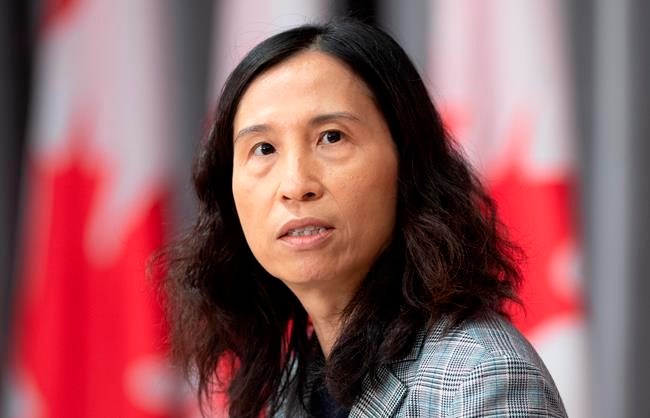
Her assessment proved true on Thursday as various provinces experienced setbacks and successes in the fight against the virus.
New Brunswick’s provincial legislature abruptly adjourned, a day after officials confirmed a health-care worker who had travelled outside New Brunswick was at the origin of a cluster that has grown to at least six cases in the Campbellton area.
Premier Blaine Higgs has said the health-care worker was in contact with “multiple patients” over a two-week period after returning to the province without self-isolating. The area, near the border with Quebec, will now have to return to tighter restrictions on physical distancing.
Tam said the response shows public health officials across the country are taking a cautious approach to reopening.
“I think there has always been the message in different jurisdictions that there’s a flexibility in the public health system to reinstate or pull back on some of the measures as they see fit, based on their own epidemiological context,” she said.
Ontario also experienced a small setback as it reported 383 new cases of COVID-19 on Thursday, after several consecutive days of fewer than 300 new cases. It brings the provincial total to 26,866, an increase of 1.4 per cent over the previous day.
The province continued to deal with the fallout of a scathing Canadian Armed Forces report alleging “horrific” conditions in five long-term care homes, including insect infestations, poor hygiene and aggressive behaviour toward residents.
On Thursday, five Ontario Liberal MPs representing ridings with long-term care homes “devastated” by COVID-19 urged Prime Minister Justin Trudeau and Health Minister Patty Hajdu to push the province to hold a full inquiry into the province’s long-term care system. They said Ottawa should work with the provinces to develop “enforceable national standards.”
Trudeau did not hold his usual COVID-19 news conference, as he co-hosted a major United Nations conference and prepared for a Thursday evening first ministers meeting.
Canada is competing for one of two non-permanent seats on the UN Security Council next month, and Trudeau is running on a platform of trying to help rebuild the post-pandemic world.
“And for the global economy to recover, and for our domestic economies to bounce back, we need a global, co-ordinated plan,” Trudeau told the videoconference. “Our citizens need to have confidence in international institutions that leave no one behind and are capable of overcoming global challenges.”
Manitoba’s premier, meanwhile, called on Trudeau to clear up mixed messages about Indigenous ceremonies after a First Nation chief said his community would hold its annual powwow next month, even if provincial public health orders continue to limit the size of gatherings.
“Now is not the time to begin to disrespect public health orders that have kept Manitobans safe — all Manitobans,” Brian Pallister said.
He said he would be bringing up the issue on a call with Trudeau later Thursday.
Chief Cornell McLean said that after careful consideration Lake Manitoba First Nation decided to go ahead with the community’s traditional powwow, although he promised social distancing measures would be in place.
“It is our culture,” McLean said.
In Quebec, Premier Francois Legault said that outside of seniors residences, the infection rate is decreasing — even in Montreal, the epicentre of the virus in Canada. The number of daily new cases of COVID-19 in the city has been decreasing for the past week.
Legault said another piece of good news is that the province’s hospitals have 173 fewer COVID-19 patients than they did a week ago.
However, new projections released by Quebec on Thursday warned that hospitalizations and deaths could increase by August if the majority of Montrealers don’t follow public health directives.
The models were divided on what will happen if compliance is strong, with 50 per cent projecting a gradual reduction in hospitalizations and deaths, and the other half suggesting those numbers could still increase.
The operation of long-term care homes and paid sick leave for workers is expected to be front and centre on the agenda when Trudeau hosts the first ministers’ call.
The prime minister has promised federal support in both areas but his offer has been met with mixed reactions from provincial and territorial leaders.
Legault has said the province’s corporate leaders want to know who will pay for Trudeau’s promise to ensure 10 days of paid sick leave for workers who fall ill with COVID-19 or are required to go into quarantine after exposure.

On long-term care homes, Legault came close to suggesting the feds should butt out, apart from sending the provinces more money for health care in general, which they could then spend as they see fit.
In contrast to Legault, Ontario Premier Doug Ford has been vocally grateful for the offer of federal help.
Trudeau on Wednesday repeatedly stressed that the federal government will respect provincial jurisdiction as it embarks on a discussion with the premiers.
— with files from Michael MacDonald in Halifax and Joan Bryden in Ottawa
This report by The Canadian Press was first published May 28, 2020.

Advertisement Advertise With Us
Advertisement Advertise With Us